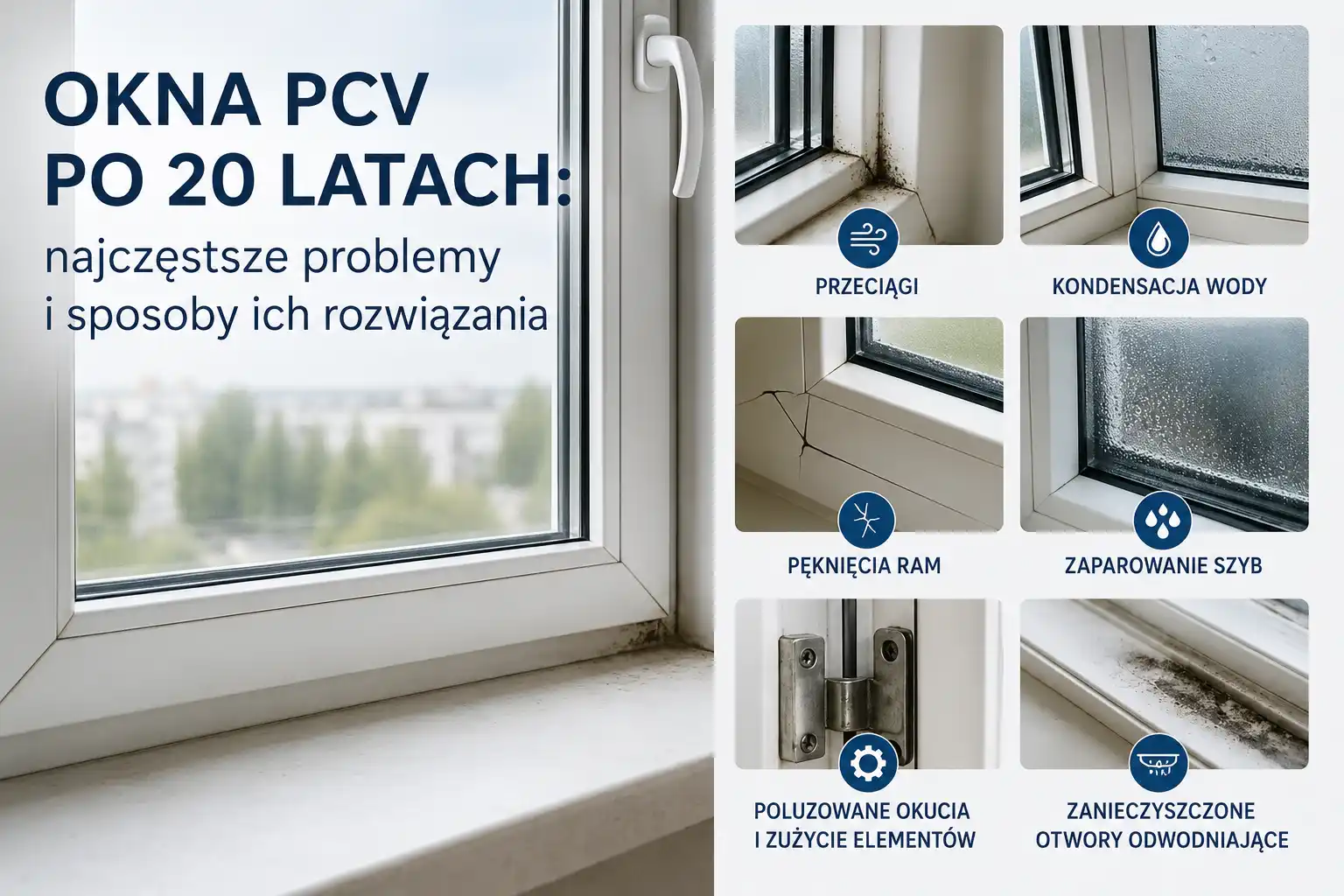
Dust, traffic residue and other deposits can collect on windows in the Silesian agglomeration. The deposit itself does not tell you whether the window is worn or needs adjustment. The useful sequence is: clean accessible areas first, reassess the components, and only then connect a remaining symptom with a possible fault.
Step 1. Establish whether the problem is only a deposit
Start with areas you can inspect without dismantling the window: profiles, accessible seal perimeter, corners, visible hardware and drainage openings. A dirty profile mainly calls for cleaning. Once the dirt is removed, cracks, deformation or missing seal sections are easier to assess.
Step 2. Clean without changing window settings
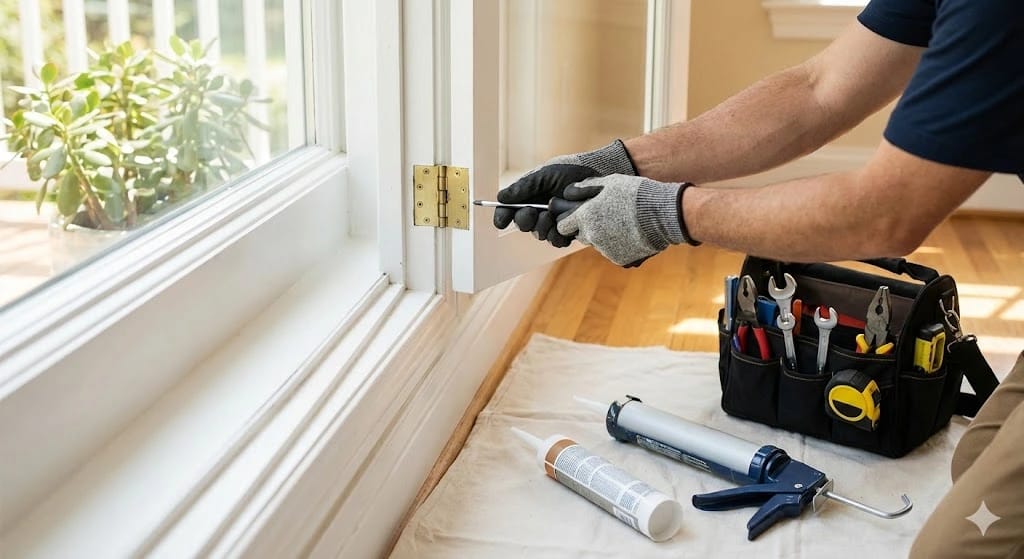
Use mild products suitable for the material and a soft cloth. Remove loose deposits from accessible hardware and drainage areas without dismantling the mechanism or enlarging openings. Hardware maintenance should follow the specific system instructions; see our cleaning and lubrication service.
Step 3. After cleaning, check whether the symptom remains
If the handle still works noticeably harder, the sash rubs or needs extra force to close, dirt is no longer a sufficient explanation. The sash position and mechanism should then be assessed.
What a window next to a busy road changes
A window exposed to heavier traffic may collect deposits faster than a similar window in a quieter location. That can justify more frequent cleaning, but not automatically more frequent adjustment, seal replacement or hardware repair.
When deposits make seal assessment difficult
Dirt can hide small cuts, permanent deformation or a section pulled out of its groove. A decision about seal replacement should therefore follow cleaning and inspection, not the colour or amount of deposit.
When dirty hardware is no longer a good explanation
If the mechanism still behaves differently after basic cleaning, it may require adjustment or repair of a specific component. Do not increase sash compression simply because dust was visible beforehand.
Moisture around the frame is a separate diagnostic path
If moisture appears near the sill or reveal after rain, establish when and where the water appears and whether it is linked to rain, wind or indoor conditions. Adding sealant without identifying the water path can hide the symptom rather than remove the cause.
Do windows in Silesia need more frequent servicing?
There is no single technical service interval created by the region. More dust can mean more frequent cleaning, while repair should still follow the actual condition and new symptoms. Local coverage is described on our Silesia service page.
When to arrange an inspection after cleaning
Further diagnosis makes sense if the changed handle operation, rubbing, poor closing, damaged hardware, physical seal damage, local draught or unexplained moisture remains after cleaning. We serve Katowice and other covered Silesian cities.
The key rule
In Silesia, heavier deposits may mean more frequent cleaning. They do not automatically mean more frequent repair. Remove the deposit first, then assess the real condition of the seal, hardware and sash.