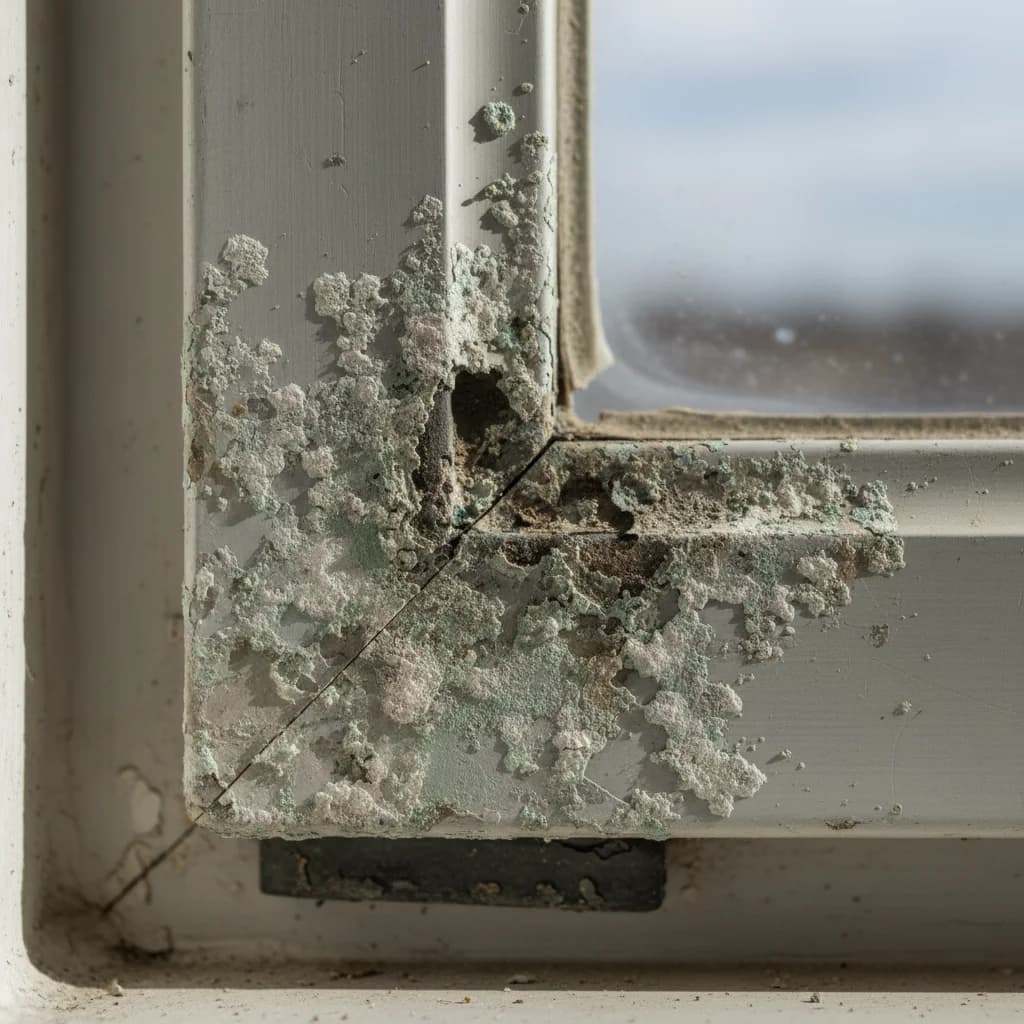
In Szczecin and other parts of West Pomerania, windows can be exposed to strong wind and wind-driven rain. If water marks appear around the frame, sill or reveal during such conditions, the important step is to determine how moisture is actually getting inside.
Not every case means a damaged seal or a poorly adjusted sash. The problem may involve the window itself, its drainage, the insulated glass unit, the connection between the frame and the building, or another location from which water travels towards the window.
Water around a window can have several different sources
At the edge of the frame or reveal. If water marks appear at the edge of the frame or reveal during or after rain, the connection between the window and the building is one area that should be checked. This does not automatically mean that replacing silicone or another external seal will solve the problem.
Water can travel within the connection and become visible somewhere other than the point where it entered the construction. The actual path of the leak should therefore be identified before repair.
At the bottom of the frame. If water collects in the lower part of the frame or around drainage areas, check whether visible drainage openings are blocked by dirt. Water appearing there does not by itself establish whether the cause is drainage, sealing or another component.
Condensation on the room-side glass surface. Condensation on the inner surface of the glass is not the same as rainwater ingress. Indoor humidity, glass surface temperature and ventilation can all contribute. Condensation alone does not confirm a window leak.
Moisture between the panes. Persistent fogging, residue or droplets between the panes of an insulated glass unit are different from moisture on the room-side glass surface. This can indicate a problem with the glass unit and requires separate assessment.
A local draught. If a clear air flow is felt at a specific point while the window is closed, note its location. Possible causes include sash alignment, seal condition, hardware operation or leakage elsewhere. A draught alone is not enough reason to increase compression.
The frame-to-wall connection and the sash seal serve different purposes
The sash seal and installation joint have different functions. The seal sits between the sash and frame and forms part of the window closure. The installation joint is between the window frame and the building structure.
Replacing a sash seal will therefore not repair leakage between the frame and wall. Likewise, renewing the outer layer of the joint will not solve a problem caused by a damaged seal, incorrect sash position or hardware fault.
The correct repair of a frame-to-wall joint depends on how it was constructed and its current condition. Silicone may be one part of the finish, but it is not a universal solution for every leak around a frame.
If the main symptom is air movement rather than water, see our guide on draughts from windows — sealing or seal replacement.
What strong wind changes during rain
Strong wind can make a problem visible only under particular weather conditions. If water marks appear only during rain combined with strong gusts, note the side of the building, the direction of the rain and the exact location where moisture appears.
This information is useful during inspection, but it does not identify a specific component that needs repair. The cause may involve the window-to-building connection, water drainage or the window itself.
Where water appears is not always where it enters
Water does not always become visible exactly where it entered the construction. It can travel across surfaces, within a joint or along finishing elements and appear only later at a frame corner, sill or reveal.
For that reason, sealing only the visible gap does not always solve the problem. If water marks return during later rainfall, the leak path should be identified rather than repairing only the place where moisture can be seen.
When to check window drainage
Many window designs include openings that allow water to drain from appropriate profile areas. If they are visible, check whether leaves, dust or other loose debris are blocking them.
Do not enlarge the openings or clean them with sharp tools. If water repeatedly remains where it should drain away, the drainage system should be checked rather than assuming that cleaning one opening will be enough.
When an inspection is worth arranging
There is no need to wait for a particular season if the problem has already appeared. An inspection is worth arranging when:
— water marks repeatedly appear around the frame, sill or reveal after rain;
— moisture appears only during rain combined with strong wind;
— water remains in the lower part of the frame and it is unclear whether it drains correctly;
— the sash rubs against the frame or no longer closes as before;
— a local draught appears while the window is closed;
— the seal has visible cracks, cuts or permanent deformation;
— persistent fogging, residue or droplets remain between the panes.
If the symptom appears only in specific weather, taking a photo and noting the conditions can make it easier to identify the cause later.
Window service in Szczecin and the area we serve
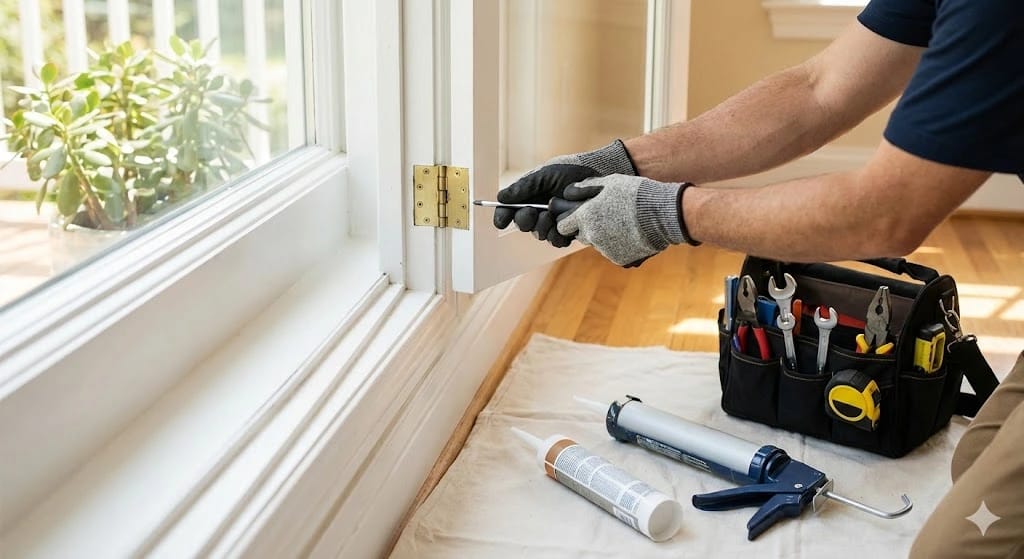
We provide window service and repair in Szczecin and within the areas of West Pomerania that we serve. The required work depends on the actual cause and may include sash adjustment, hardware repair, seal replacement, insulated glass unit replacement or work on the connection between the frame and the building.
As part of our window repair service, we first identify the cause and then define the required work. The initial diagnosis and technician's visit are free within the area we serve.
What to remember
Water around a window does not automatically point to one cause. The location of moisture, the conditions in which it appears, the condition of the frame-to-building connection, drainage and the operation of the window itself all matter.
The most important step is to identify how water is getting inside before deciding to replace a seal, adjust the sash or renew the frame-to-wall joint. This allows the repair scope to follow the actual cause rather than only the place where water is visible.