If clear air movement is felt around a closed window, the most important step is to establish exactly where it comes from. A draught at the sash-to-frame contact, airflow around the reveal and a problem related to gasket condition may require different work.
The symptom alone should not lead immediately to gasket replacement or hardware adjustment. The leak location and the way the window operates are checked first, and the repair is selected afterwards.
In practice, inspection focuses mainly on gasket condition, sash-to-frame contact and the sealing of the frame connection to its surroundings. The scope depends on where air movement appears and how the window operates.
Gasket, sash contact or frame-to-wall joint — how do these problems differ?
Gasket
The gasket is one of the elements responsible for airtightness at the sash-to-frame contact. A draught alone is not enough to identify it as the source.
If air movement appears at this contact, both gasket condition and the way the sash meets the frame are assessed.
Sash-to-frame contact
A draught can also occur when the sash does not interact correctly with the frame. It matters whether the sash closes evenly, whether handle operation has changed, whether rubbing occurs and whether the problem appears at a specific point around the perimeter.
If inspection points to sash setting or hardware-to-frame interaction rather than damage requiring replacement, adjustment may improve contact.
Frame-to-wall joint
The frame-to-wall joint is a separate airtightness area from the sash-to-frame contact. If air movement is felt around the reveal, sill or another area around the frame, this joint also needs to be considered during diagnostics.
If the draught source is still unknown, locate it first
Choosing between adjustment, gasket replacement and repair of the window-to-building joint only makes sense once the airflow has been assigned to a specific area. Our guide to what to do when air is coming through a window covers source-finding in detail. This article starts from the next step: the problem area has been identified and the task is to choose the appropriate type of repair.
When is gasket replacement needed?
Gasket replacement is considered when its condition genuinely prevents correct contact at the sash-to-frame joint. Visible cracks, permanent deformation, damage and the way the gasket sits in the profile groove are relevant.
Selecting the correct profile also matters. A gasket should not be chosen on the basis that “thicker means tighter”. A profile that is too large can make the sash harder to close and alter hardware operation, while one that is too small may fail to provide suitable contact.
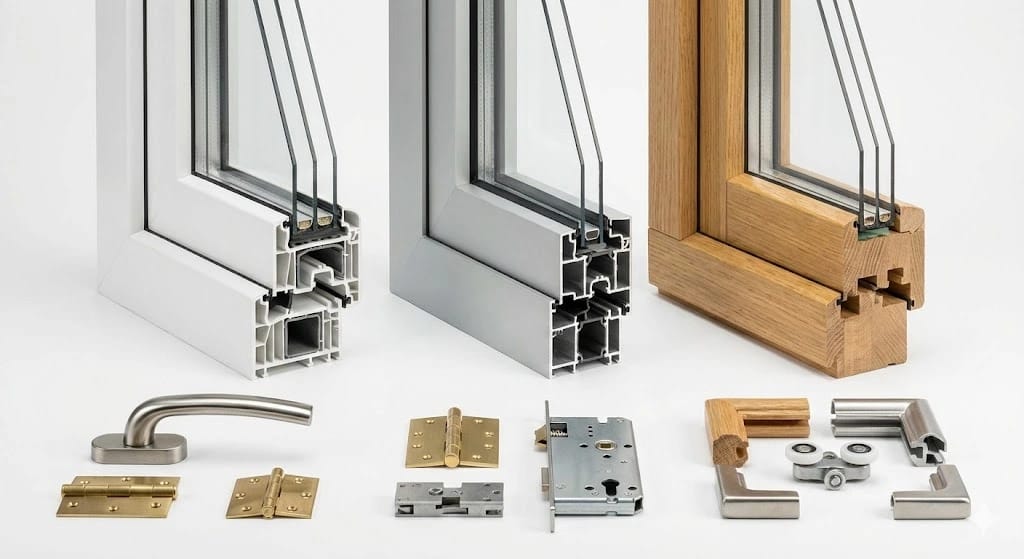
The replacement gasket should therefore match the specific window system rather than being chosen only by thickness or by the appearance of the old part.
When can adjustment solve the problem?
Adjustment may be appropriate when inspection links the problem to sash setting or the way the hardware interacts with the frame rather than to damage requiring replacement.
The purpose is not simply to increase compression. Adjustment should restore correct interaction between the sash, frame and closing components within the intended range of the system.
Searches for “winter summer window adjustment” often reduce the issue to a seasonal change in compression. It should not be treated as a universal instruction: the adjustment range depends on the hardware system and the actual problem being corrected.
If the draught is accompanied by a clear change in handle or mechanism operation, we discuss possible causes in more detail in our guide to damaged window hardware.
When should the frame-to-wall joint be checked?
If the draught is felt around the junction between frame and reveal, sill or another part of the window surround, the frame-to-building connection should also be checked.
A leak in this area is not in the same layer as the sash gasket. A new gasket therefore will not solve the problem if air movement occurs outside the sash-to-frame contact.
The repair scope depends on the location and condition of the joint. Simply adding sealing material around the frame is not a universal solution for every construction.
Why gasket replacement does not always remove a draught
If air enters outside the sash-to-frame contact, a new gasket works in a different area from the source of the leak. If the problem comes from sash setting, changing the gasket alone also does not remove the cause.
The same principle works in reverse: adjustment will not repair a damaged gasket or a leaking frame-to-building joint. The type of work should therefore follow the problem location rather than the symptom “cold air from the window”.
If the problem is accompanied by other symptoms, their broader overview is available in our guide to cold air from a window — what to do.
How to seal windows for winter — where should you start?
The phrase “how to seal windows for winter” often reduces the issue to a single action, but the correct work depends on the source of the draught. Before the heating season, first establish where air movement appears and whether the issue concerns the gasket, sash contact or the frame-to-building joint.
If the window shows no air leak, there is no need to increase compression or replace the gasket simply because winter is approaching. If a draught is present, the work should match the actual cause.
When is it worth booking a service visit?
A visit is particularly useful when the draught location cannot be identified clearly, the symptom occurs only in certain wind conditions, or sash or handle operation has changed at the same time.
If the problem is intermittent, note the location and the conditions in which it occurs. If the draught is accompanied by a sash or handle problem, a short recording of that movement can be useful.
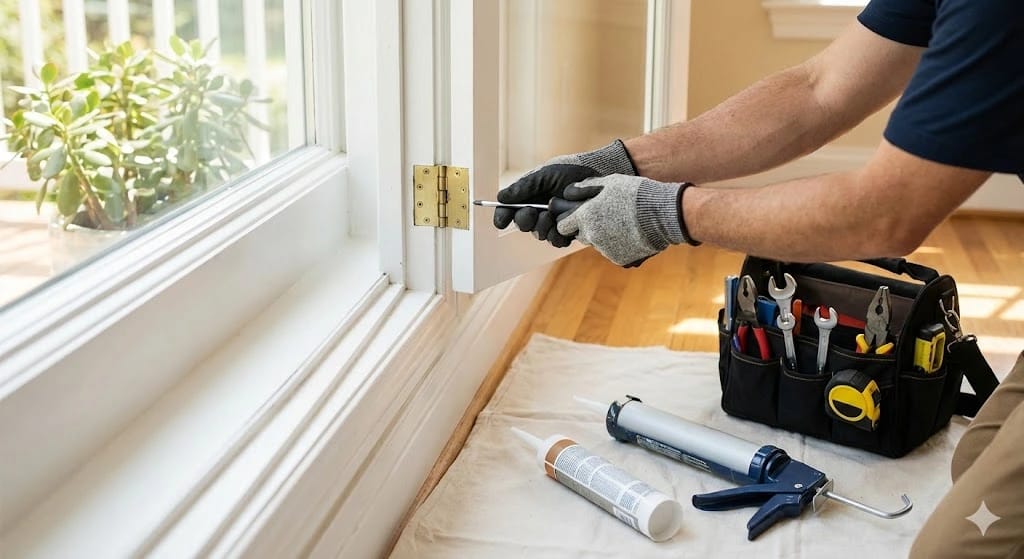
As part of our window repair service, we first check the areas that may be responsible for the draught and then select the work scope. The initial diagnosis and technician's visit are free within the area we serve, and the cost is explained before repair begins.
Identify the draught source before choosing the repair
Gasket replacement, adjustment and repair of the frame-to-building connection solve different problems. The work scope should therefore follow the leak location and the condition of the relevant components rather than only the fact that a draught is felt near the window.
If the problem is at the frame-to-reveal joint, see our window sealing service. If air movement occurs between the sash and frame, sash contact, hardware operation and gasket condition should be assessed together. Locate the leak first, then choose the repair.