Has your front door started scraping the threshold, needing a firmer push against the frame, or becoming hard to lock unless you press the door first? The first assumption is often that the door simply needs adjustment. But similar symptoms can have different causes – from door alignment to the lock itself.
Before adjusting hinges or replacing parts, pay attention to one detail: the exact point at which the door starts resisting movement. That often tells you more than the general complaint that the door is hard to close.
When resistance appears is the first useful clue
If the sash scrapes the threshold or frame while moving, check its alignment, the hinges and how the door moves in relation to the frame. If it moves freely but resistance appears only at the final stage of closing, the sash position relative to the frame also needs attention.
A different pattern appears when the door reaches the frame normally but the handle or key becomes stiff only while locking. In that case, the lock, keeps and their alignment deserve closer inspection.
There is also a situation that only seems to be the same problem: the door closes and locks without obvious resistance, yet you can feel a draught at an edge or hear more outside noise. That may not be a closing problem at all. The seal, threshold or sash compression may be involved.
The same complaint – “the door won’t close properly” – can therefore describe several different problems.
When the sash scrapes the threshold or frame
A rubbing mark on the threshold, resistance at one point or the need to lift the sash slightly while closing suggests that sash alignment is a sensible place to start checking.
That does not automatically mean a hinge has failed. The cause may involve hinge adjustment, a change in sash position, play or wear in a component. Turning the first accessible adjustment screw without checking the whole door may remove rubbing in one place and create a problem somewhere else.
The hinge system also matters. Different designs have different adjustment methods and ranges, so there is no single Allen-key procedure that suits every entrance door.
When resistance appears only at the final stage of closing
The sash may move freely through almost its entire travel and begin resisting only as it reaches the frame. In that situation, lubricating the hinges may change nothing because the source of the resistance may lie elsewhere.
Check the sash position relative to the frame, where it starts to rub or meet resistance, and whether the gaps around the door are even. An uneven gap is a clue rather than a diagnosis – it does not by itself identify which component caused the change.
A closer inspection may also include the frame, its fixing and the points where the sash starts rubbing or pressing too heavily. Only then can you decide whether adjustment is enough or the cause lies elsewhere.
When the door closes but is difficult to lock
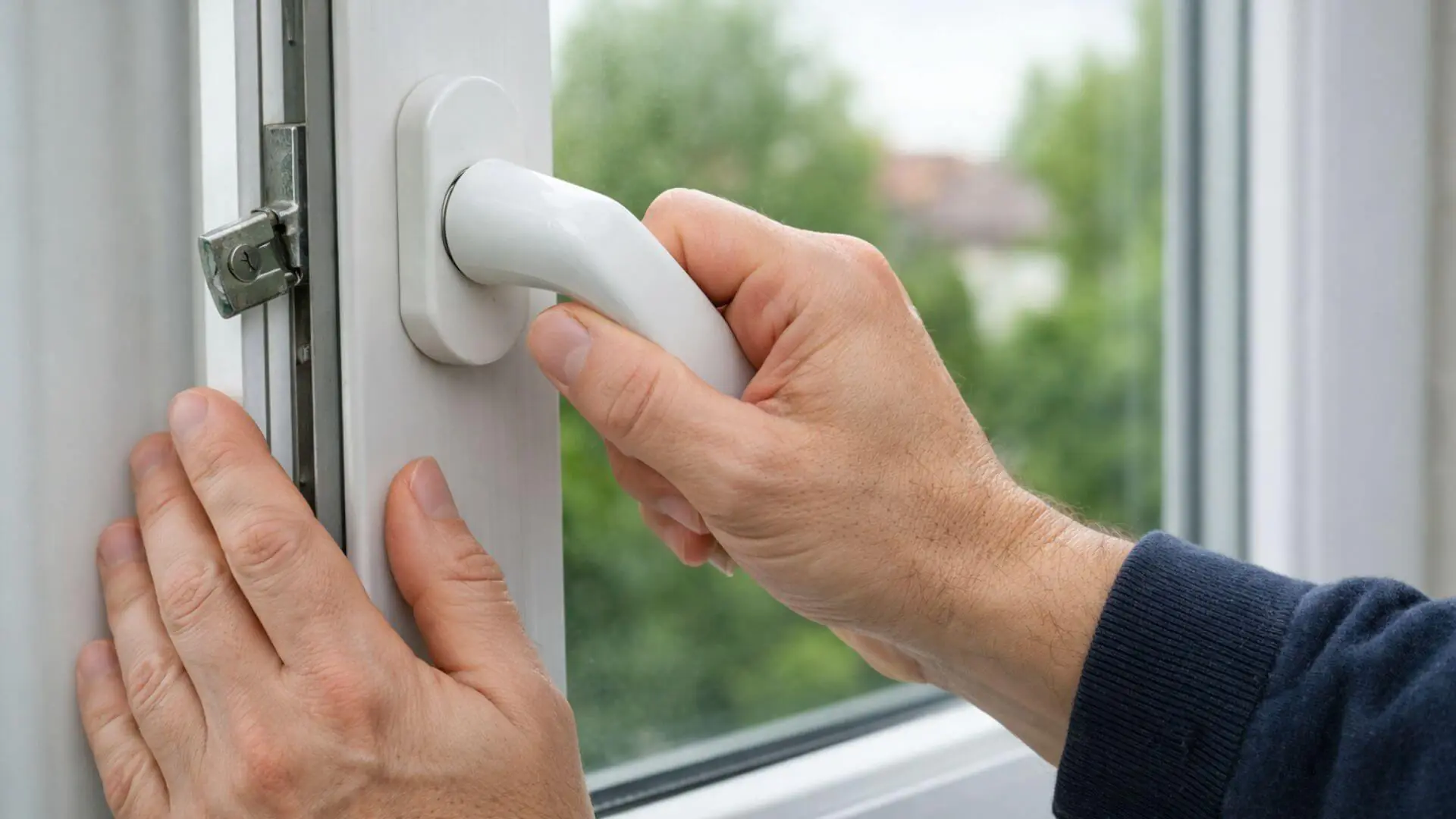
This is an easy symptom to blame on the lock itself. Many entrance doors use multipoint locking. If the sash position changes, the locking elements may no longer meet the keeps as they did before.
The result can be a door that reaches the frame normally but needs noticeably more force at the handle or key. Importantly, the lock itself may still be serviceable.
A fault inside the mechanism is also possible. Before replacing a lock, compare how it operates with the sash open and after the door is closed. This simple comparison often helps distinguish an alignment issue from a fault in the mechanism itself.
A door can close properly and still be draughty
If the sash closes and locks normally but you feel a draught along the bottom or side edge, adjusting the lock alone may change nothing.
The seals, threshold and the way the sash sits against the frame should also be checked. A damaged or permanently deformed seal may need replacement, but weak compression at one point does not prove that the seal is the cause. Sash alignment can produce a similar symptom.
Closing and sealing are not the same thing. A door can close correctly and still fail to seal properly.
How does a technician look for the cause?
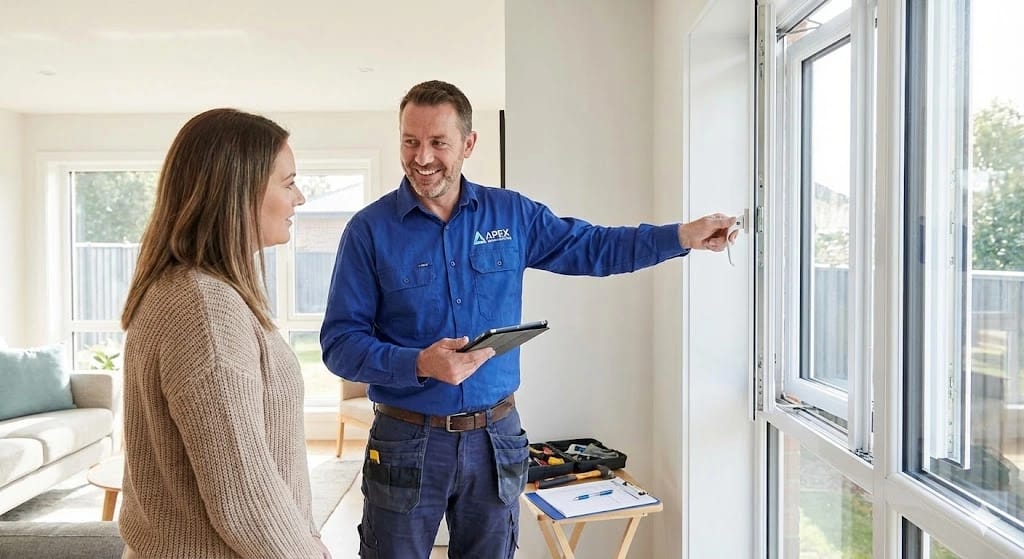
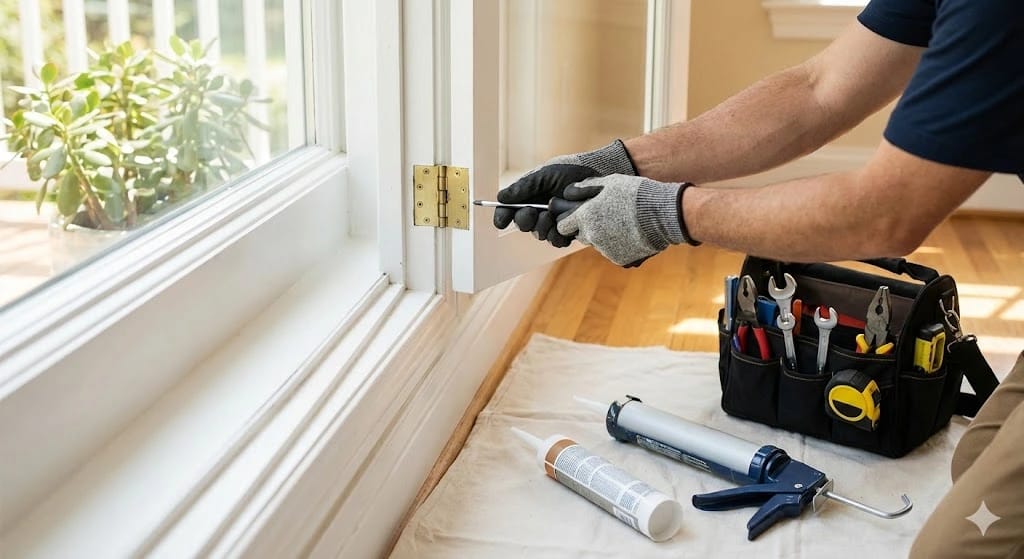
The sensible starting point is not a random adjustment to one hinge. The door should be checked as a whole: sash, hinges, frame, lock, keeps, threshold and seals.
A technician checks where resistance appears, how the door moves while opening and closing, and how the locking mechanism behaves with the door open and closed. If the complaint involves draughts or poor sealing, the seals and the way the sash sits against the frame are checked as well.
A stiff handle does not necessarily mean a failed lock, just as a rubbing sash does not automatically mean a hinge needs replacing. A symptom points to what should be checked – not always to the part that should be replaced.
Only after that inspection is it possible to decide whether the door needs adjustment, maintenance, repair or replacement of a specific component.
What can you check without dismantling the door?
Before reaching for tools, first observe how the door behaves. Open it and check whether it moves freely throughout its travel. Note any point where it rubs the threshold or frame, then close it slowly and notice exactly when resistance begins.
It is also worth comparing the handle or key with the door open and closed. If the mechanism feels light with the door open but becomes noticeably stiffer after closing, note that difference – it is useful diagnostic information.
You can also inspect accessible seals and lock components for visible damage. Avoid turning unidentified adjustment screws, dismantling the lock or forcing the handle through resistance. Door systems differ, and an incorrect adjustment can make the door work worse rather than better.
When is adjustment enough, and when is repair needed?
If the problem is caused by incorrect sash alignment, proper adjustment may restore normal operation. If a component is worn or damaged, or the problem involves the lock, fixing or another part of the construction, adjustment alone will not be enough.
That is why one symptom alone should not determine the repair. “The door is rubbing” does not automatically mean “adjust the hinge”, and “the key is hard to turn” does not automatically mean “replace the lock”.
If the door is scraping noticeably, requires increasing force to close, or the handle or key regularly jams, it is worth arranging a diagnosis. Do not keep forcing the movement, because that can place additional load on the lock, hinges or other parts of the mechanism.
During a service visit, we identify the cause and determine whether adjustment is sufficient or whether a specific component needs repair or replacement. Diagnosis and the technician's call-out are free, and the scope and cost of the work are explained before repair begins.
Related services
We service entry doors alongside balcony door repair and broader window repair. Initial diagnosis and travel are free of charge.