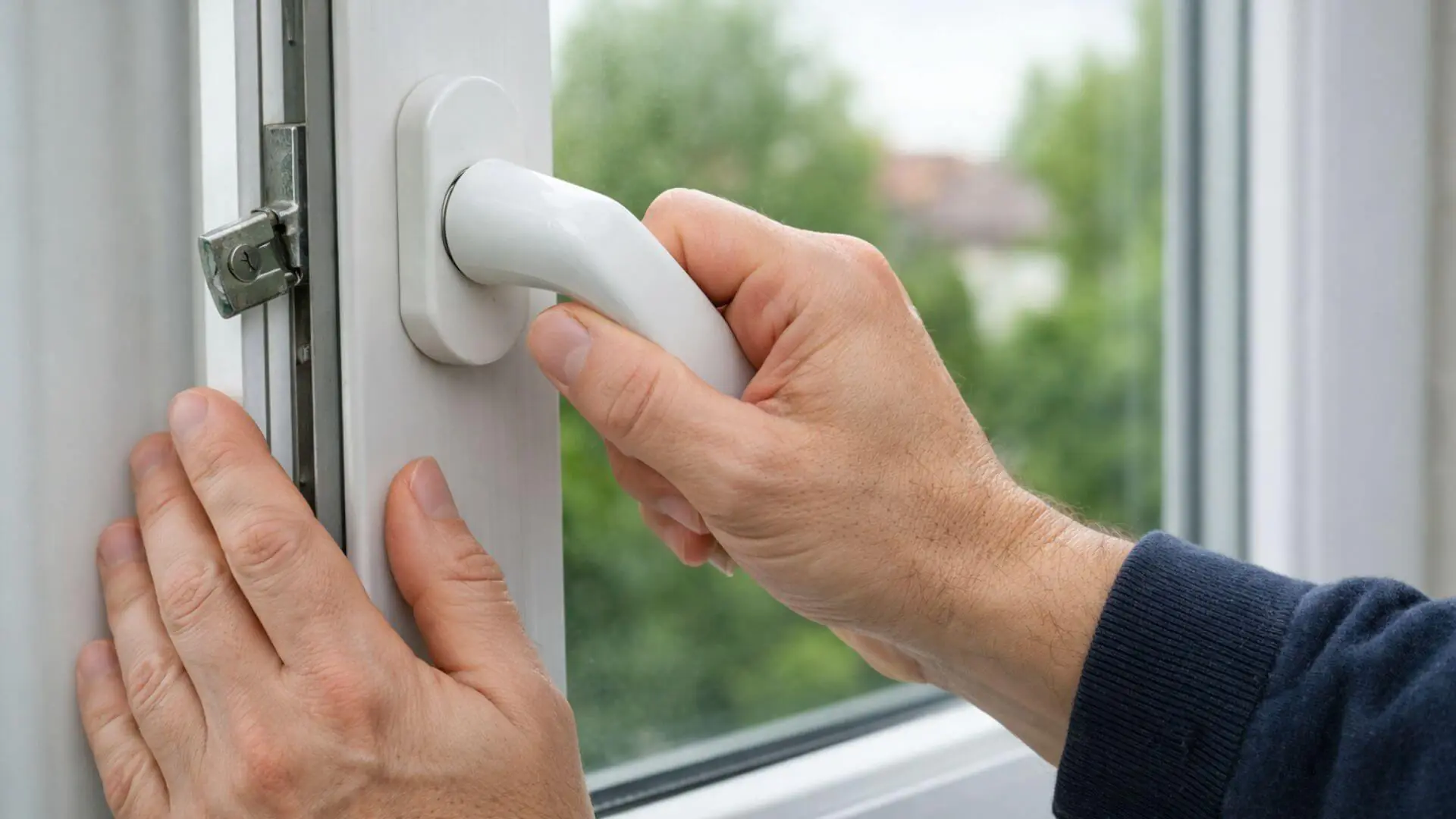
The handle turns freely, but the window does not respond. The sash does not change position, and turning the handle no longer produces the effect it used to. The first thought is natural: the handle is broken.
That is not necessarily the case. The handle is only one part of the system that transfers movement to the window hardware. If that transfer is interrupted somewhere along the way, the handle may still turn even though the fault is elsewhere.
The symptom is clear, but it identifies an area to inspect rather than providing a definite diagnosis.
What happens between the handle and the hardware
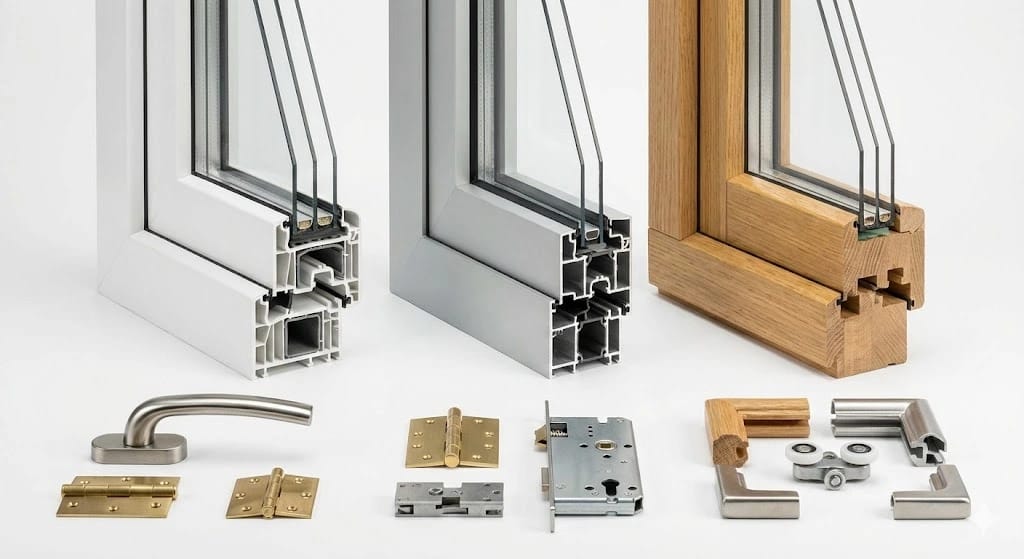
The rotation of the handle has to be transferred to the hardware mechanism inside the sash. Depending on the design, this involves the handle itself, its spindle and components of the mechanism.
If the movement is no longer transferred correctly, the cause may be in the handle, at its connection to the mechanism, or further inside the hardware.
A handle that spins freely does not tell you which component is damaged. It mainly tells you to find the point where movement stops being transferred.
What can cause a handle to spin freely
Several different faults can look very similar from the outside. Instead of assigning the symptom to one component immediately, it is more useful to consider three areas.
1. The handle itself or its mounting. Play, wear or damage can prevent the handle's rotation from being transferred correctly. Obvious looseness may provide a clue, but it is not a complete diagnosis on its own.
2. The connection between the handle and the mechanism. In some designs the problem may involve the handle spindle or the point where it engages with the mechanism. If this connection no longer transfers rotation, the handle can move while the hardware fails to respond correctly.
3. The hardware mechanism. The source may also be further inside the hardware. In that case the handle and its mounting may appear intact, while turning the handle still produces no proper response from the mechanism.
These situations can look alike to the user but require different repairs. That is why replacing the handle before identifying the cause does not always solve the problem.
The handle can be intact even when it no longer controls the window
This is one of the most useful things to understand about this symptom. The component you hold in your hand is not necessarily the component that has failed.
If the handle turns but its movement is not reaching the hardware correctly, fitting a new handle may change nothing.
A better question than “is the handle broken?” is: where has the transfer of movement stopped?
What you can check without dismantling the window
Without removing components, you can note a few things:
— whether the handle has obvious play relative to the sash,
— whether it turns in a similar way in both directions,
— whether moving it changes the position of the sash,
— whether the window has remained closed, tilted or open,
— whether the handle had started behaving differently before the fault appeared.
These observations help describe the symptom but do not replace diagnosis. Avoid forcing the handle, repeatedly turning it against its stop or trying to force the sash to move when the mechanism is not responding correctly.
When DIY handle replacement makes sense
If the handle itself is known to be damaged and its specifications are known, replacing it may be relatively straightforward.
The situation is different when the handle spins freely and the window mechanism does not respond. At that point it is not yet clear whether the problem is in the handle, its connection to the mechanism or the hardware itself.
Buying replacement parts by trial and error may therefore fail to solve the problem. It is also better not to force the mechanism or dismantle the hardware without identifying the cause and the system involved.
Replacing a component whose failure has been confirmed can be simple. The harder part is establishing which component actually needs replacing.
Is the window properly closed with this fault?
The position of the sash alone does not always confirm the position in which the hardware mechanism has stopped. If the handle no longer controls the hardware, do not automatically assume that every locking point is in the correct position.
If the sash has been left tilted, remains partly open or correct closure cannot be confirmed, the fault should be treated more urgently.
When to arrange a service visit
Diagnosis is particularly useful when:
— the handle turns but the window does not change between open, closed or tilted states,
— the sash is stuck in a position from which it cannot be moved normally,
— replacing the handle itself did not remove the symptom,
— it is unclear whether the problem is in the handle, the connection or the hardware mechanism,
— you are not sure which component matches the installed system.
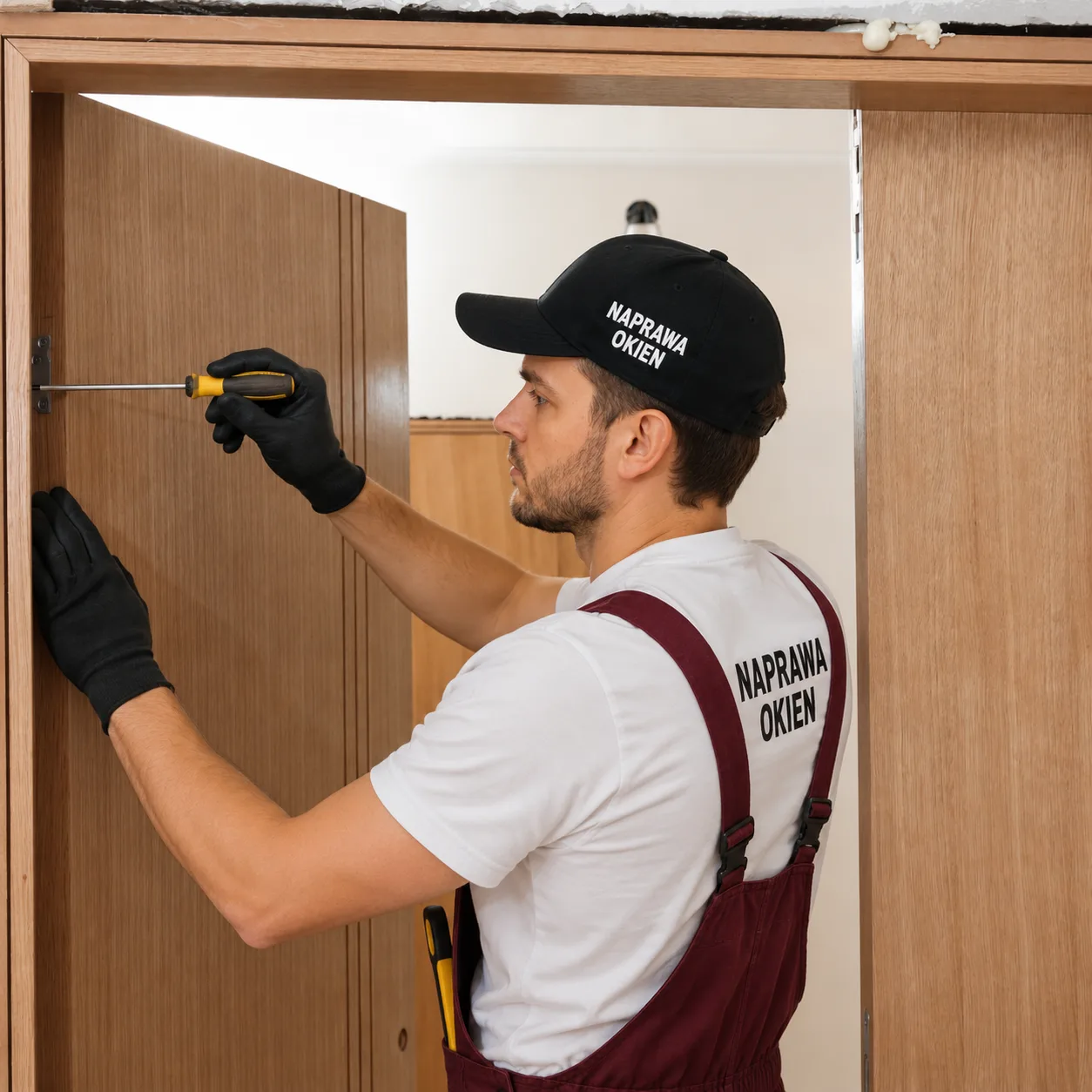
As part of our uPVC window repair service, we first check whether the problem concerns the handle and its connection to the mechanism or lies further inside the hardware. Only after the cause has been identified can the appropriate repair scope be selected.
What is worth remembering
A handle that spins freely tells you one thing above all: its movement is not being transferred correctly to the window mechanism. The cause may be in the handle, its connection to the mechanism or the hardware.
The first step should therefore not be buying a random new handle, but identifying the point where the transfer of movement is lost.
If the window is left in an unusual position or correct closure cannot be confirmed, do not force the mechanism. Identifying the cause is more useful than making another attempt to turn the handle.
See also what our uPVC window repair service covers and how to tell whether a window that will not close needs adjustment or repair.
Related services
Handle work can include mechanism replacement, adjustment, or a full window service. See also window handle replacement - when and how. Initial diagnosis and travel are free of charge.