Not every problem you feel through a window handle is caused by the handle itself. A cracked or mechanically damaged handle may genuinely need replacing, but stiffness, jamming or a lack of response from the hardware can also originate at the handle-to-hardware connection or within the window hardware itself.
Before buying a replacement, it is worth identifying where the problem actually starts. This helps avoid replacing a working part and makes it easier to choose the correct handle when replacement is genuinely needed.
When might the problem actually be the handle?
The handle is cracked or mechanically damaged
A visible crack, break or damage to the handle body is one of the clearest reasons to replace it. Before fitting a new handle, however, check whether the rest of the hardware operates normally and whether excessive resistance elsewhere may have contributed to the damage.
The handle is loose
A loose handle does not always mean the whole handle is worn out. Check the fixing first. If the only problem is a loose fixing and there is no other damage, replacement may not be necessary. If the fixing is secure but the play comes from the handle itself or its connection to the hardware, further assessment is needed.
The handle turns but does not operate the hardware
If a window handle spins freely or turns without producing the expected response from the hardware, do not assume a single type of failure. The fault may be in the handle, the spindle or its connection to the mechanism, but it may also be inside the window hardware. Before replacing the handle, establish whether its movement is being transmitted correctly.
When might replacing the handle solve nothing?
The handle is stiff
Increased resistance when turning the handle does not automatically mean the handle is faulty. The source may be the handle itself, the window hardware, sash alignment or the way the locking components interact. Replacing the handle without identifying the cause may leave the original problem unchanged.
The handle jams only when the sash is closed
If the handle moves normally while the sash is open but becomes stiff or jams after the window is closed, sash alignment and the interaction of the hardware should also be considered. This symptom alone is not enough to justify replacing the handle.
The handle also jams while the sash is open
If the problem is present with the sash open as well, both the handle and its connection to the hardware, as well as the hardware mechanism itself, may need to be checked. The symptom alone does not reliably identify one failed component.
The window will not open or close even though the handle moves
If the window handle is not working in the sense that moving it no longer allows the window to open or close normally, do not apply more force. The problem may involve how the handle engages the hardware or the hardware mechanism itself. Forcing it further can make the fault harder to deal with.
A simple check before buying a new handle
Before buying a replacement, inspect the handle for visible damage, check its fixing, compare how it behaves with the sash open and closed, and note whether turning the handle produces a response from the hardware. If you encounter clear resistance or a jam, do not force it.
If the issue is a loose or damaged handle body, or the handle behaves abnormally regardless of sash position, the handle or its connection to the hardware may be involved. If the difficulty appears mainly after the sash is closed, sash alignment and hardware interaction should also be considered.
How do you choose the right handle for a specific window?
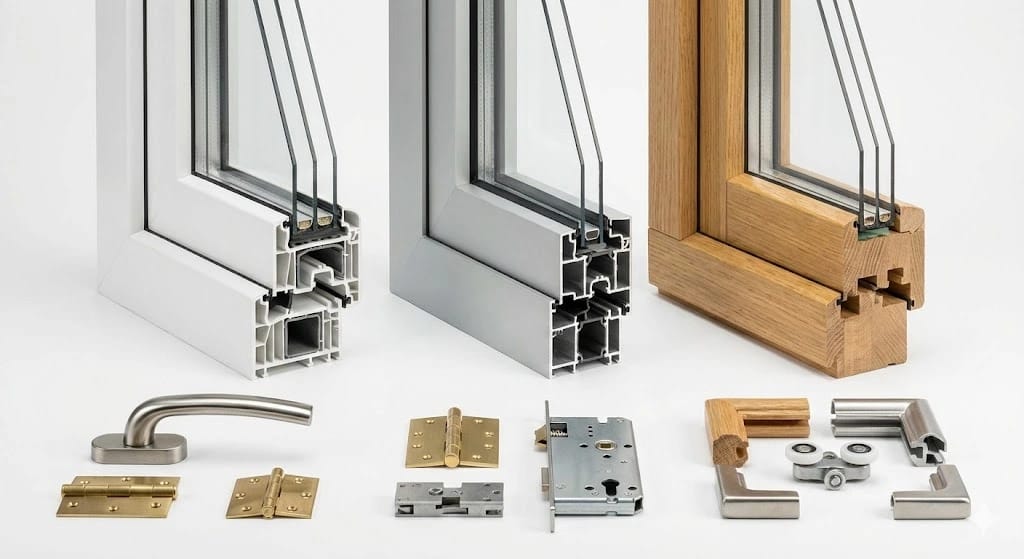
A PVC window handle should not be selected by appearance alone. Before buying one, compare the old and new handles and check the dimensions and functions that matter for the particular window.
Spindle size and length
The spindle is the square section that transfers handle rotation to the window hardware. Both its size and length matter. Rather than assuming one universal standard, compare the replacement with the original handle or the specification for the particular system.
Fixing layout
The new handle must match the fixing arrangement used on the window. Do not choose one according to a simple “PVC versus aluminium” rule; compatibility depends on the particular handle, hardware and window construction.
Handle function
In addition to standard handles, there are lockable versions, push-button handles and other system-specific options. If the original handle had an additional function, that function should be considered when choosing the replacement.
The safest way to match a replacement
The removed original handle, together with measurements of the spindle and fixing, provides the most useful reference. Photos can help with identification, but they do not always show every dimension needed for a reliable match.
How is a window handle replaced?
If the diagnosis points to the handle itself and the replacement has been correctly matched, changing a standard handle is usually straightforward. Handle designs vary in detail, however, so access to the fixing should follow the construction of the particular model.
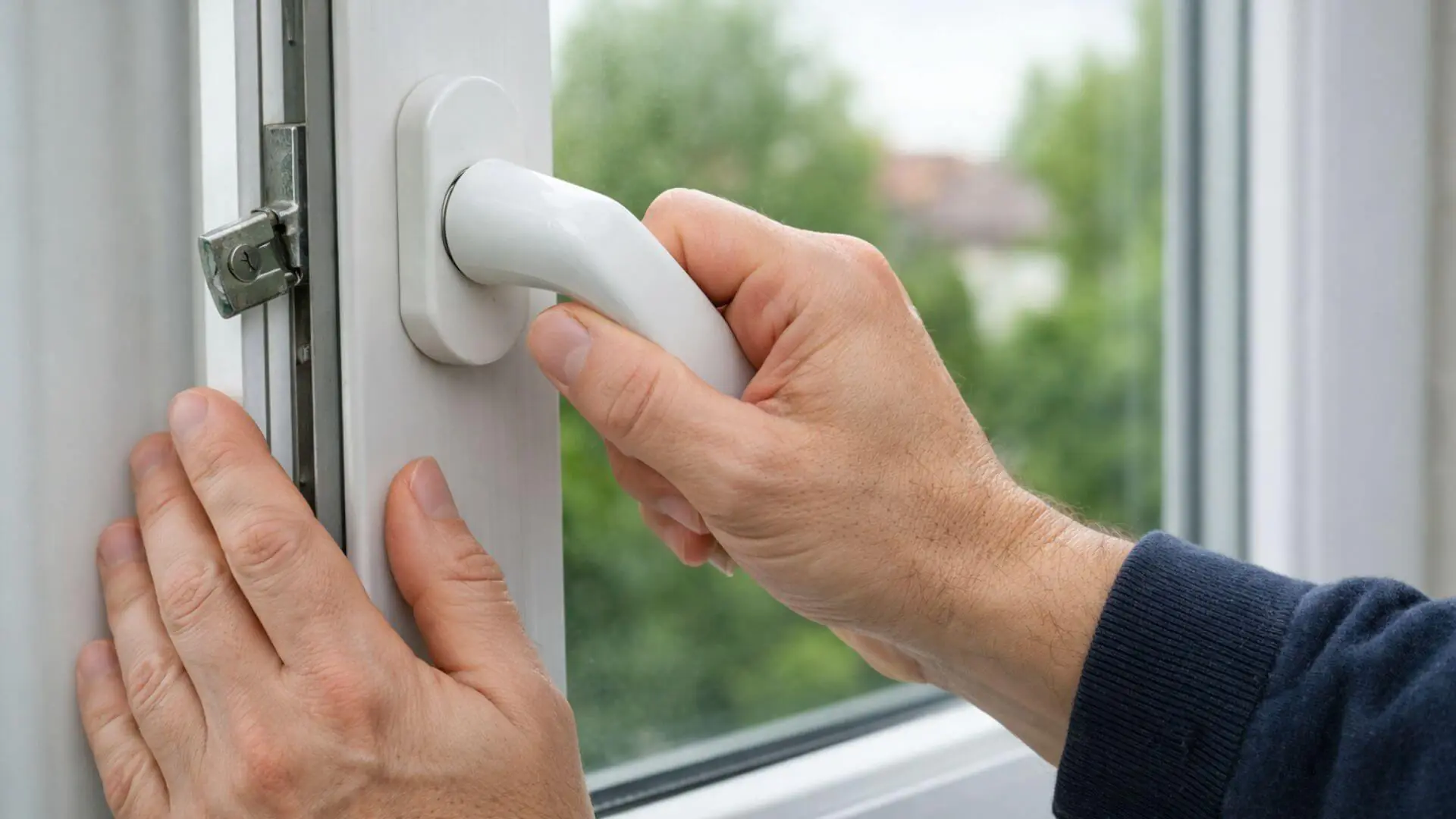
Typically, place the sash and handle in a stable position, expose the fixing as intended by the handle design, undo the fixing and carefully remove the old handle. Before fitting the replacement, compare the spindle and fixing with the original once more. Fit the new handle without excessive force, then check its operation in the window's normal operating positions.
If the replacement does not fit, the spindle will not engage correctly or the mechanism develops obvious resistance, stop and check compatibility again rather than forcing the installation.
What should you avoid during replacement?
Do not force an incompatible spindle into place
If the spindle does not engage correctly with the mechanism, do not force it in or modify its dimensions at random. First confirm that the replacement handle is compatible with the window.
Do not overtighten the fixing
The fixing should hold the handle securely, but excessive tightening is not a solution for every type of play. If the problem remains after correct installation, its source needs to be identified.
Do not force the handle to move
A clear jam or unusual resistance is a reason to stop. Forcing the handle can place additional load on the handle or window hardware without addressing the cause.
When is it better to call a technician?
Professional diagnosis is particularly useful when the handle jams and the window will not open or close, hardware damage is visible, the problem remains after replacing the handle, the mounting area is damaged, or it is unclear whether the fault is in the handle or the mechanism.
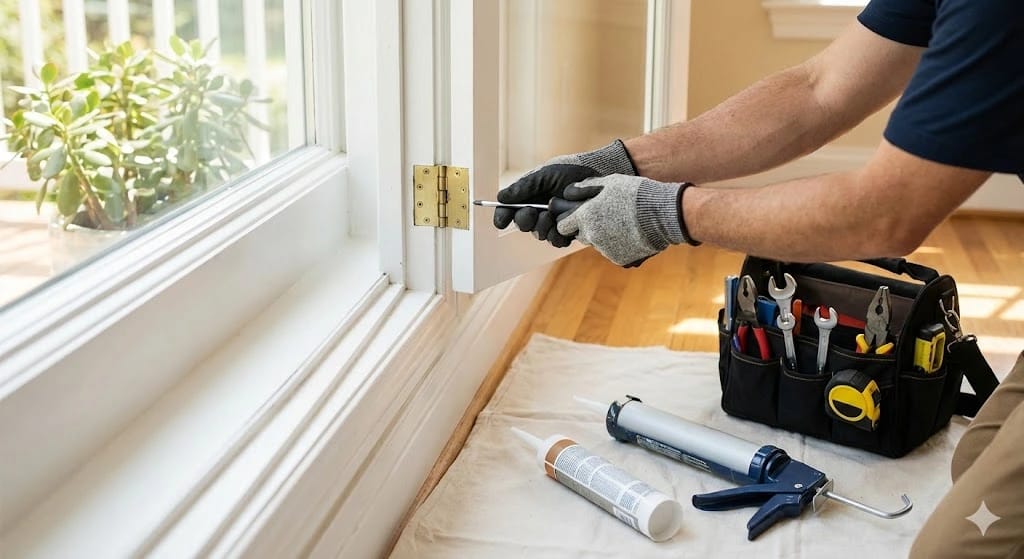
As part of our window repair service, we identify the source of the problem before deciding what work is needed. The initial diagnosis and technician's visit are free of charge. If the symptoms point to the mechanism, see also our guides to damaged window hardware and what to check when a window will not close properly.
Window handle replacement or repair?
Window handle repair does not always mean replacing the entire handle. If the only issue is a loose fixing, securing it correctly may be enough. If the handle body or its internal mechanism is damaged, replacing the complete handle may be the practical solution. If the fault lies in the window hardware or the mounting area, a new handle alone will not correct it.
In short
Window handle replacement makes sense when the problem genuinely lies in the handle and the new part is compatible with the specific window. Stiff operation, jamming or a lack of response from the hardware should not automatically lead to buying a new handle — first identify where the problem originates.
When the problem goes beyond the handle itself
If a new or otherwise functional handle does not transmit movement correctly to the hardware, the fault may lie deeper in the mechanism; in that case, the appropriate direction may be mechanism repair or replacement. Anti-burglary protection, on the other hand, is a separate functional choice and should not be presented as an automatic part of every handle replacement. The cause of the fault should be corrected first, and any additional functions selected afterwards.