Problems with window hardware do not automatically mean that the whole window or the entire hardware system needs to be replaced. A handle that has become harder to operate, a sash that rubs or a tilt function that no longer works correctly can result from misalignment, wear or damage to a specific component.
The key is to distinguish misalignment from actual hardware damage. If the components are mechanically sound, correct adjustment may be enough. If a part is cracked, permanently deformed, corroded enough to affect its function or no longer performs as intended, repair or replacement may be necessary.
What is window hardware and what does it do?
Which components are part of the hardware system?
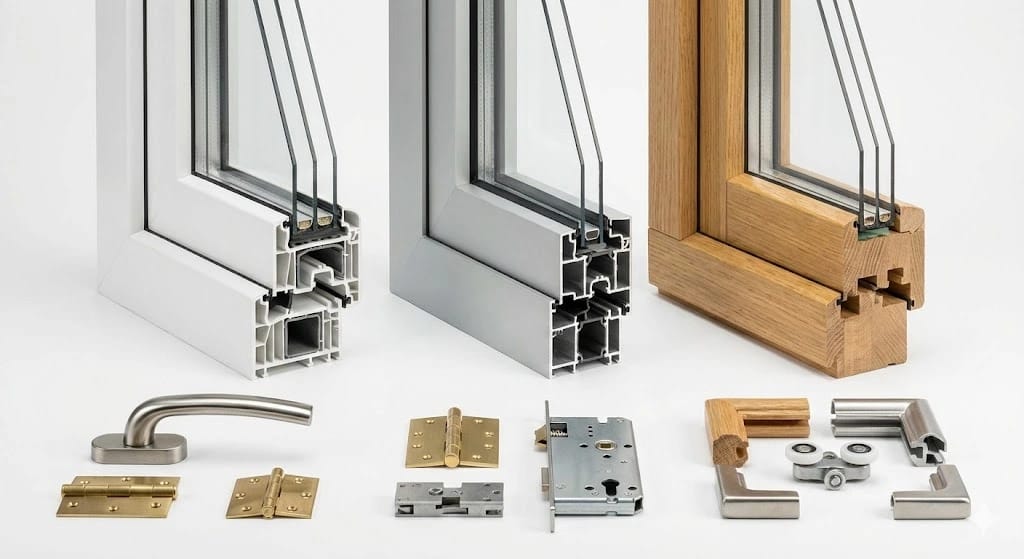
Window hardware is the group of components responsible for opening, closing, locking and tilting the sash. Depending on the system, it can include hinges, strikers, locking points, components responsible for the tilt function, and parts that transfer movement from the handle.
Not every window uses the same hardware design. Manufacturers, product lines, generations and technical solutions vary, so a diagnosis or replacement-part choice should not be based on the appearance of one component alone.
Why does one symptom not identify the damaged part?
The same symptom can have different causes. A stiff handle does not automatically mean that the handle itself is damaged, and a rubbing sash does not necessarily mean that a hinge has failed. The operation of the sash and the cooperating hardware should be assessed together.
What symptoms can point to a hardware problem?
The handle has become harder to operate or sticks
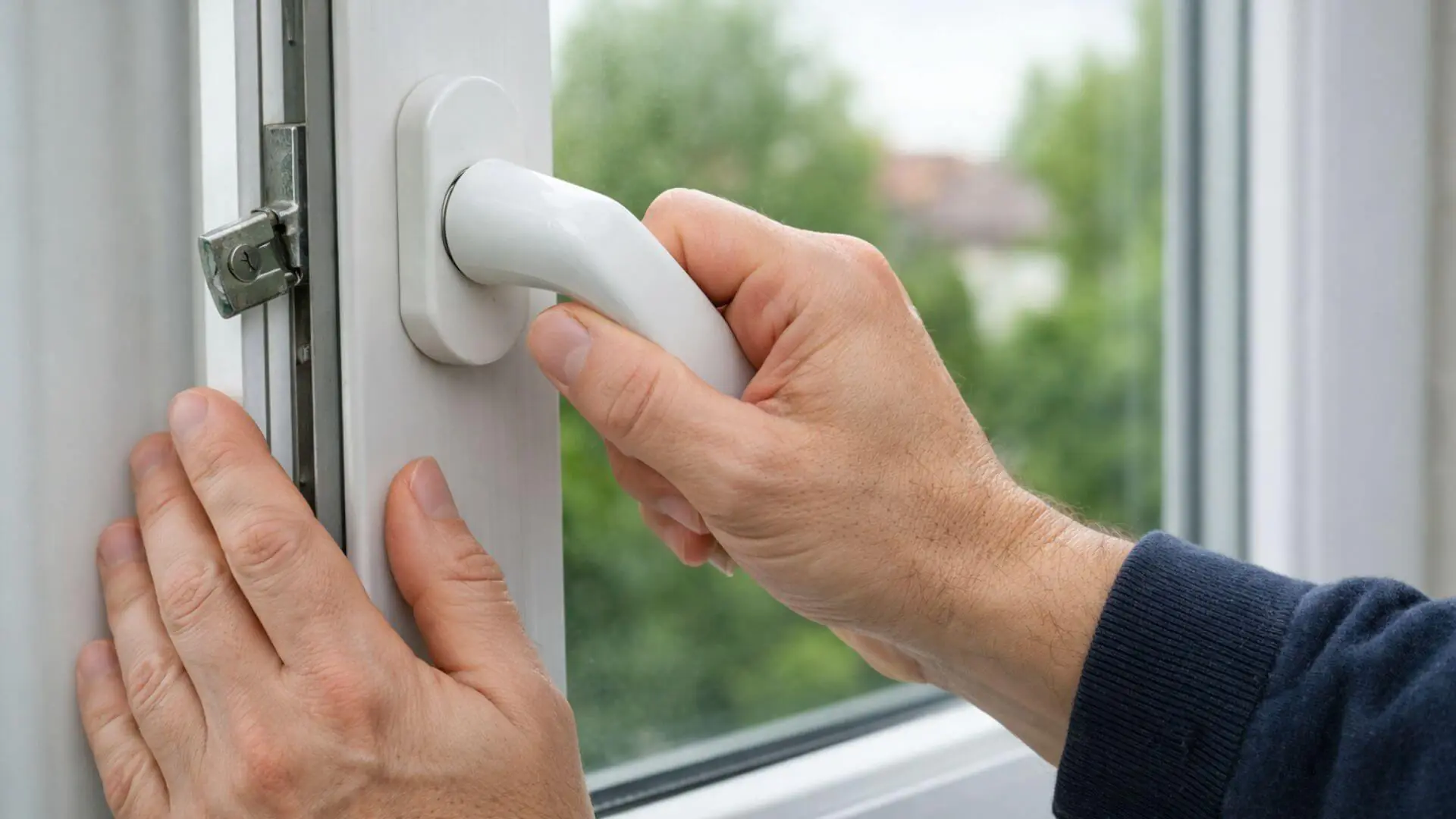
If the handle suddenly requires noticeably more force, sticks or cannot reach the position intended for a particular opening mode, do not force it. The mechanism should be checked, but the symptom alone does not identify the failed component.
The sash rubs or is difficult to close
A sash rubbing against the frame or becoming harder to close may involve sash position, the alignment of cooperating components or a hardware fault. If the window does not close correctly, we discuss the difference between adjustment and repair in our guide to a window that does not close — adjustment or repair.
There is play or unstable sash movement
If the sash moves differently than before, has noticeable play or feels unstable while opening and closing, the position and condition of the components responsible for guiding and locking it should be checked. Play alone does not determine whether adjustment or replacement is needed.
There is visible cracking, deformation or corrosion
A visible crack, permanent deformation or mechanical damage is a reason to inspect the component. Corrosion may also require intervention if it has affected the strength, geometry or correct operation of the part. Surface rust alone does not automatically mean replacement is necessary.
The tilt or micro-ventilation function no longer works correctly
If the tilt or micro-ventilation function no longer engages, the handle will not reach the correct position or the sash no longer operates as expected, the relevant mechanism for that specific hardware system should be checked. The operating behaviour depends on the specific hardware system.
What can you safely check yourself?
Inspect visible components
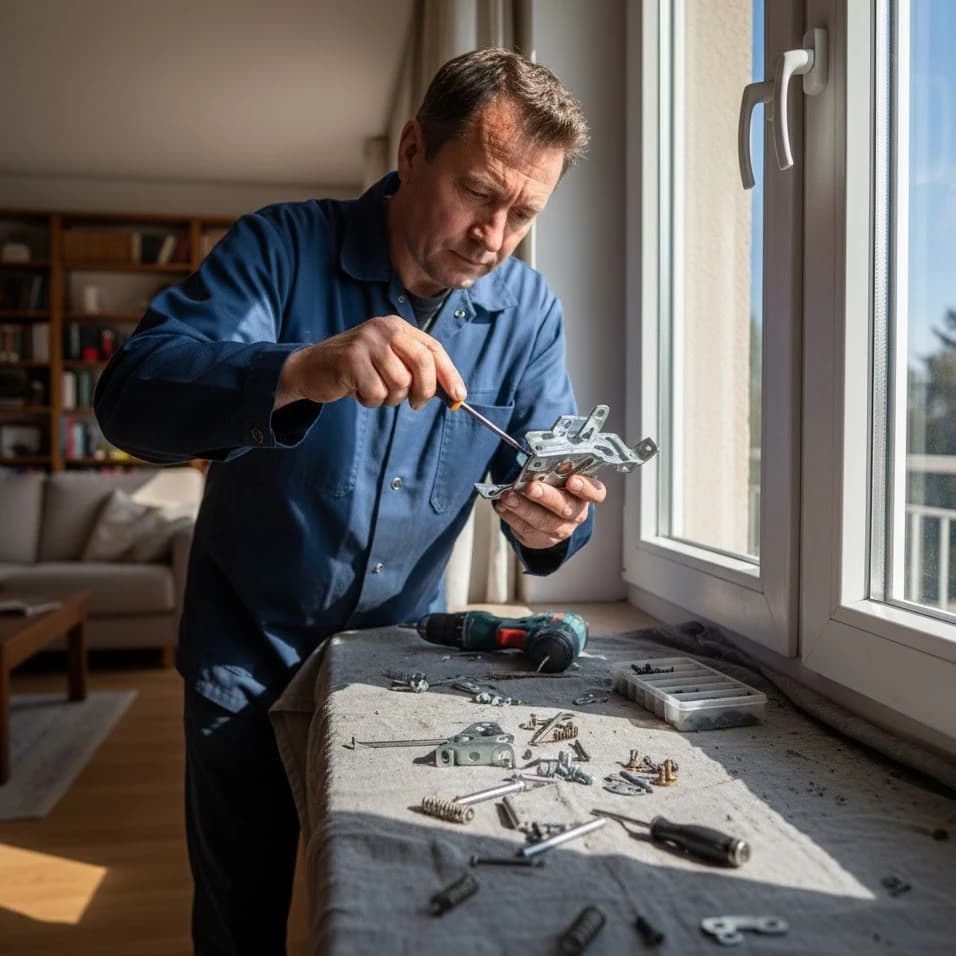
Without dismantling anything, look for visible cracks, bending, missing or loose components and corrosion. Different hardware components can have different designs and functions, so differences in appearance alone do not indicate a fault.
Check the handle and sash without using force
Open and close the window gently without pressing the sash into place or forcing the handle. Look for sticking, a sudden increase in resistance, difficulty reaching the correct handle position, or the need to lift or push the sash to close it.
A stiff handle does not automatically mean a damaged handle. Rubbing does not automatically mean a failed hinge. A draught does not prove that the hardware is damaged, and condensation on the glass is not, by itself, a symptom of hardware failure. Observation helps identify the area to inspect, but it does not replace diagnosis.
Adjustment or hardware replacement — what determines the decision?
When may adjustment be enough?
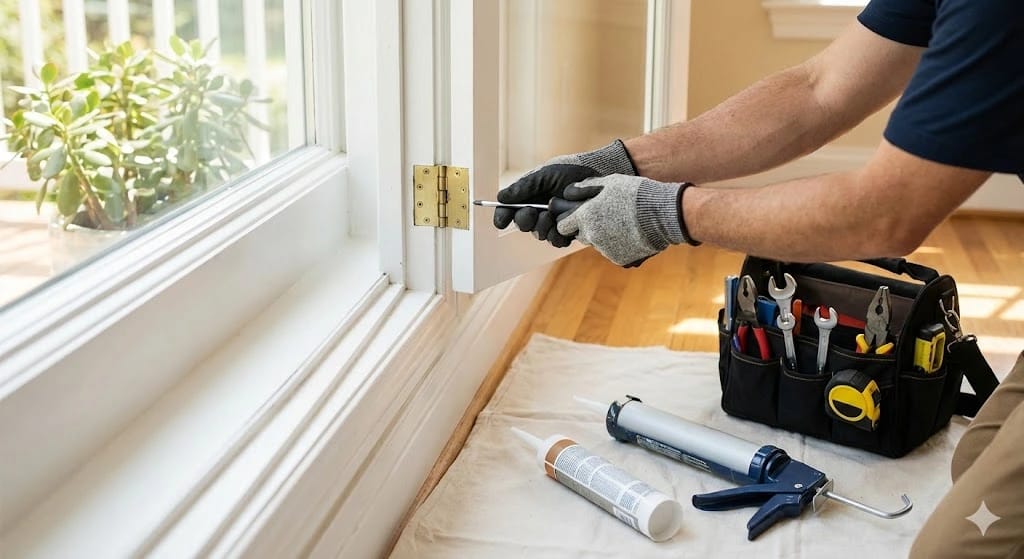
Adjustment may be enough when the hardware is mechanically sound and the problem is caused by sash position or the alignment of cooperating components. The goal is to restore correct alignment and operation without replacing parts that are still serviceable.
If an adjustment is needed, it should be carried out within the adjustment options of the specific hardware system. We cover this topic separately in our guide to 3D window adjustment step by step.
When does a component need to be replaced?
Replacement is considered when a component is cracked, permanently deformed, mechanically damaged, corroded enough to affect its function or no longer performs correctly. Replacement may also be necessary when component wear prevents correct operation from being restored even after proper adjustment.
Why can adjustment not repair a physically damaged component?
Adjustment changes the position or interaction of components. It cannot repair a crack, reverse permanent deformation or restore a worn component to serviceable condition. Repeated adjustment attempts should not replace the replacement of a component that is physically damaged.
Does the entire hardware system have to be replaced?
Window hardware replacement does not always mean replacing the entire system. The scope depends on which component is damaged, the condition of the remaining parts and whether compatible replacements are available.
When is replacing a single component enough?
If the source of the problem has been identified and the remaining hardware is serviceable, it may be possible to replace only the damaged part, provided that a compatible replacement intended for that window construction is available.
When is a broader replacement considered?
A broader replacement may be justified when several cooperating components are damaged or worn, parts for an older system are no longer available, there is no suitable replacement solution or a partial repair cannot restore correct operation.
Why must the hardware system be identified before replacement?
The brand name alone is not enough
The hardware brand alone is not always sufficient for selecting a replacement part. One manufacturer may have several product lines, generations and component versions. The system fitted to the specific window must be identified.
What needs to be checked before selecting a part?
Relevant details can include the component markings, its function, dimensions, mounting arrangement and the configuration of the overall system. A part that looks similar may not be compatible or work correctly with the existing hardware.
What if the original part is no longer available?
In that situation, it is necessary to check whether a compatible replacement part or an approved service solution exists for the system. If no suitable replacement exists, a larger part of the hardware system may need to be replaced. A component from a different system should not be assumed to fit simply because it looks similar.
How can you reduce premature hardware wear?
Cleaning, inspection and lubrication
Accessible components can be cleaned and inspected according to the manufacturer's instructions. Routine maintenance should not involve dismantling the mechanism unless the user documentation specifically allows it.
For some hardware systems, the manufacturer specifies annual or other periodic maintenance of designated points. The scope, interval and lubricant should be matched to the specific system rather than applying one universal maintenance routine to every window.
Adjustment is not a mandatory seasonal ritual
Correctly functioning hardware does not need adjustment simply because the season has changed. Adjustment should be based on a real symptom and the capabilities of the specific system. We discuss seasonal compression separately in our guide to winter–summer window adjustment.
When is it worth calling a window service?
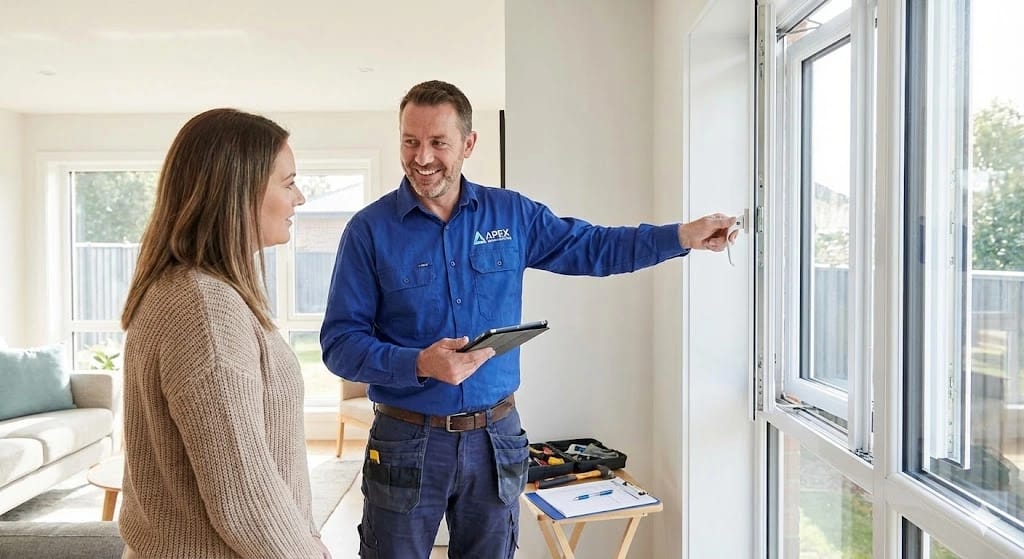
Professional help is worth considering when the handle jams or sticks noticeably, the sash cannot be closed correctly, a component is visibly cracked or bent, there is substantial play, the tilt function no longer works correctly, or it is unclear whether the issue requires adjustment or replacement.
As part of our window repair service, we identify the cause first and then determine the required scope of work. The initial diagnosis and the technician's visit are free of charge.
The key question: adjust or replace?
If the components are serviceable and the issue is alignment, adjustment may be enough. If a specific component is physically damaged or no longer performs its function, repair or replacement may be required. If several parts are affected or compatible replacements are unavailable, a broader hardware replacement may be justified. The decision should be made only after the actual cause has been identified.
Adjustment or mechanism replacement?
If the hardware is complete and mechanically sound and the problem concerns its alignment, window adjustment may be the appropriate direction. If diagnosis confirms a cracked, worn or non-functioning component, the required work may instead include mechanism replacement. The key distinction is the condition of the part: adjustment can correct the position of a serviceable component, but it cannot restore the integrity of a physically damaged one.