Guides on choosing a contractor often repeat the same advice: check credentials, get three quotes, sign a contract. Some of that can be very useful when several windows are being replaced. For a sash adjustment or handle replacement, arranging three separate visits just to compare prices may make little practical sense.
Instead of using one checklist for every job, start with a simpler question: how large is the repair?
The way a professional talks about the specific problem already tells you a lot: do they first try to understand it, or do they immediately sell a ready-made solution?
Before you call — what is worth observing yourself
You do not need to know what has failed. A few observations are enough to help the technician understand the symptom. Diagnosis comes later.
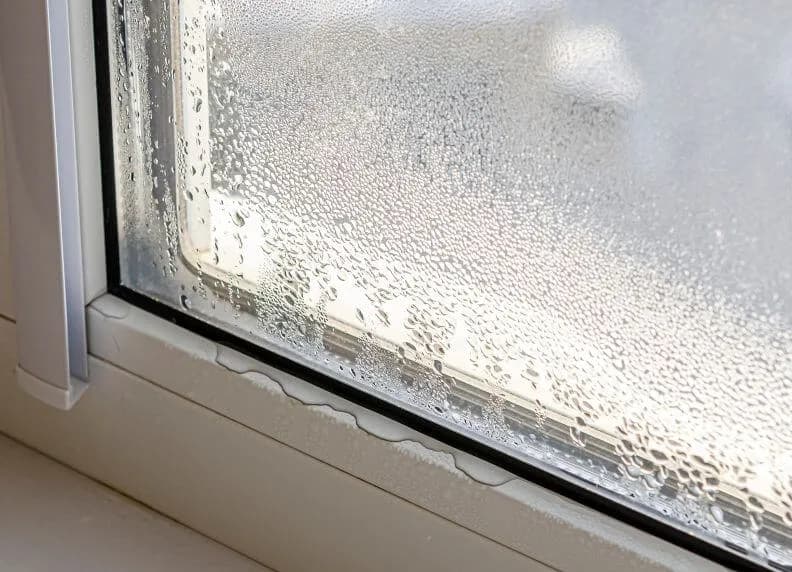
— which part is causing the problem: handle, sash, seal, glass or another area,
— when the problem started and whether it appeared suddenly or developed gradually,
— whether it happens all the time or only under certain conditions,
— roughly how old the window is and whether any work was carried out on it before the problem appeared.
This does not replace an inspection, but it lets the conversation start with a specific symptom rather than the general question, “how much does a window repair cost?”.
Not every repair needs the same quoting process
Adjusting one sash, replacing an ordered insulated glass unit and replacing several complete windows are three different situations. The larger the scope, cost and number of unknowns, the more should be clarified before work starts.
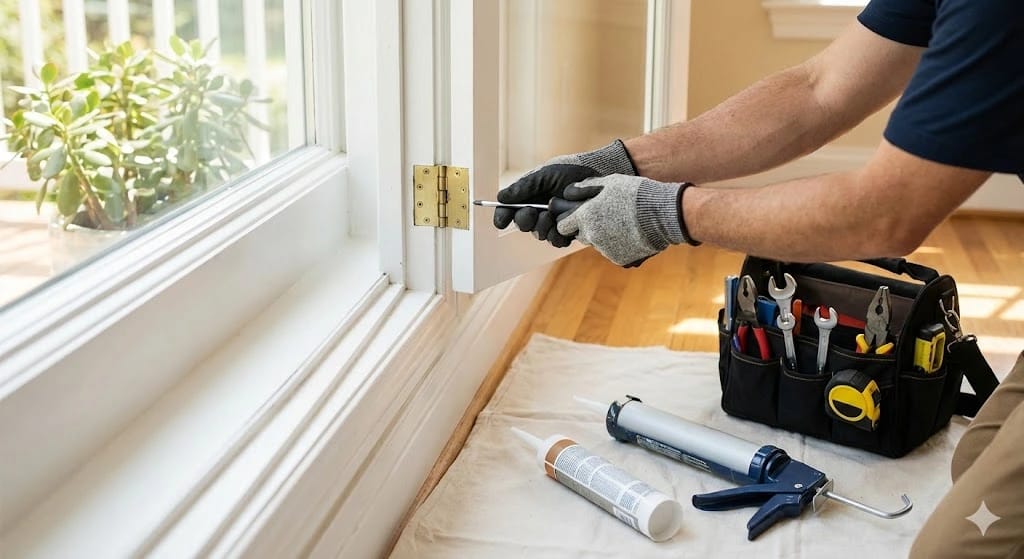
A simple service job. A sash adjustment, handle replacement or another small job that can be defined after inspection usually does not require an elaborate contractor-selection process. The important points are what will be done, how much it will cost and how payment will be handled.
A repair involving parts or a larger scope. The situation changes when a specific component must be ordered, measurements are needed or the technician has to return for a second stage. This may apply to an insulated glass unit, an unusual hardware component or several windows. In that case, the quote should explain not only the price, but also what it includes, which parts will be ordered and what could change the cost.
Window replacement. Full replacement requires more detailed arrangements: the actual products, dimensions, installation, any additional work, timing and payment terms. If you compare several offers, compare what is behind the figures, not only the totals.
Two offers at a similar price do not necessarily cover the same scope. A lower price is not automatically the better offer if some work has simply been left out.
The customer does not need to know which category the problem belongs to. That is exactly why the professional should not decide on the solution from a short description alone. A symptom that sounds like a reason to replace a window may have a repairable cause — but the reverse can also happen: a seemingly small issue may require an ordered part or a broader repair.
What should a good quote explain?
An indicative cost or a price for a typical service can often be given over the phone. The final amount, however, depends on what actually needs to be done to the specific window. The same symptom — such as difficult closing — can have different causes and require different work.
For a larger or less obvious repair, it helps if the quote makes at least three things clear:
— exactly what work will be carried out,
— the price for the agreed scope,
— what could cause that price to change.
A description such as “window repair” says very little. It is much more useful to know what the quote includes and that any additional work will be discussed before it is carried out. This shows where the current quote ends.
One question worth asking: “What could change this price?”
The figure alone does not always tell you whether a quote is clear. For a less obvious repair, ask: “What could make the final cost different?”
A good answer sets the boundaries of the current quote. The professional may explain that the stated price covers the agreed scope and that if additional damage is found during the work, any further work and cost will be discussed first.
That tells you more than simply seeing the lowest price. You know not only what the current option costs, but also where the uncertainty lies.
Signs that are worth questioning or comparing
No single feature automatically proves whether a contractor is good or bad. But some situations justify asking for more detail:
— a final price given without inspection or basic questions even though the scope is not obvious,
— pressure to decide immediately before the scope and cost have been clearly explained,
— no clear answer about what the stated price actually includes,
— a request for a significant advance without a clear explanation of what it is for or how it will be confirmed,
— a categorical recommendation to replace the whole window before its condition has been assessed.
One signal does not necessarily decide the quality of the contractor. But if you cannot get a clear answer about the scope, price or payment method, comparing the proposal with another one is sensible.
Contract and payment — proportional to the job
The greater the value and complexity of the work, the more of the agreement is worth keeping in a durable form. For a small service job, the important thing is to make the scope, price and payment method clear. For a repair involving ordered parts, it is also worth agreeing what any deposit relates to and what happens if the scope changes.
For full window replacement, the exact products, installation scope, additional work, timing and payment terms matter as well. The point is not paperwork for its own sake, but making sure both sides understand the job in the same way.
Cash payment by itself does not say whether a contractor is reliable. What matters is that the payment method is clear and the payment is appropriately confirmed.
What is actually worth remembering
A good window professional does not have to be judged by the number of certificates shown on a website. What matters more is whether they separate the symptom from the diagnosis, define the scope clearly and explain when the quoted price could change.
A simple adjustment needs only a few clear arrangements. A repair involving ordered parts needs more. For full window replacement, compare the complete scope of each offer rather than only the final price. The larger the job, the more should be clear before work begins.
If you want to see which faults can be addressed without replacing the whole window, see our window repair and window adjustment pages. The initial diagnosis and the technician’s visit to assess the scope of work are free of charge.