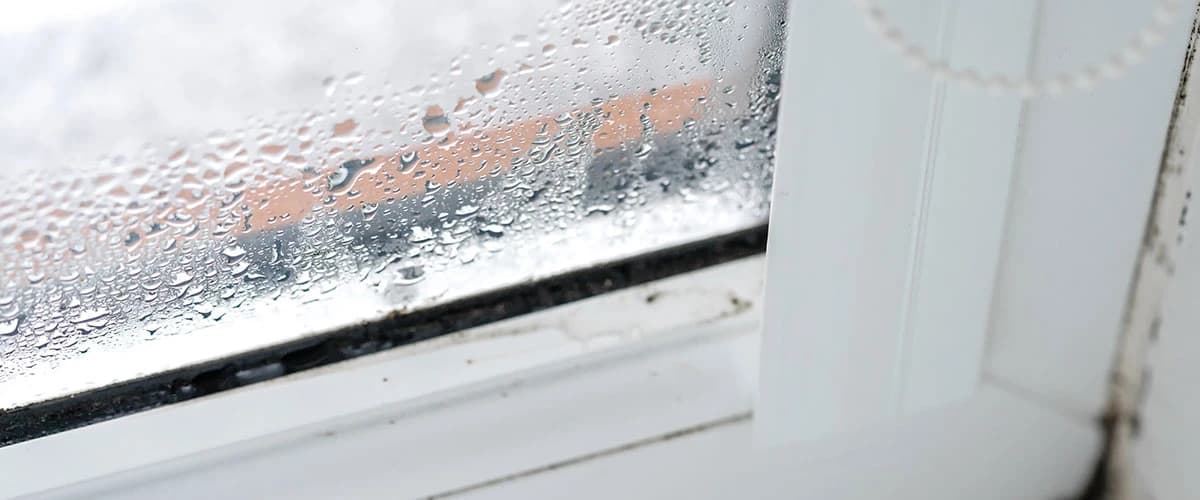
Condensation on the room-side surface, moisture on the exterior glass and mist trapped between the panes can look similar, but they represent different situations. In the last case, the key point is that the mark cannot be wiped from any accessible glass surface.
If the mist is genuinely between the panes of the sealed glass unit, the problem concerns the unit itself rather than moisture settling on its surface. This does not necessarily mean the whole window must be replaced — the glass unit and the construction in which it is installed should be checked first.
Surface condensation or condensation between panes — how to tell the difference
If the mark disappears when the room-side surface is wiped, it is on the inner surface of the glass. If that surface is dry, the exterior side should be checked as well, provided it can be done safely.
When both accessible surfaces are dry but the mist remains visible, it may be inside the sealed glass unit. Multi-pane units can contain more than one cavity, but the practical rule for the user remains the same: moisture trapped inside the unit cannot be reached during normal cleaning.
This distinction matters because surface condensation and moisture inside the unit have different causes and require different responses. More information on the first issue is available in our guide to condensation and moisture on windows.
Why moisture appears inside a sealed glass unit
A sealed glass unit consists of at least two panes separated by a spacer bar. The edge of the unit is sealed so that the space between the panes remains separated from the surroundings. In insulating glass units, this space may be gas-filled.
When the unit loses seal integrity, conditions inside the cavity change and moisture may become visible as mist, droplets or internal deposits. Because the mark is beyond the accessible glass surfaces, it cannot be removed during normal window cleaning.
The appearance of the mist alone does not show exactly where the unit lost its seal. For the next step, the important point is confirming that the moisture is genuinely inside the glass unit.
Can mist between the panes disappear on its own?
The visibility of the mist can change. Under certain conditions it may become weaker and later appear more clearly again.
If the cause is loss of seal integrity, a temporary disappearance of visible condensation does not remove the problem. The glass unit does not regain its lost seal as a result.
Assessment therefore should not rely only on whether the mist is visible on the exact day of the visit. Photos taken earlier, when the symptom was clearer, can also be useful.
Does condensation between panes mean replacing the whole window?
No. If the problem concerns the sealed glass unit, this does not automatically mean replacing the frame and sash. The glass unit is one component installed within the window construction.
If the sash, profile and other components are in suitable condition and the correct unit can be selected and fitted, the glass unit itself can be replaced.
More information about this work is available in our guide to glass unit replacement.
Can a fogged glass unit be cleaned and resealed?
The space between the panes is part of a factory-made sealed insulating glass unit. If loss of seal is confirmed, the usual remedy is not to dismantle the unit while it remains in the window, wipe the inner glass surfaces and reseal it on site.
This is where the diagnostic question of “mist between the panes” ends. Selecting a replacement unit, changing glazing performance where compatible, measurement and the replacement process itself are covered separately in our guide to insulating glass unit replacement.
What can be checked safely before a visit?
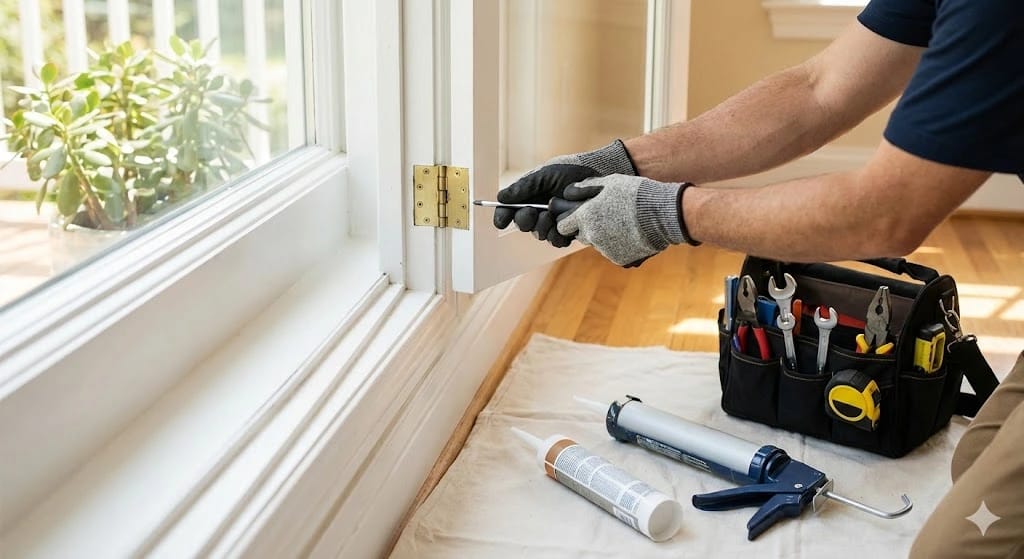
Before reporting the problem, it is useful to establish which surface the moisture is on and take a photo of the symptom. This does not require dismantling any part of the window.
First check the room-side glass surface. If the mark cannot be wiped away, the exterior surface can also be checked, provided access is safe.
If the mist or droplets remain visible while the accessible surfaces are dry, a photo of the problem and of any readable markings on the spacer bar may be useful.
Glazing beads should not be removed and the glass unit should not be taken out merely to confirm where the condensation is located.
What to do after confirming moisture between the panes
If the mark cannot be wiped from any accessible surface and the moisture is confirmed inside the sealed unit, the next step is to check the unit and the existing window construction. With a functional sash and profile, a suitable replacement glass unit can be selected without replacing the whole window.
Insulated glass unit replacement is part of our glass replacement service and the broader window repair offering. Coverage includes Warsaw, Krakow, Poznan and Wroclaw. On-site diagnosis and quote are free of charge. If the window also has a draught, diagnose that symptom separately; it is not an automatic consequence of a failed glass-unit seal.