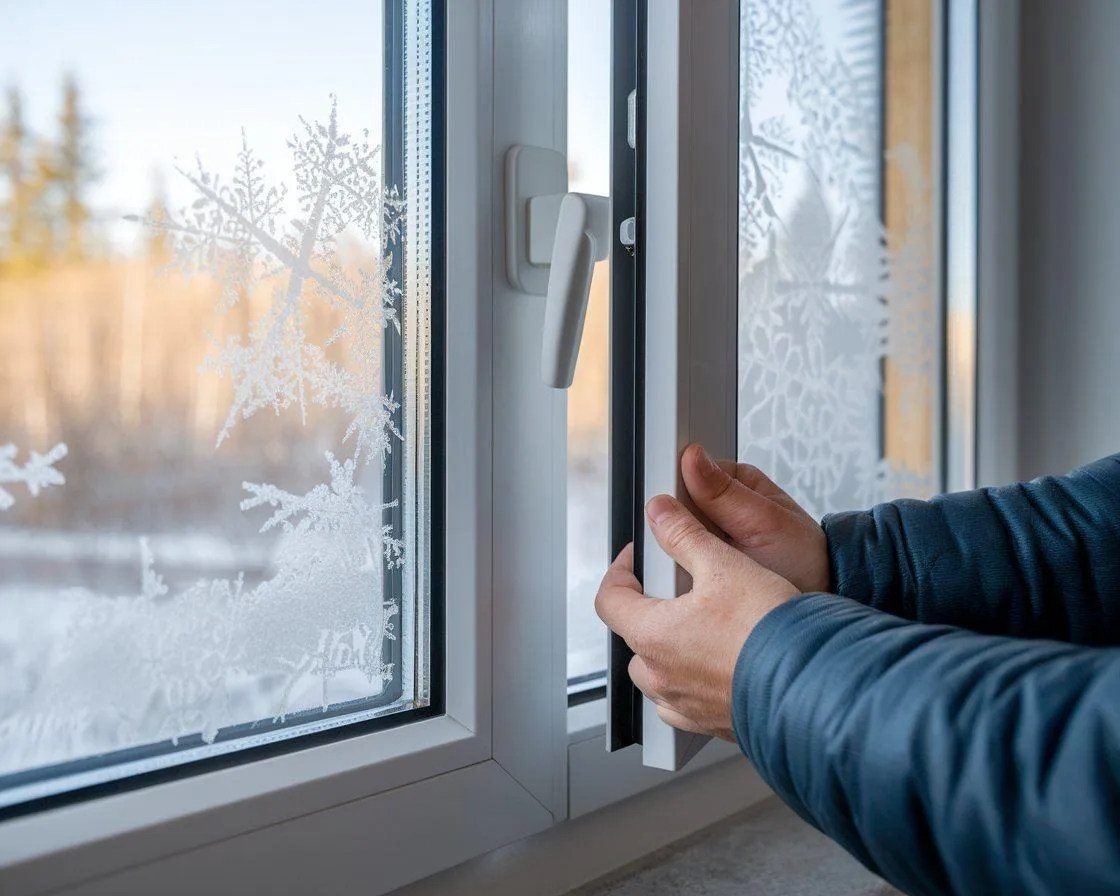
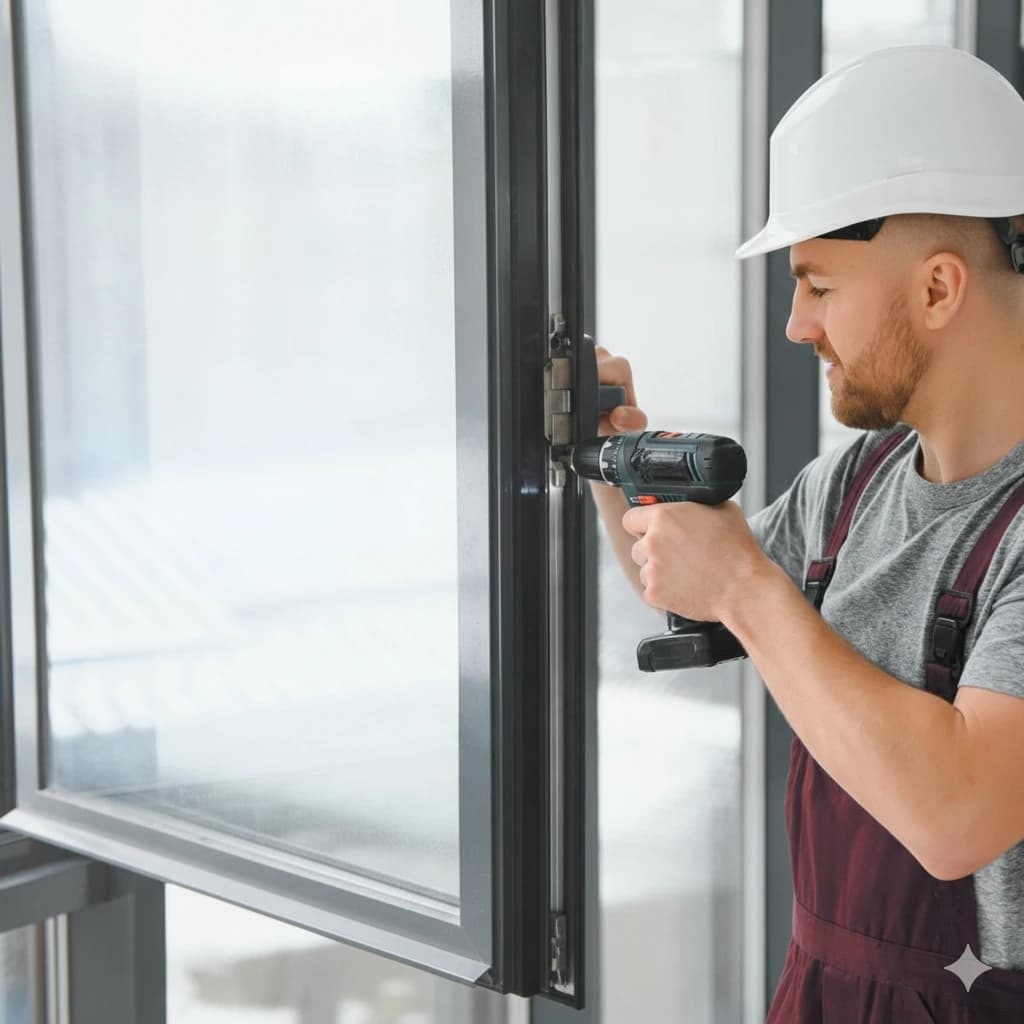
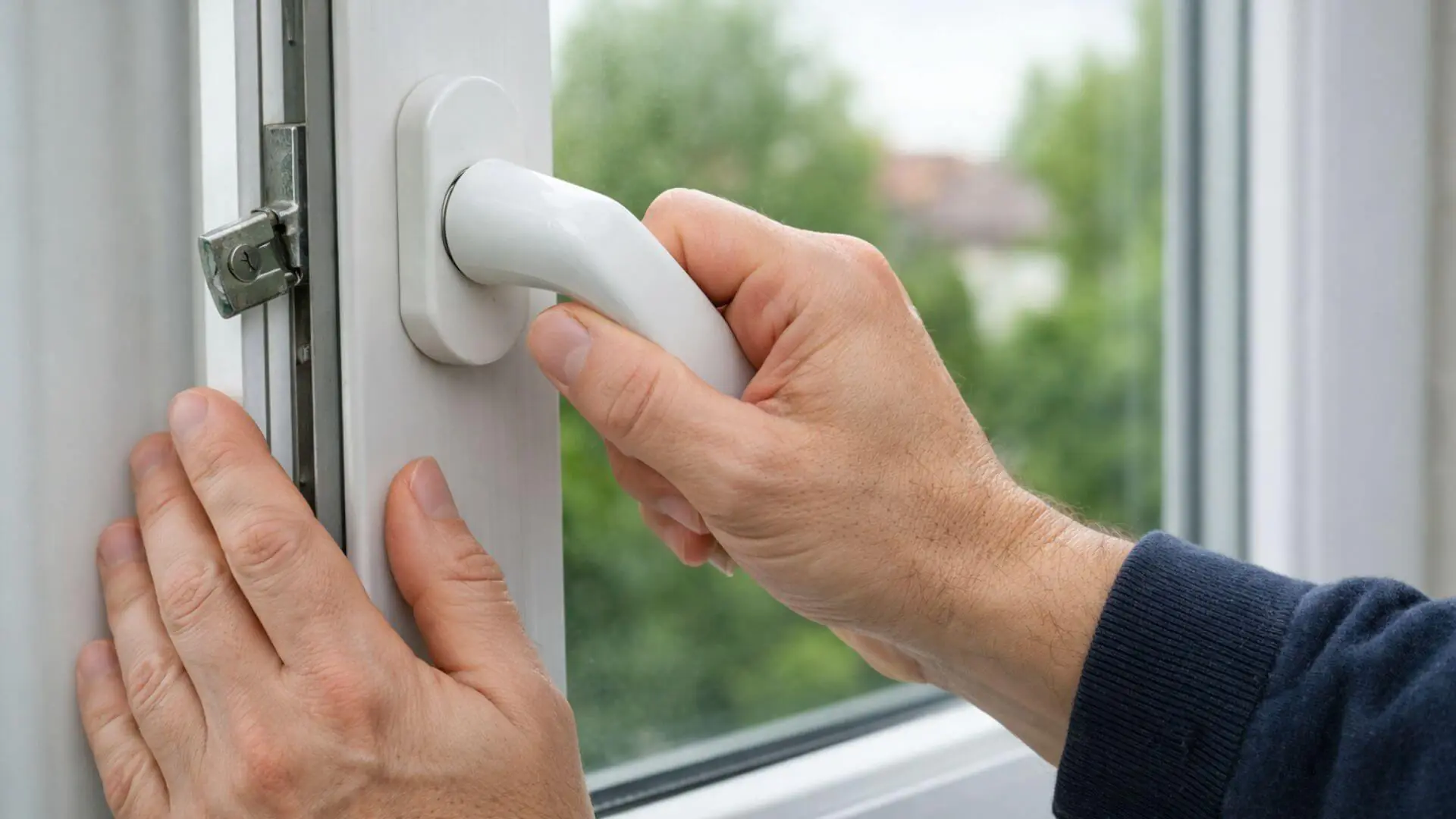
A window that needs more force than before does not identify the cause on its own. Resistance may appear when turning the handle, when the sash starts to move away from the frame, at one specific point during opening, or throughout the sash movement. Each situation calls for a slightly different check.
Continuing to use a window despite clear resistance can place additional load on parts of the mechanism, so it is better to identify the cause before the problem becomes more pronounced. This does not mean that stiffer operation automatically indicates a serious fault or the need for replacement parts.
Dirty or insufficiently lubricated hardware
Dirt or insufficient lubrication of moving hardware parts can increase mechanical resistance. One sign may be a stiffer handle or noticeably greater resistance while locking and unlocking the sash.
Basic cleaning and maintenance of moving parts should follow the hardware manufacturer's guidance and use products intended for the specific mechanism. If maintenance does not change the way the window operates, the cause may lie elsewhere.
Compression and sash setting
Incorrect sash alignment or adjustment of locking components can increase resistance during opening and closing. Some hardware systems allow compression adjustment, but the available range and method depend on the specific mechanism.
The fact that a window is harder to open at the beginning of its movement is not enough to conclude that compression is excessive. Sash position, the interaction of locking points and the condition of the seal also need to be checked.
Hardware settings should not be treated as a universal “summer mode” or “winter mode”. Adjustment should follow the actual operation of the specific window rather than the season.
When the sash rubs against the frame
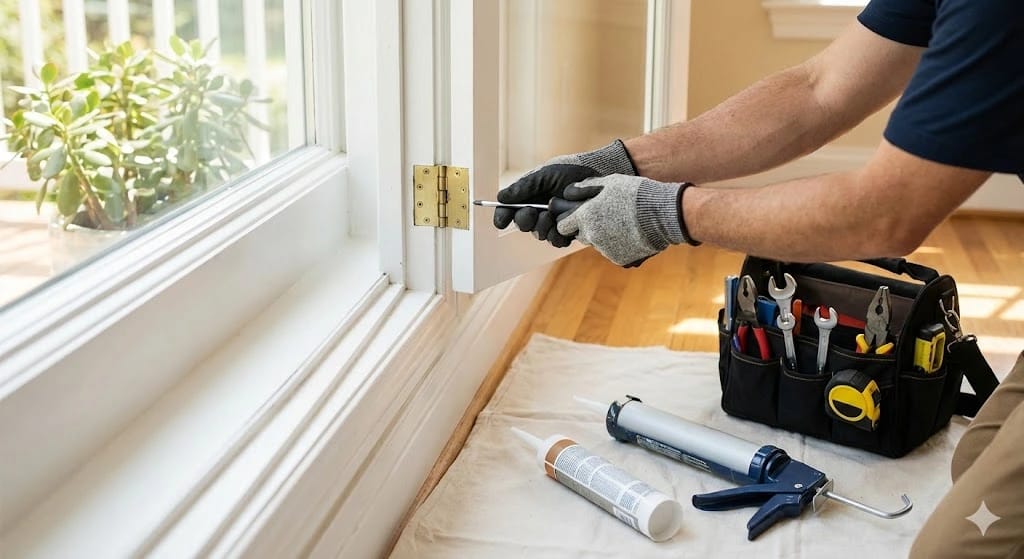
If resistance occurs because the sash touches the frame or threshold, the reason for the change in position needs to be identified. Possible causes include hardware adjustment, sash geometry, the condition of a particular mechanism component, or another change affecting the sash position.
The point where the sash rubs does not by itself show that a hinge is worn. Likewise, the age of the window does not determine that a hinge needs replacement.
If the problem comes from sash alignment, adjustment of the relevant hardware components may be the solution. Where there is mechanical damage, the scope of the repair depends on the specific system and damaged component.
Timber windows — when wood moisture matters
Wood changes dimensions as its moisture content changes. If an element is exposed to elevated moisture or its protective coating is damaged, the sash may temporarily operate differently than before.
If the resistance genuinely comes from increased moisture content in the wood, it may decrease as conditions change. This does not mean that every timber window that becomes stiffer after a wet period requires corrective carpentry work.
The condition of the wood, protective coating and sash geometry should be assessed first. Corrective carpentry work is appropriate only when the problem comes from persistent geometry rather than a temporary change in wood moisture.
More detail is available in our guide to timber window repair.
Can temperature and humidity change how a window operates?
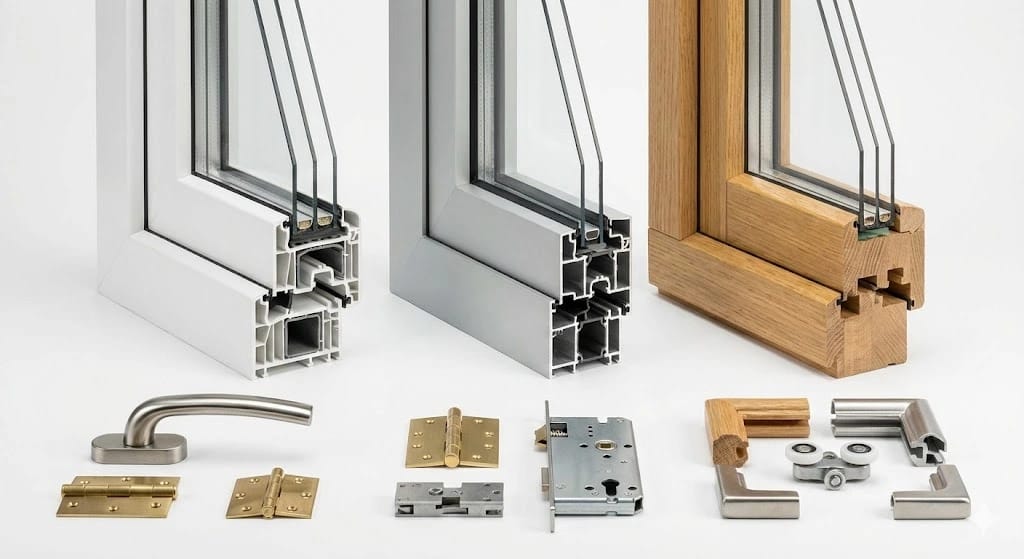
Yes. Environmental conditions can affect window materials and operation. Plastic profiles change dimensions with temperature, wood responds to changes in moisture content, and operating conditions can also affect how some window components behave.
Seasonal variation is only a diagnostic clue. If resistance mainly appears during hot weather, after periods of high humidity, or at very low temperatures, the pattern is worth noting, but it should not automatically be attributed to a single cause.
The same symptom can result from sash alignment, geometry, hardware, the seal, or several factors at once.
What to observe before diagnosis
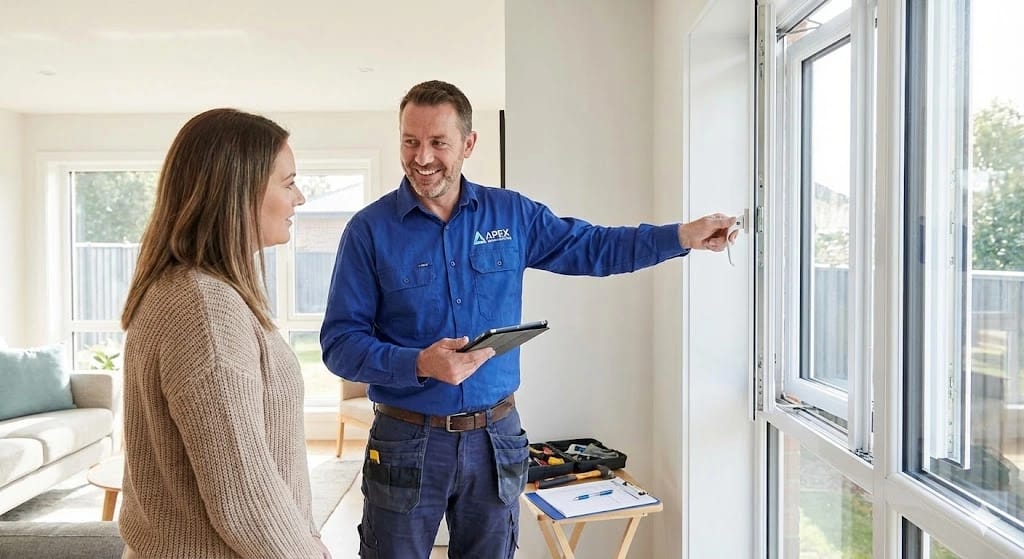
Before a technician visits, note exactly how the window behaves. The aim is not to diagnose it yourself, but to provide information that helps locate the source of resistance.
When resistance appears. Is the handle itself stiff, or does resistance start only when the sash moves?
Where it rubs. Does the sash touch the frame or threshold at one specific point?
How the problem behaves. Did the resistance appear suddenly or build gradually? Is it constant, or does it change with conditions?
Sounds. A grinding, knocking or other new sound is worth noting, but the sound alone does not identify a specific fault.
Window history. It is useful to know whether the problem started after an adjustment, repair, renovation or another change.
These observations are more useful than trying to assign the symptom yourself to a particular hinge, compression setting or hardware component.
What you can do yourself
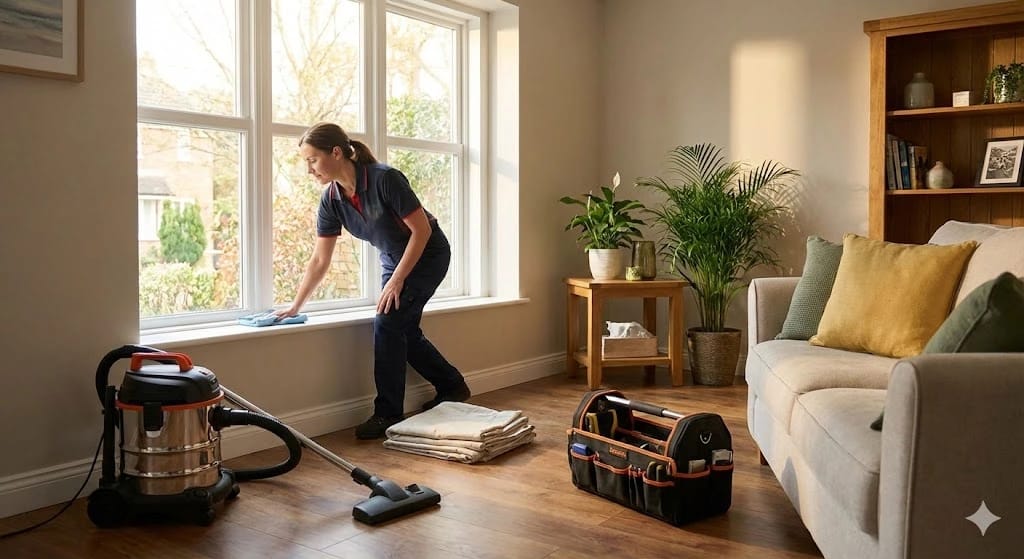
Without adjusting the hardware, you can carry out basic cleaning and maintenance of moving parts in accordance with the manufacturer's instructions and check whether there is visible dirt or an obstruction in the sash path.
If the problem requires changing the sash alignment, adjusting locking points, working on hinges or replacing a mechanism component, the actual cause of the resistance should be established first. Random adjustment can alter the interaction of several parts and make later diagnosis more difficult.
When not to keep forcing the window
A closer assessment is warranted when:
— the sash clearly rubs against the frame or threshold;
— the handle or sash requires noticeably more force than before;
— movement produces a metallic grinding, knock or another new sound;
— the window sticks at the same point every time it is opened;
— basic maintenance does not change how the window operates;
— resistance increases quickly or appeared after an earlier adjustment or repair.
This does not automatically mean a serious failure. The point is not to keep forcing the sash while the source of the resistance is unknown.
As part of our window adjustment and window repair services, we match the scope of work to the actual condition and cause of the problem. The initial diagnosis and technician's visit are free within the area we serve.
If the main problem is that the sash does not close correctly, see also our guide window does not close — adjustment or repair.
First identify where the resistance comes from
A window becoming harder to operate does not point to one specific fault. The cause may lie in the mechanism, sash alignment or geometry, the seal, or — for timber windows — dimensional changes in the wood.
That is why it is better not to start with random compression or hinge adjustment. First identify when and where the resistance occurs.
Only then can you decide whether basic maintenance is enough, adjustment is needed, or a specific component requires repair.