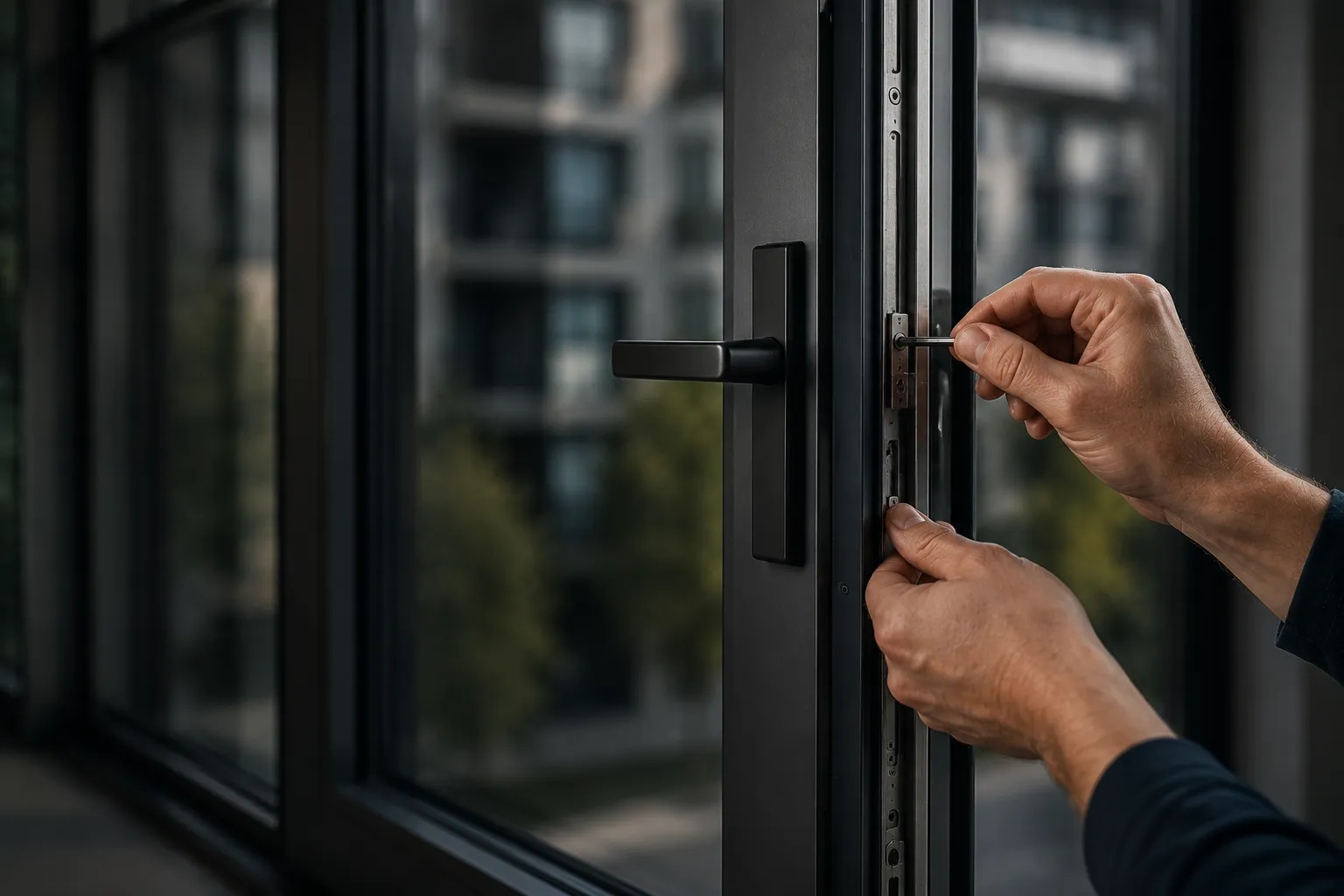
An aluminium window that starts rubbing against the frame, closes unevenly or operates with greater resistance may need correction of the sash or hardware setting. This does not mean every aluminium window is adjusted in the same way.
The adjustment range depends on the specific profile system, hardware, opening type and hinge-side construction. Aluminium windows can use visible hinges or concealed hardware systems. Before adjustment, identify the construction and the symptom, then determine whether the problem is within the adjustment range or requires repair.
Symptoms that make it worth checking the window setting
A change in window operation can indicate a need for adjustment, but the symptom alone is not a diagnosis. Start by identifying where the problem occurs and how the sash behaves.
| Symptom | What to check |
|---|
| The sash rubs against the frame | Sash position relative to the frame and the condition of hinge-side components. |
| The gap between sash and frame is uneven | Sash setting and its position relative to the frame. |
| The handle operates with greater resistance | Interaction of locking components, sash setting and mechanism condition. |
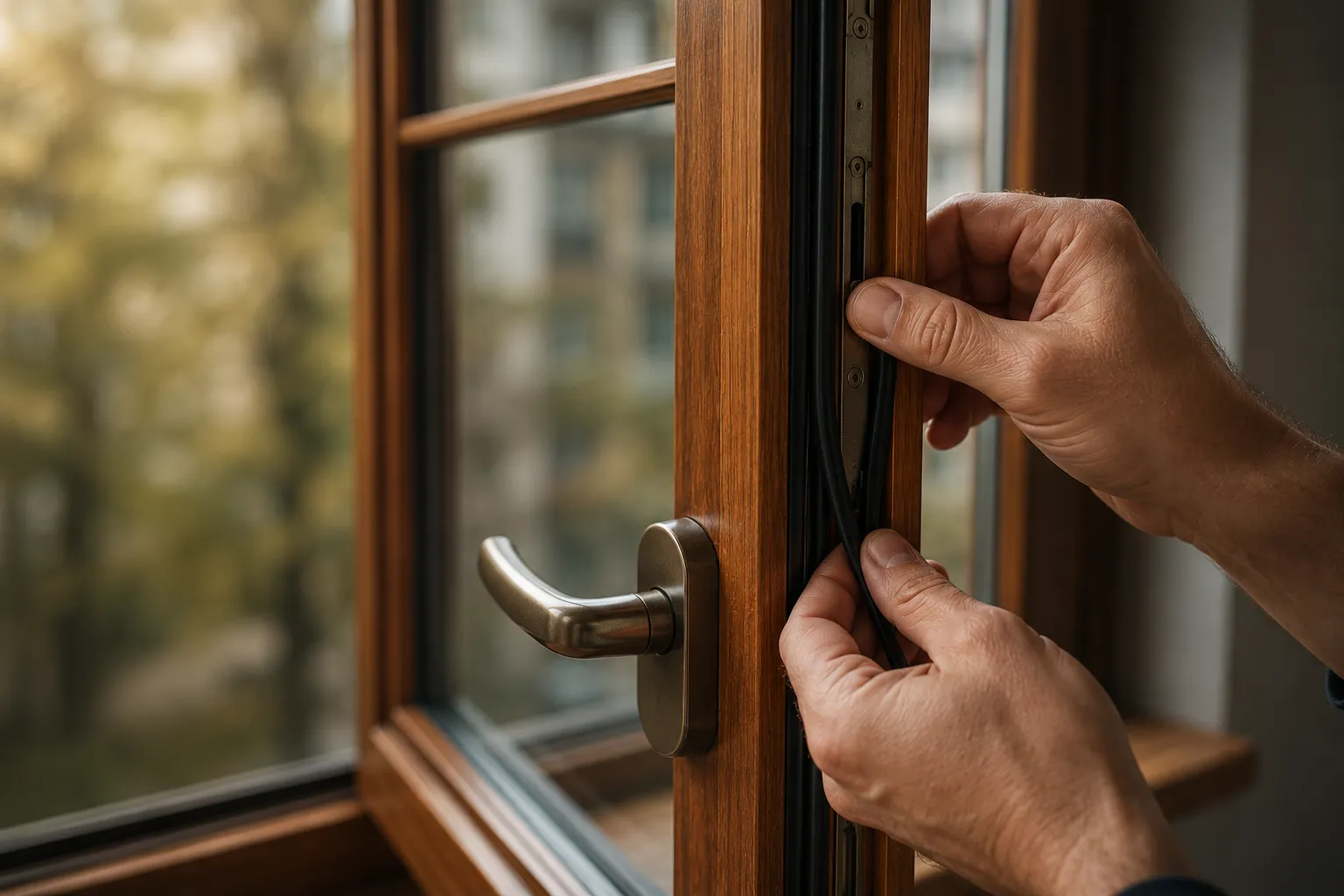
| A local draught is felt with the window closed | Sash contact, gasket condition and the location through which air is entering. |
| The sash or hinge has obvious play | Hardware condition before further adjustment. |
Adjustment can correct the setting of a sound mechanism, but it cannot repair a damaged component. If there is play, jamming or visible damage, assess the hardware condition first.
Why does the hardware system matter when adjusting an aluminium window?
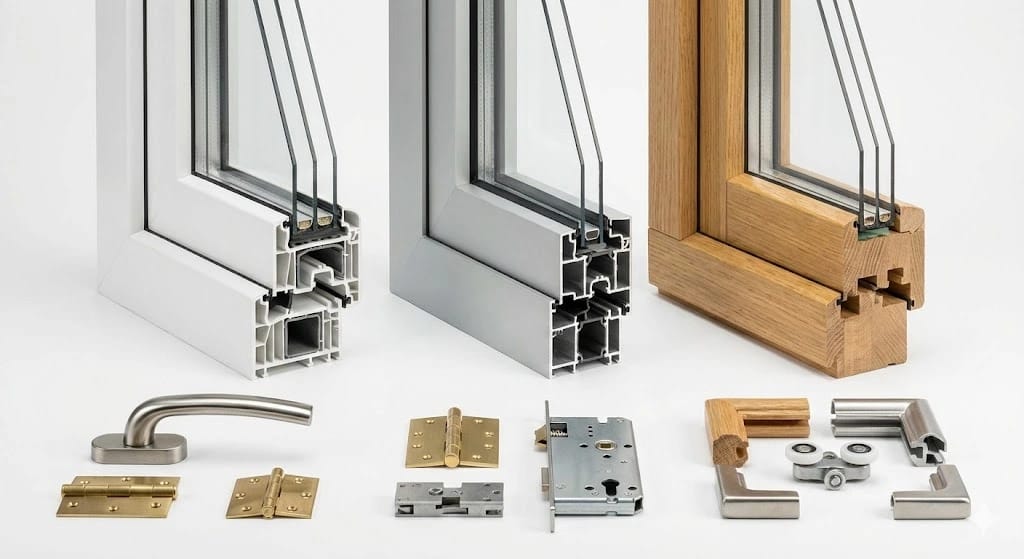
“Aluminium window” does not describe a single mechanism. Depending on the manufacturer and construction, there can be different opening types, hinge-side designs and systems with visible or fully concealed hardware.
The location of adjustment points and the available correction range can also differ. Instructions written for one aluminium window should therefore not automatically be applied to another. Before using tools, identify the hardware manufacturer or series and refer to documentation for that system.
What can be adjusted in an aluminium window?
Depending on the hardware design, adjustment may include sash position relative to the frame and the setting of components that interact during closing. The exact possibilities depend on the system; do not assume that every window has the same adjustment points.
If the sash rubs in only one place, this does not automatically mean the nearest hinge should be adjusted. The cause may be the position of the entire sash or the interaction of several hardware components.
Sash position relative to the frame
Correction may involve sash height or lateral position. This can be relevant when the sash starts rubbing against the frame, gaps become uneven or closing components no longer interact as they did before.
The hinge side
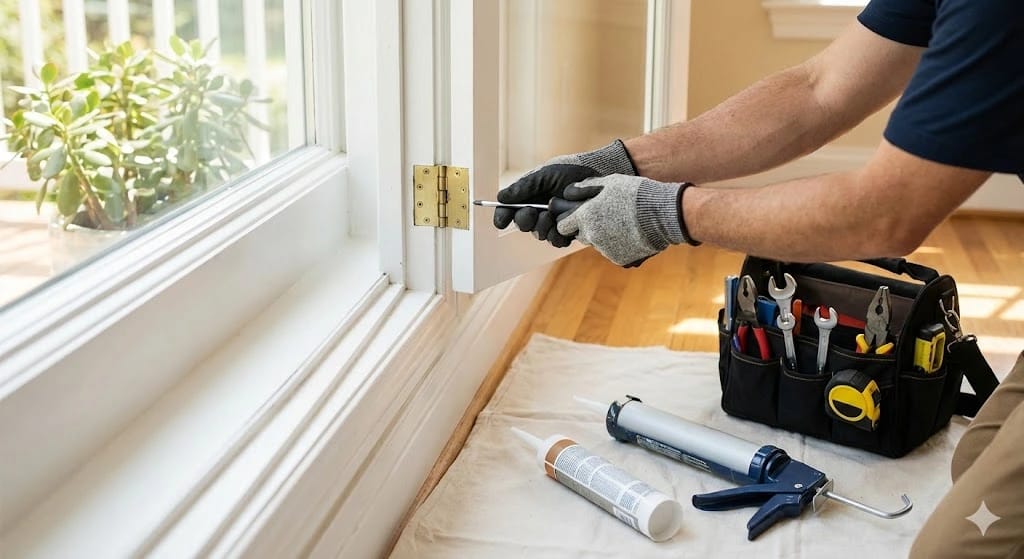
Depending on the system, some corrections are made at hinges or other hinge-side components. Aluminium window hinge adjustment is not identical in every solution, so the specific mechanism should be identified before changing a setting.
Locking components and sash contact
In some systems, corrections may also concern the interaction of locking components and settings that affect sash contact. This does not mean every draught or increase in handle resistance should be addressed by increasing compression. First establish whether the problem actually comes from the hardware setting.
If air is entering not between the sash and frame but around the connection between the frame and the wall or sill, hardware adjustment will not remove the cause. In that case, the source of the leak should be sought outside the window mechanism.
Visible and concealed hardware — why can the adjustment method differ?
Depending on the construction, some hinge-side components may be visible or accessible when the sash is opened. In concealed systems, these components are largely integrated into the sash and frame, so access and adjustment can differ.
Do not look for adjustment points using instructions written for visible hinges if the particular window has concealed hardware. Documentation for the correct system is especially important in this case.
What should you check before adjusting an aluminium window?
Before attempting any work, identify the profile-system manufacturer or designation where possible, the hardware manufacturer or series, the opening type and the exact symptom. Markings may be visible on mechanism components after the sash is opened, although their location depends on the system.
After identification, check the manufacturer's instructions and confirm which components are intended for adjustment. Documentation for the specific solution takes priority over a general internet guide. For some systems, the manufacturer may specify that particular adjustment work is to be carried out by qualified personnel.
If adjustment is provided for by the manufacturer — how can you reduce the risk of error?
If the documentation permits adjustment and the correct point has been identified, make corrections in small steps. Check sash operation after every change rather than altering several settings at the same time.
Before starting, take a photo of the initial position of the adjusted component. If a correction causes greater resistance, new rubbing or worse mechanism operation, do not continue changing settings by trial and error.
Every mechanism has an intended adjustment range. If a component reaches the end of that range, offers unusually high resistance or correct alignment would require a large correction, do not try to compensate by turning the adjuster further or applying more force.
When is adjustment not enough?
Adjustment and repair are not the same thing. Adjustment changes the setting of sound components within the range intended for the specific system. If a component is cracked, bent, excessively loose or does not operate correctly, repair or replacement may be required.
DIY adjustment should also stop if the sash has obvious play, the mechanism jams, a small correction makes the problem worse or the adjustment range is reached without improvement. We discuss these symptoms in more detail in our guide to common aluminium window problems.
Maintenance of aluminium window hardware
The method and frequency of maintenance should follow the recommendations for the specific hardware system. There is no single inspection interval or maintenance product suitable for every construction.
Maintenance may include checking component fastening and operation, cleaning, and lubricating points for which the manufacturer specifies such servicing. Lubricants and cleaning products should not be chosen at random; check which products are approved for the system, seals and surface finish.
Is aluminium window adjustment different from PVC window adjustment?
The objective can be similar: restoring correct sash position and interaction between mechanism components. The frame material alone, however, is not enough to determine adjustment points, direction or range. The hardware system and the construction of the particular window are decisive. A similar symptom in a PVC and an aluminium window therefore does not mean adjustment is performed in the same place or in the same way.
If the problem concerns a PVC window, we explain separately how to adjust a PVC window. This avoids transferring instructions for one construction to another.
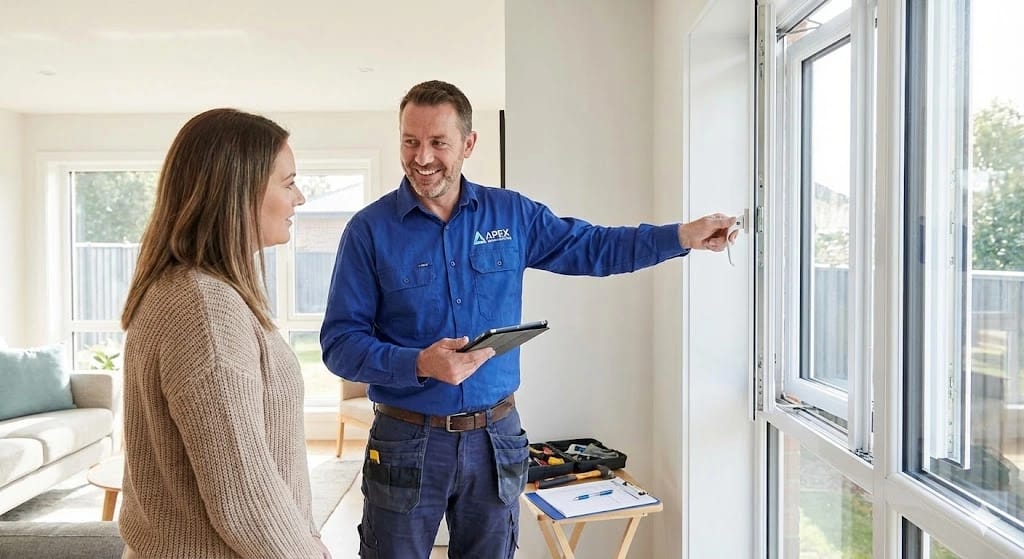
When is professional aluminium window service worth considering?
Aluminium window service is worth considering when the system or adjustment points cannot be identified clearly, the mechanism has play or visible damage, and also when the window has concealed hardware but the user does not have instructions for the correct system or cannot identify its adjustment points. This also applies where the manufacturer specifies that the particular work should be performed by qualified personnel.
If adjustment carried out in accordance with the instructions does not solve the problem, professional diagnosis is worth considering. We identify the cause and determine whether adjustment is enough or window repair is needed. The initial diagnosis and technician's visit are free within the area we serve, and we explain the cost of the required work before it begins.
With an aluminium window, identify the system before adjusting
There is no single adjustment instruction suitable for every aluminium window. The key is to identify the hardware system, the symptom and the correction range intended by the manufacturer. Adjustment can restore the correct setting of a sound mechanism; if the problem comes from a damaged component, repair is needed rather than further turning of adjusters.
When the problem goes beyond aluminium window adjustment
If identifying the system shows that a component is damaged rather than simply misadjusted, the appropriate next step is aluminium window repair. When several symptoms occur together or the cause is unclear, a broader window service can be the starting point. This keeps adjustment as a correction for a sound mechanism, rather than treating it as a universal answer to every aluminium-window fault.