Lubricated the window hardware, only for the window to feel stiff again later? Adding more lubricant is not always the answer. It is worth checking not only the lubrication itself, but also dirt, product choice, sash alignment and the condition of the mechanism. When sticking returns, the key question is where the resistance is actually coming from.
Why can window hardware still stick after lubrication?
Lubrication reduces friction, but it cannot remove every cause of stiff window operation. If old lubricant, dust or other debris remains on accessible parts of the mechanism, adding another layer of product may not provide lasting improvement.
A similar symptom can occur when the sash is not correctly aligned and parts of the mechanism meet additional resistance as the window closes. Lubrication may make movement easier for a while, but it will not correct sash alignment.
The condition of the mechanism itself also needs to be considered. If a component is visibly deformed, damaged or has excessive play, lubricant alone will not restore normal operation.
If the window feels easier to operate for a while after lubrication but the resistance later returns, that does not automatically mean it needs to be lubricated more often. The product may have reduced friction without removing the source of the problem.
Does the type of lubricant matter?
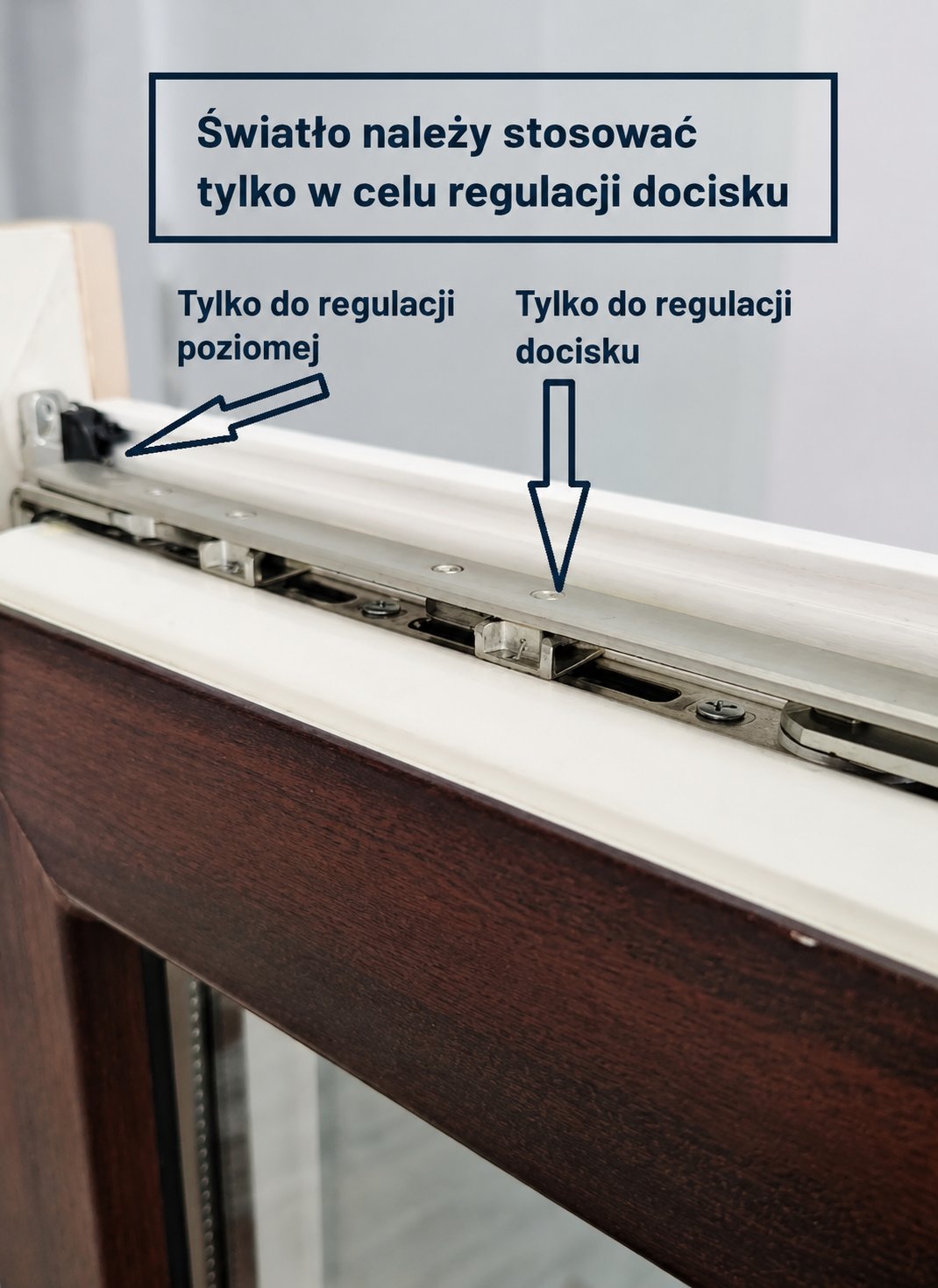
Yes, but there is no single product suitable for every hardware system and every lubrication point. Hardware systems differ in design, so maintenance should follow the manufacturer's guidance for the specific system.
Not every general-purpose spray is intended for window hardware maintenance. Before using a product, check its intended application and the hardware manufacturer's guidance rather than assuming that anything with lubricating properties is suitable.
PTFE-containing products are also available. The presence of PTFE on the label does not, by itself, mean that a product is suitable for a particular hardware system or every component within it.
The better approach is to choose a product for the specific application and according to the hardware manufacturer's guidance, rather than on the basis of a single ingredient listed on the label.
Andrzej’s simple experiment: two sheets of paper
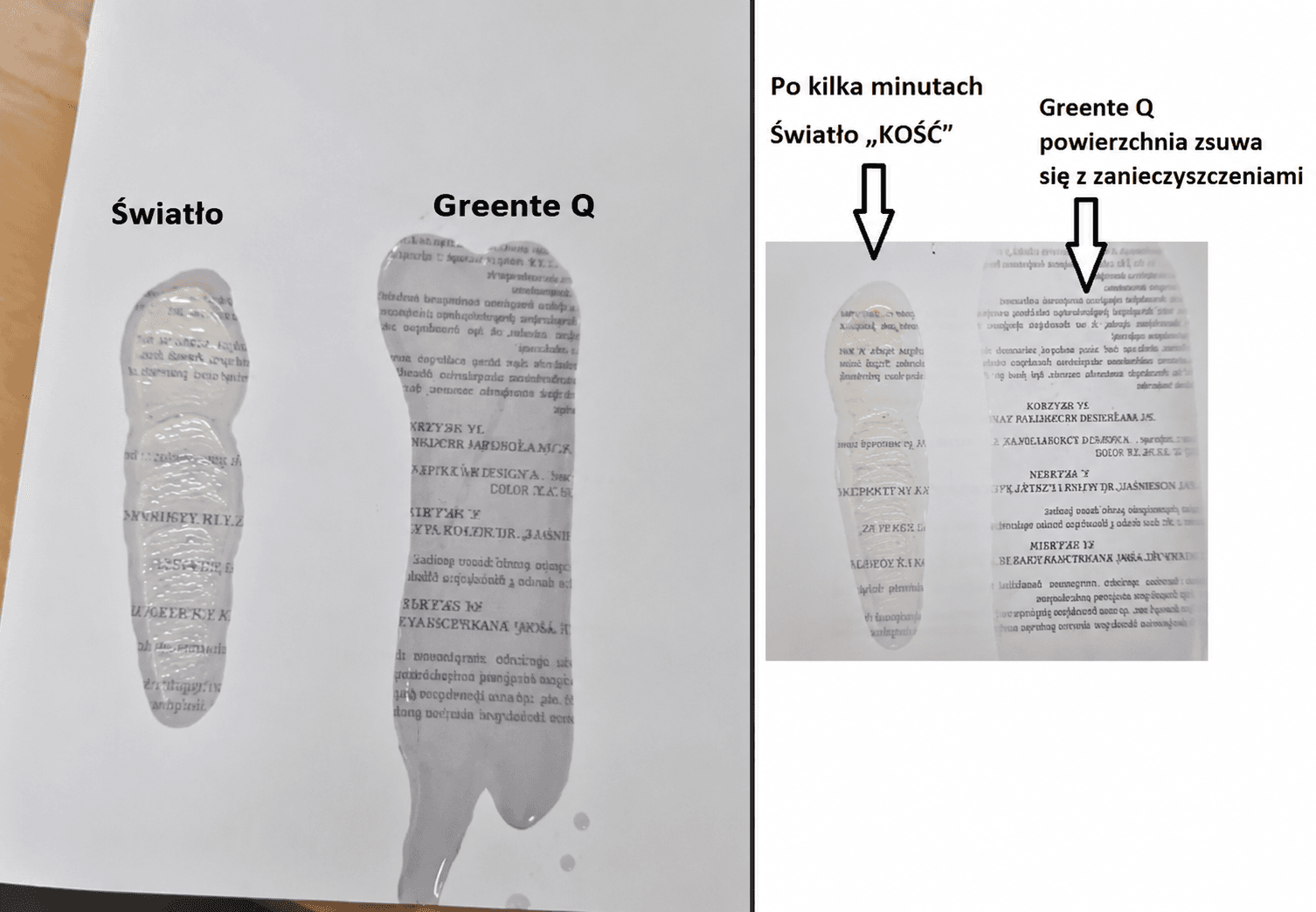
Andrzej uses a simple demonstration to explain why the type of product matters. He applies a small amount of a regular oily preparation to one sheet of paper and a small amount of GreenteQ with PTFE to another. The point is not to reproduce laboratory conditions, but to show the practical difference in how the products behave on a surface.
The ordinary oily product leaves a visibly greasy area that can readily collect dust and fine dirt. GreenteQ with PTFE is intended for hardware maintenance and leaves a different type of lubricating film. In window hardware, where moving elements operate close to seals, profiles and areas exposed to dust, that difference matters.
The experiment does not prove that every sticking mechanism will be fixed by changing lubricant. Its purpose is narrower: maintenance products are not interchangeable, and adding more of an unsuitable oily product can create a dirt-catching layer instead of solving the mechanical cause.
Lubrication does not replace adjustment or repair
If the handle is difficult to turn or the sash needs extra pressure to close, do not assume that lack of lubrication is the cause.
Notice whether the resistance is present with the sash open or appears mainly while closing it. This observation can help narrow the diagnostic scope, but it does not determine the cause on its own.
Resistance during closing may involve sash alignment and the way the locking components engage, while resistance that is also present with the window open is a reason to inspect the mechanism more closely. It is also useful to note whether the difficulty occurs throughout the handle's movement or only at one point.
Lubrication should improve the operation of a sound mechanism, not mask a fault. If the symptom remains after maintenance or quickly returns, it is better to identify the cause than to repeat the same step.
What can you check yourself?
Without dismantling the mechanism, you can make a few simple observations. Check whether the handle still feels noticeably stiff with the sash open, then note whether the difficulty appears mainly as the window closes against the frame. Also inspect the accessible hardware. Visible dirt or an excess of old product is a good reason not to start by adding another layer of lubricant.
Do not force the handle, dismantle the hardware or flood the mechanism with a random cleaning product. Without knowing the specific hardware system, it is easy to mistake a maintenance point for a problem that actually requires adjustment or repair.
What should you do if the hardware starts sticking again?
If resistance does not disappear after appropriate maintenance, or returns quickly, the next step should be diagnosis rather than another dose of lubricant. The aim is to determine whether the problem concerns the hardware itself, sash alignment, the way the locking components engage or the condition of one of the mechanism components.
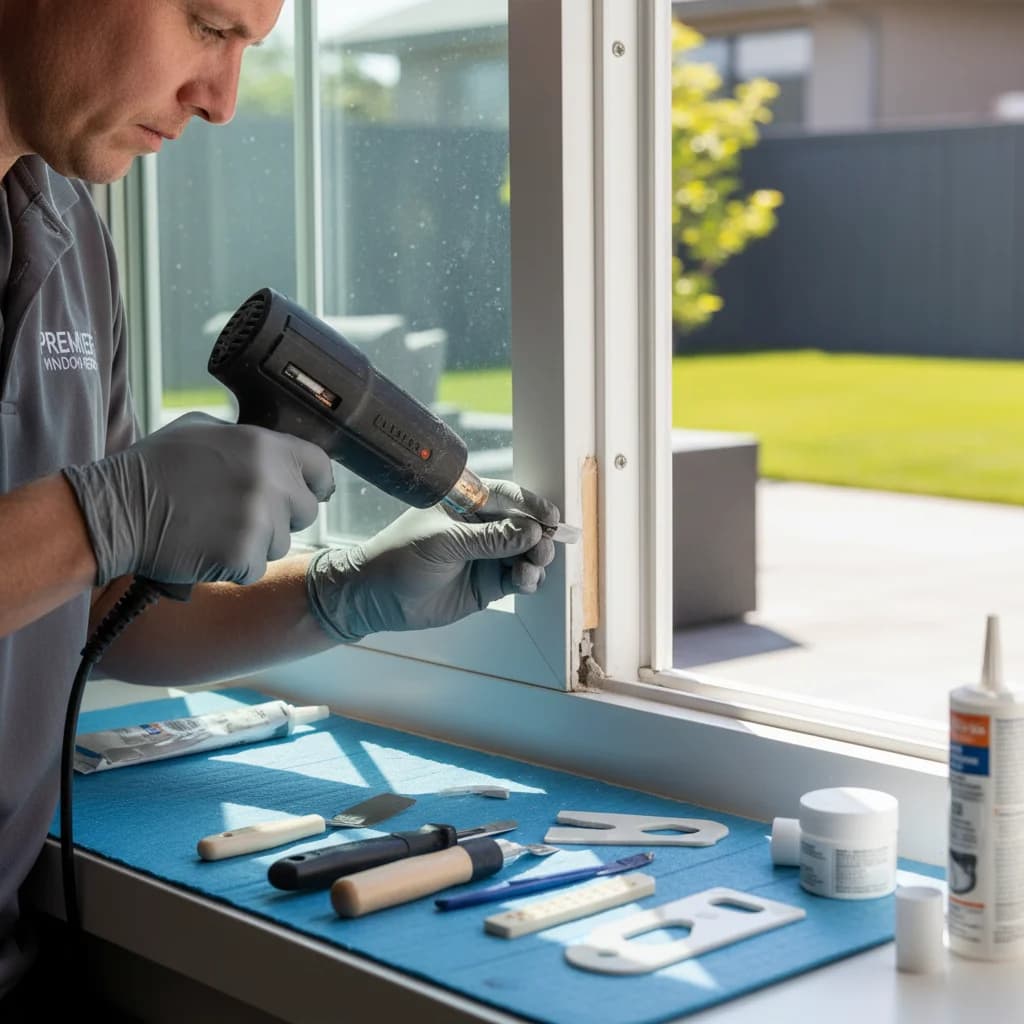
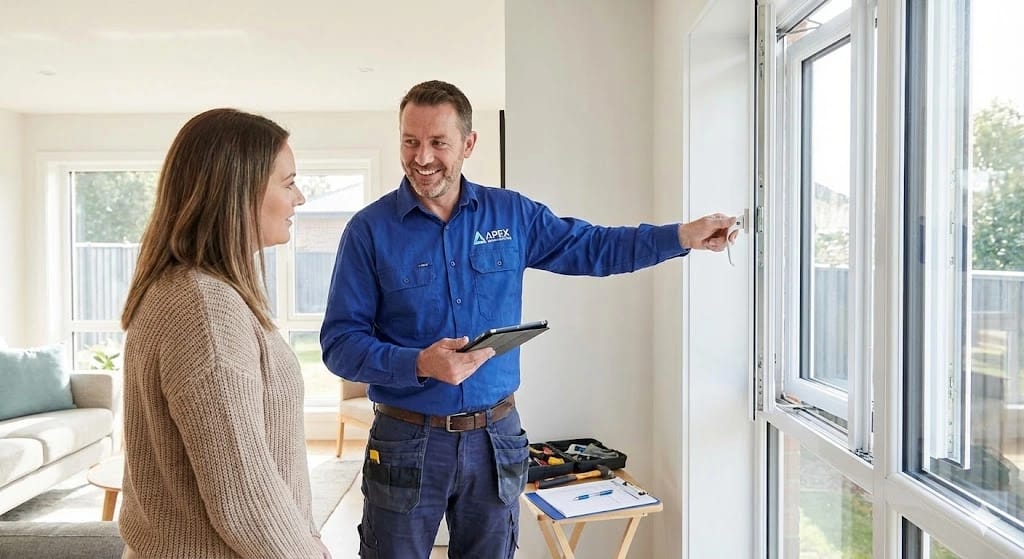
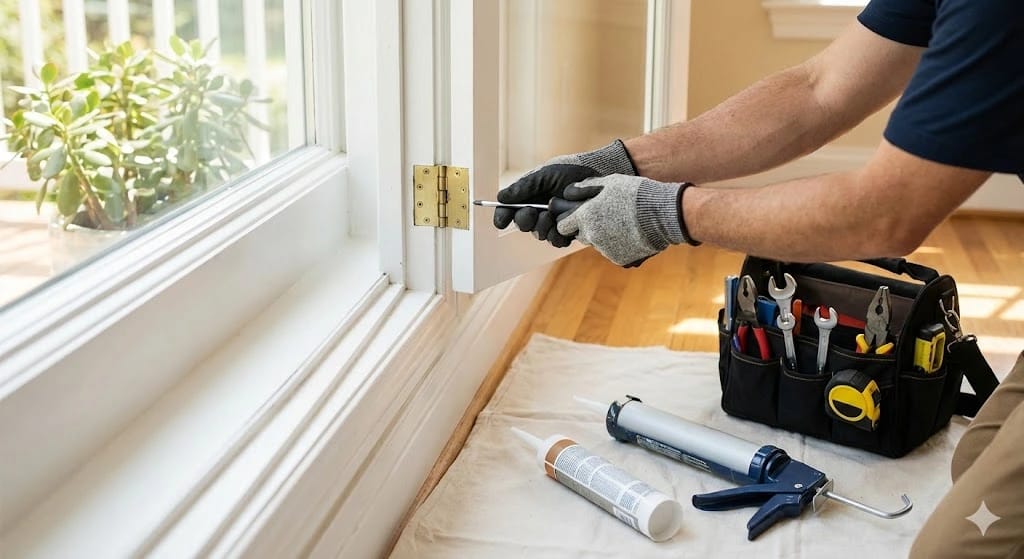
During a service visit, we check how the window behaves while opening, closing and locking. If maintenance is needed, we carry out hardware cleaning and lubrication. If the source of resistance lies elsewhere, the scope of repair is based on the diagnosis.
When to plan a service instead of another lubrication
Recurring hardware sticking after lubrication is a signal that the problem may lie not in the lubricant itself but in a specific mechanism component, sash alignment or window geometry. The scope of work should then follow a diagnosis rather than another try-and-see step.
In practice this can mean window adjustment, mechanism replacement, proper cleaning and lubrication, or a full window service. For related symptoms, see damaged window hardware - when to replace. Initial diagnosis and travel are free of charge.
It's worth remembering that lubrication is only one part of hardware maintenance, not a universal fix for every mechanism problem. If lubrication makes hardware run smoothly only briefly, and after a few days or weeks the same resistance returns, the cause usually does not lie in the lubricant itself. What matters is the condition of moving surfaces, wear of a specific component, incorrect sash alignment, or dirt in areas hard to reach through routine maintenance.
In such situations, observation gives good clues: where exactly the resistance appears, which sash movement makes it worse, whether the problem affects one window or several. This information helps identify the actual cause more quickly and choose the right scope of repair instead of repeating rounds of lubrication.