The window will not close properly, you can feel a draught around the sash, or moisture has appeared between the panes. Does that mean the whole window needs replacing? Not necessarily. Many such symptoms may have a cause that can be corrected without removing the entire window. There are also situations, however, where another repair will not solve the real problem or no longer makes economic sense.
The most useful first question is therefore not how old the window is or what material it is made from. First establish where the problem lies — in a component that can be adjusted or replaced, in the window structure itself, or outside the window altogether.
Only then does it make sense to compare repair with replacement.
Repair or replacement? Start with where the problem is
The same user-visible symptom can have very different causes. A window may be difficult to close because of sash alignment, a worn hardware component or an issue with the structure itself. The decision should therefore not begin by choosing a solution.
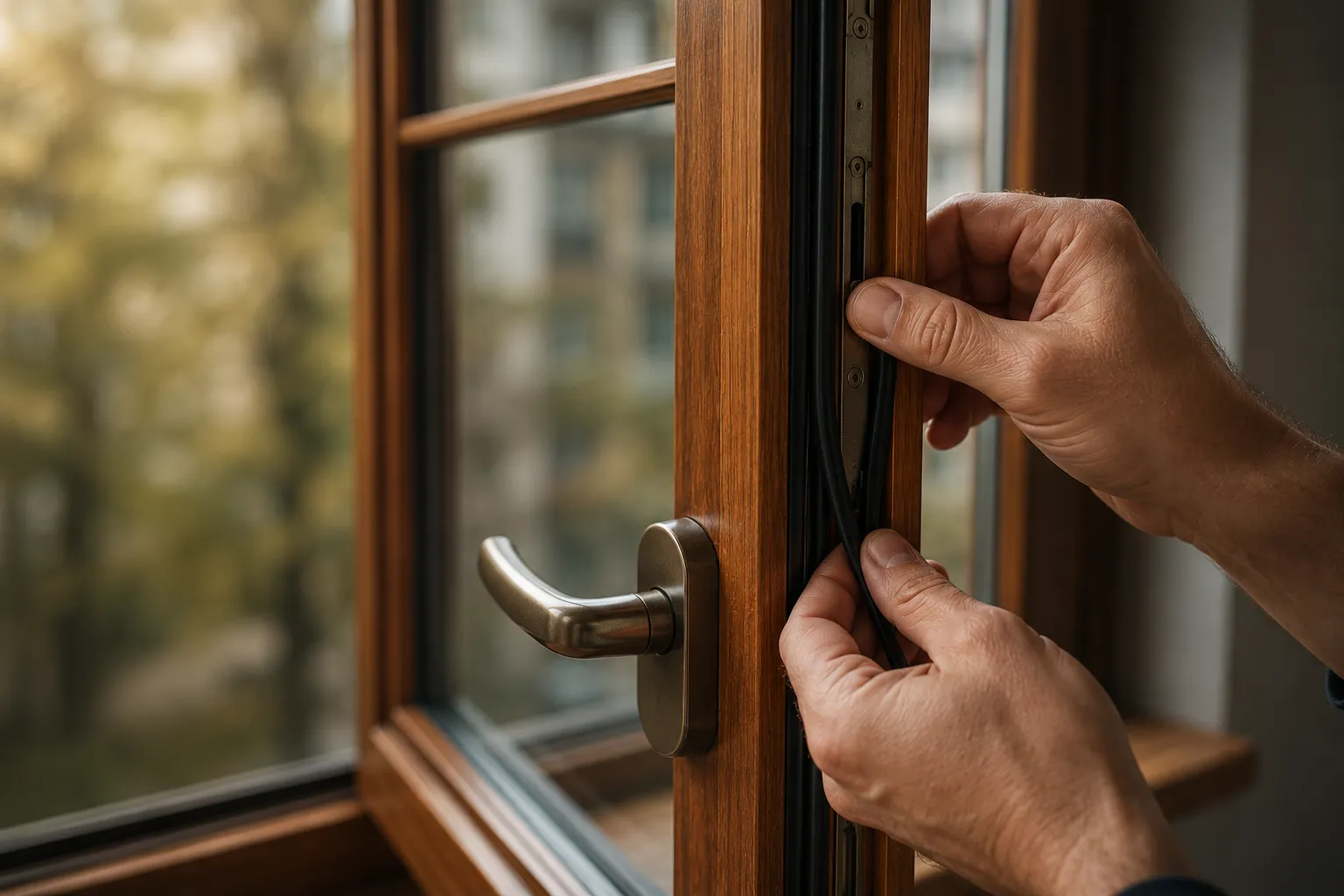
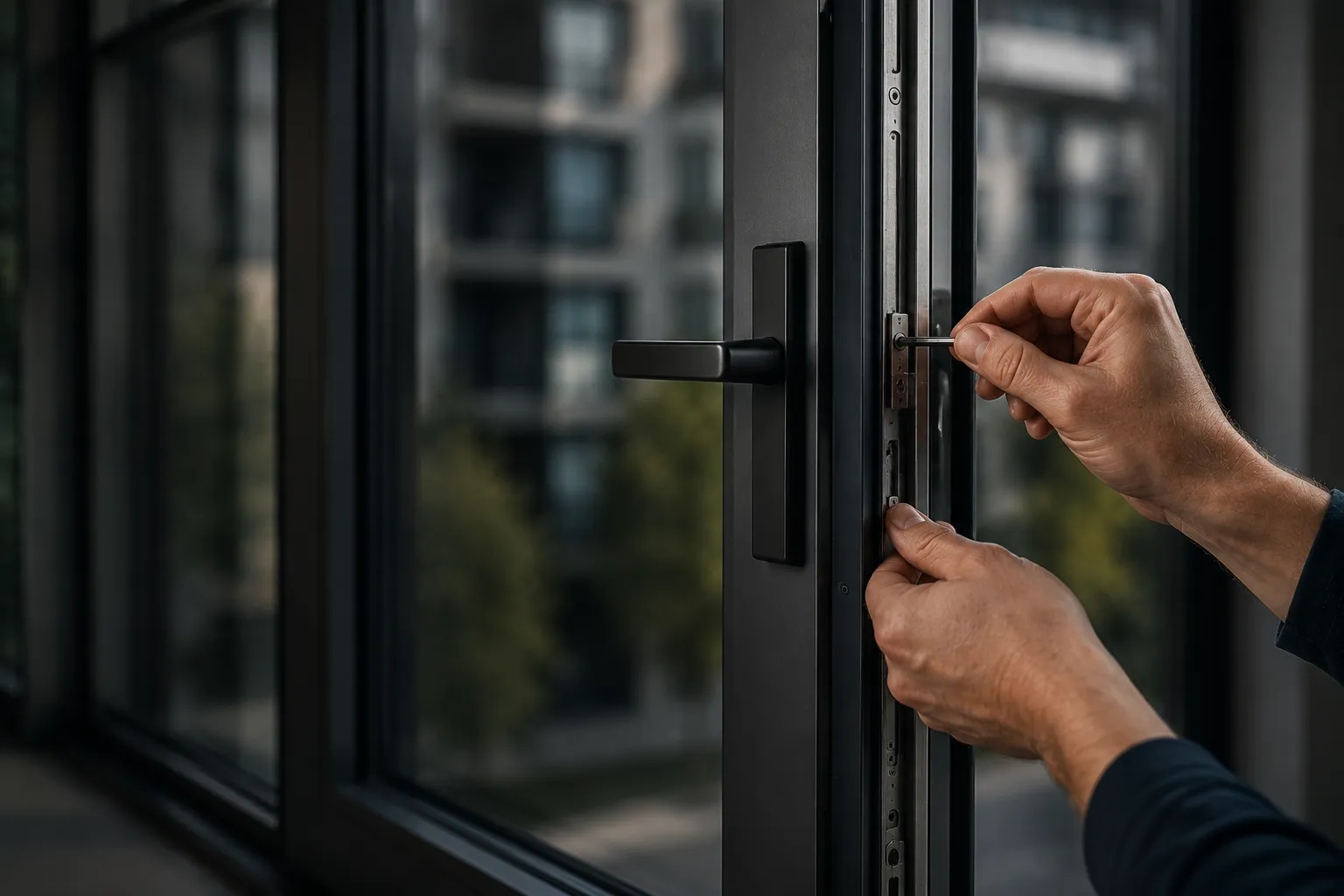
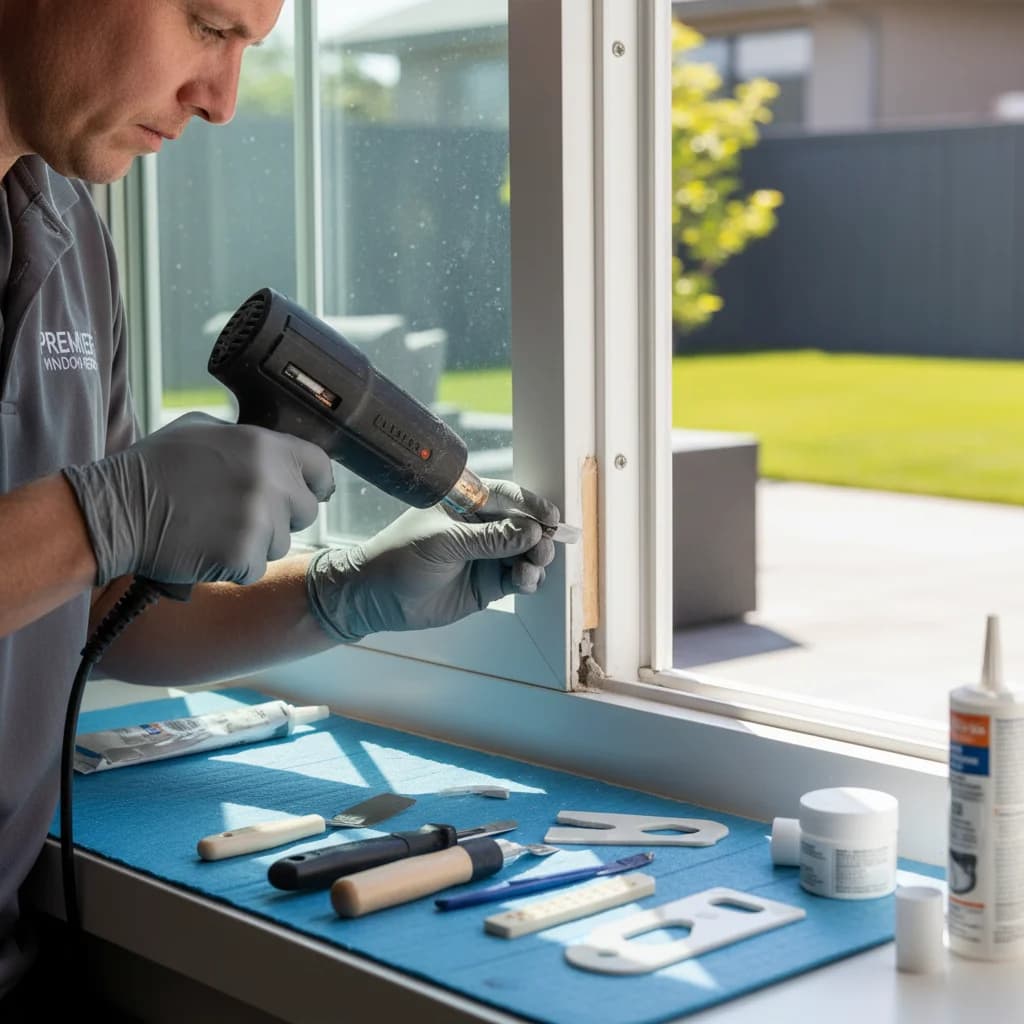
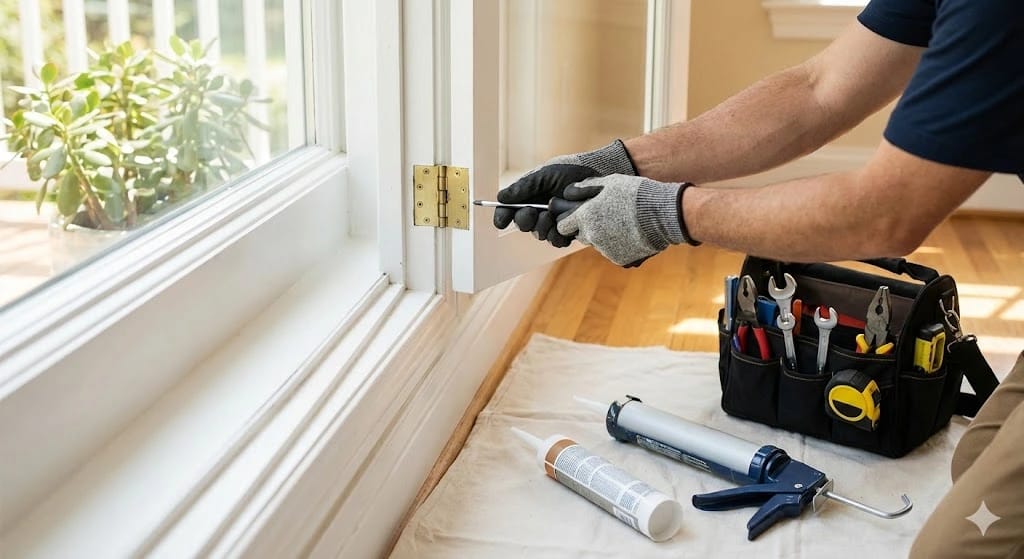
1. The problem concerns a component that can be serviced or replaced separately. Seals, handles, selected hardware components, sash adjustment and insulated glass units do not always require replacement of the whole window. If the cause lies in one of these areas, the first step is to assess whether that component can be adjusted, repaired or replaced.
2. The problem concerns the window structure. The situation becomes more serious when damage affects the frame, sash or another structural component. Permanent deformation, cracking or loss of correct geometry requires an assessment of whether the affected part can be repaired or replaced effectively and whether the window will operate correctly afterwards.
3. The problem may be outside the window. Moisture around the reveal, mould in a corner or damaged finishes around the frame do not by themselves prove that the window needs replacing. The source may be the window-to-wall junction or another part of the building envelope.
This distinction matters more than the age of the window or the material it is made from.
Symptoms that do not automatically mean replacement
Some symptoms look serious but do not by themselves show that the entire window is worn out. They are better treated as clues about where diagnosis should begin.
The window is difficult to close or the handle feels stiff. The cause may involve sash alignment, a hardware component or another mechanical issue. The symptom alone does not establish the scope of repair.
Air movement can be felt with the sash closed. The sealing, compression and the actual path of the air should be checked. Not every draught means that the frame itself is defective.
The handle is loose or does not operate correctly. The issue may involve the handle itself or the mechanism working with it.
The sash moves heavily, rubs or has started making unusual noises. It may need adjustment, maintenance or repair of a mechanism component, but the cause should be confirmed first.
What about moisture between the panes?
If moisture is inside a sealed insulated glass unit, it indicates that the unit has lost its seal. That does not automatically mean the whole window must be replaced. In many designs the glass unit can be replaced separately, provided the sash and frame are in suitable condition.
When the condition of the structure makes replacement worth serious consideration
The situation is different when the problem goes beyond a serviceable component. Damage to a structural part of the frame or sash is a much more significant signal than a worn seal or handle.
Permanent deformation, a serious profile crack, damaged structural joints or an inability to restore correct geometry may support replacement. Even then, damage to the frame does not automatically mean that the entire window must be removed — the location and extent of the damage and the feasibility of an effective repair matter.
Another signal is the return of the same fault despite a properly completed repair. Rather than repeating the same action automatically, the cause should be reassessed — for example the hardware condition, sash geometry, fixing or structure.
Sometimes the problem is not in the window itself
Moisture around the reveal, mould near a corner or damaged finishes can look like an obvious argument for replacing the window. They should not lead to that conclusion until the source has been identified.
The cause may involve the window-to-wall junction, a local leakage path or another part of the building envelope. The first task is to establish what actually needs repair.
Replacing a sound window will not remove a cause that lies outside it.
Three diagnostic steps before comparing repair with replacement
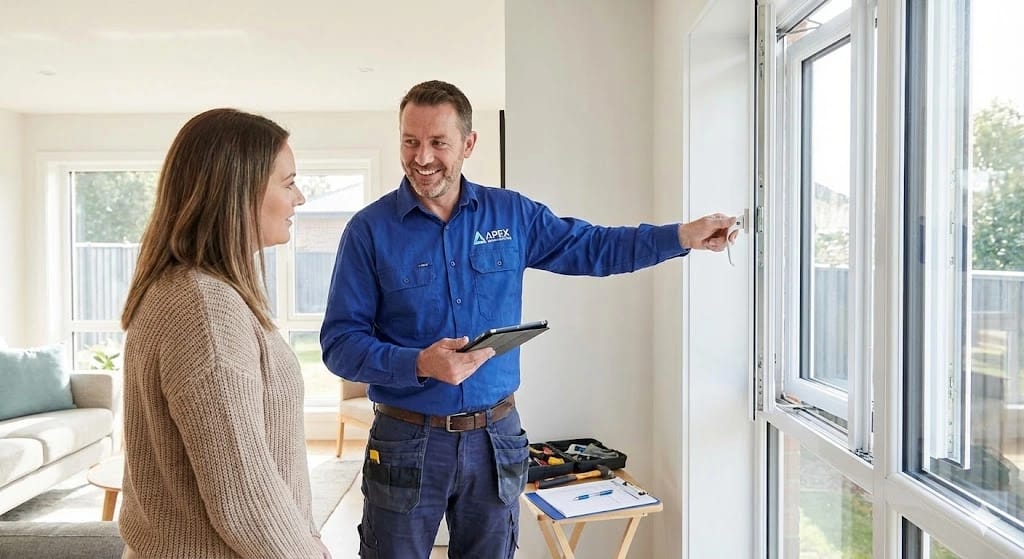
1. Assign the symptom to the correct area. First establish whether the problem concerns a serviceable component, the frame or sash structure, the insulating glass unit, or the window-to-building joint. Without that distinction it is easy to compare solutions aimed at different causes.
2. Establish whether the problem is local or affects the wider construction. One damaged handle, gasket or hardware component is a different situation from permanent profile deformation or several independent structural problems.
3. Only then move to the economic decision. Once the failed component and the repair needed to restore correct operation are known, repair and replacement can be compared meaningfully. A separate guide covers the cost-and-outcome comparison between repair and full replacement in detail.
Material and age are context, not a verdict
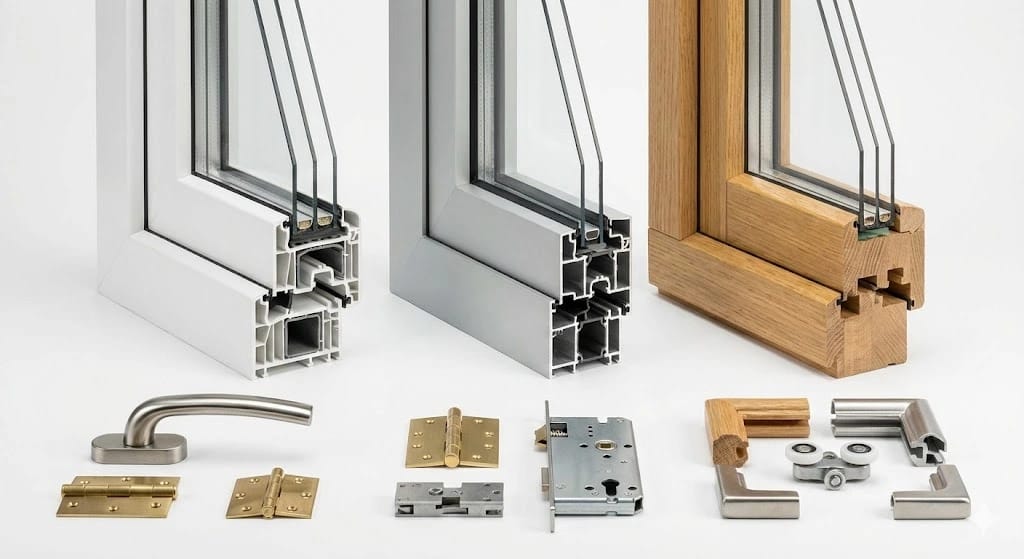
uPVC, aluminium and timber differ in construction, ageing and repair possibilities, so material matters during diagnosis. It is not, however, a stand-alone reason for replacement.
The same applies to age. An older window may still be suitable for an effective repair, while a newer one may have damage that requires much more extensive work. Two windows made from the same material and of a similar age can therefore lead to very different decisions.
For timber windows, the condition of the wood itself and its protective coatings also matters. Read more in our guide to timber window repair.
Answer “what is actually damaged?” before “repair or replace?”
Window age, material and a single symptom are not yet a replacement decision. This diagnostic stage ends when it is clear whether the cause lies in a serviceable part, the window construction or outside the window itself. Only then is it useful to compare the scope, outcome and cost of repair with replacement of the whole unit.