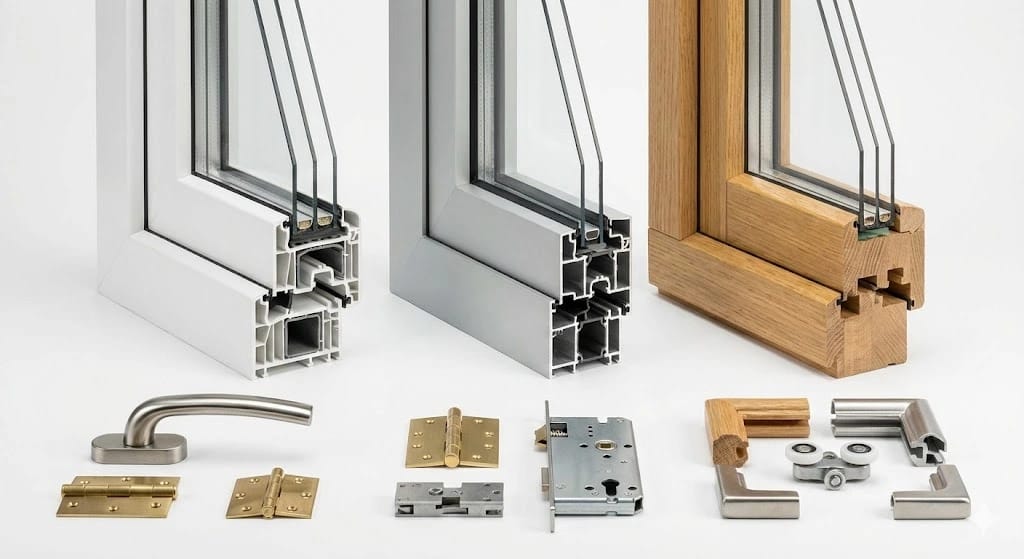
Aluminium windows are valued for durability and structural stiffness, but that does not mean every component is maintenance-free. Hardware operates every time the window is opened or closed, seals remain service components, and the insulated glass unit and other parts of the construction may also require assessment over time.
Diagnosis should separate the symptom from its cause. A stiffer handle does not automatically mean adjustment is enough, a draught does not prove that the seal is worn, and condensation does not necessarily mean the window is faulty. The repair scope should follow the condition of the specific construction.
What a specific symptom may mean
A stiffer handle or sash. If the handle becomes harder to operate or the sash develops clear resistance when closing, sash position, hardware operation, locking points and the location of resistance should be checked. Adjustment, the condition of a specific mechanism component or another issue may be involved. The symptom alone does not prove that lubrication or adjustment will be enough.
Squeaking when opening. The sound may come from a hinge or another moving point. If resistance, play or a change in sash operation appears at the same time, the component should be checked before limiting the solution to lubrication alone.
Rattling in the wind. The first step is to identify which part is actually moving. The source may be the sash, a hardware component, a seal or another part of the construction. The sound alone is not enough reason to increase sash compression.
A local draught. A draught with the window closed may relate to seal condition, sash position, hardware operation or leakage elsewhere. The actual path of the air should be identified first.
Visible corrosion. Corrosion marks on hardware should be assessed with regard to the specific component. Resistance depends on factors including material, surface protection and conditions of use. If hardware operation changes along with corrosion, the component deserves closer assessment.
A damaged or deformed seal. The seal should be assessed mainly for cracks, cuts, permanent deformation, displacement from its groove and other visible damage. Draughts, noise or water marks around the window do not automatically mean the seal is the cause. Any replacement must match the specific profile system.
Condensation on an aluminium window — three different situations
With condensation, the location of moisture is particularly important. Droplets on the room-side glass surface, condensation on the profile and moisture between the panes do not mean the same thing.
On the room-side glass surface. Condensation on the inner glass surface does not automatically mean a window fault. It forms when the surface temperature is sufficiently low relative to the indoor air temperature and humidity. Indoor humidity, ventilation, room temperature and the thermal properties of the envelope can all matter.
On the aluminium profile. If moisture appears on the inner profile surface, the temperature of that component matters. The aluminium system design, the presence and properties of a thermal break, and indoor and outdoor conditions all affect surface temperature. Condensation alone is not enough to identify one cause.
Between the panes. Persistent fogging, residue or droplets visible inside the insulated glass unit may indicate loss of seal. The glass unit is then assessed separately from the frame; if the rest of the construction is in suitable condition, replacing the glass unit alone may be possible.
More detail is available in our guide to condensation and moisture on windows. If the issue appeared after a change in how the dwelling is ventilated, our article on window trickle vents may also help.
What a thermal break actually changes
Aluminium conducts heat well, so modern window systems use thermal breaks to separate the inner and outer parts of the profile. Their purpose is to reduce heat flow through the profile construction and improve thermal performance.
This does not mean a window with a thermal break cannot develop condensation. Inner surface temperatures still depend on the performance of the whole window, outdoor conditions and indoor temperature and humidity.
The label “thermally broken aluminium” alone is therefore not enough to diagnose a moisture problem.
How aluminium window service differs from PVC
The general categories of problems can be similar — sash adjustment, seals, handles, hardware or the insulated glass unit — but the specific solution depends on the window system used.
Adjustment points, hinge and hardware construction, the way components are mounted and seal profiles can differ between systems. The specific construction should therefore be identified before adjustment or parts selection.
Do not assume that an adjustment method used on one PVC window will be suitable for any aluminium window.
More detail is available in our guide to aluminium window adjustment.
Adjustment, seal, hardware or insulated glass unit?
The repair type should follow the cause of the problem, not only its symptom.
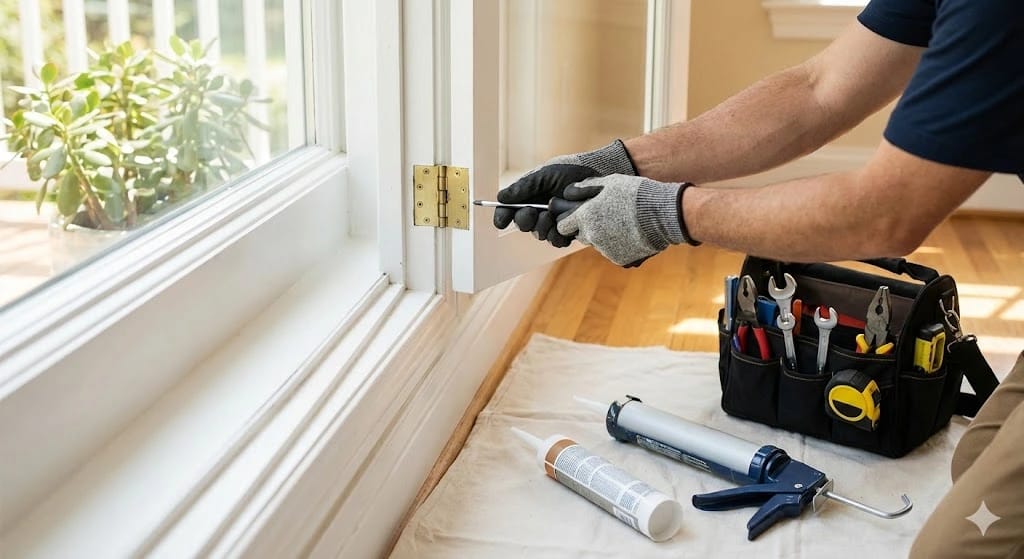
Adjustment may be appropriate if the issue involves sash position or how hardware components work together. A seal should be replaced when its condition actually requires it, for example where visible damage or permanent deformation is present. A damaged hardware component can be assessed for repair or replacement, while loss of seal in an insulated glass unit can lead to consideration of replacing the glass unit itself.
None of these issues automatically means the whole window needs replacing. That decision should take account of the condition of the full construction, the scale of damage and whether an effective repair is possible.
When an inspection is worth arranging
It is worth having the window checked when:
— the sash clearly rubs against the frame or no longer closes as before;
— the handle develops strong resistance or no longer operates the mechanism correctly;
— a local draught appears with the window closed and its source is unclear;
— the seal has visible cracks, cuts or permanent deformation;
— persistent fogging, residue or droplets remain between the panes;
— clear corrosion or damage appears on hardware components;
— moisture or mould repeatedly appears around the window and the cause is unclear.
The symptom alone does not determine the repair. The main purpose of inspection is to identify its actual cause.
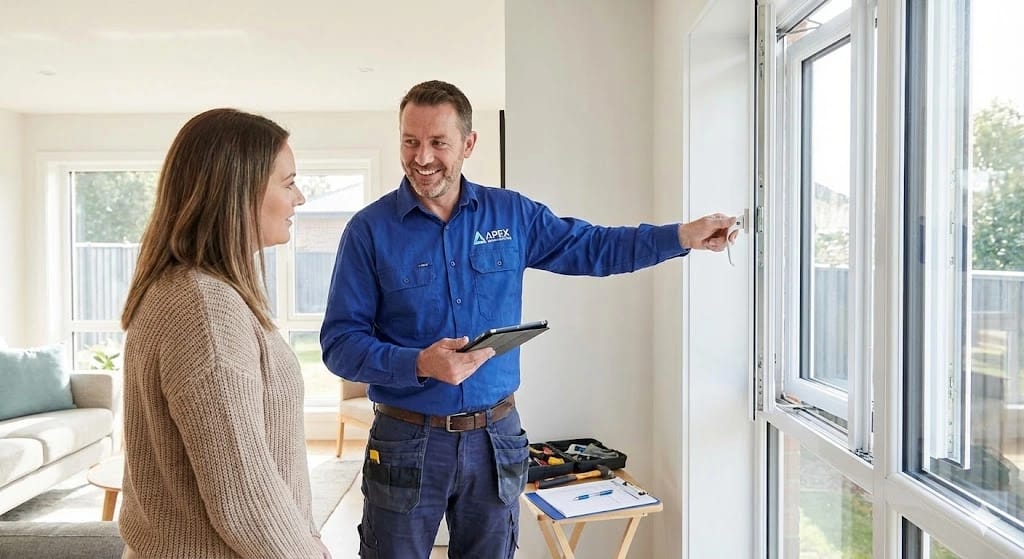
As part of our window repair service, we first assess the specific construction and then define the required work. The initial diagnosis and technician's visit are free within the area we serve.
What to remember
Aluminium windows are durable, but their hardware, seals, insulated glass units and other components can still require service. Correctly identifying the cause of a problem is the most important step.
A stiffer handle does not automatically mean adjustment is needed, a draught does not prove that the seal should be replaced, and condensation does not always mean the window is faulty.
Seals should be replaced because of their actual condition rather than age alone, while any decision on larger repair or complete window replacement should follow assessment of the full construction.
Related content
See also: book a visit. Initial diagnosis and travel are free of charge.