Old tenement buildings can contain both historic timber joinery and windows installed during later renovations. The age of the building alone therefore does not tell you what kind of window is present or what scope of work is appropriate.
Before deciding on repair, restoration or replacement, two issues should be separated. The first is the actual technical condition of the window: timber, structural joints, hardware, glazing and sealing. The second is the building's protection status and the requirements that apply to the proposed intervention.
This matters particularly when the work may change the window's appearance from the façade side, its material, glazing divisions, colour or other characteristics of the existing joinery. The applicable requirements should then be checked for the specific building and the specific type of work.
First check the protection status of the specific building
Not every tenement building is subject to the same rules. The status of the specific building, the scope of protection and the type of proposed work all matter. Requirements should not be inferred only from the building's age, appearance or location in a historic part of the city.
Before replacing a window or changing its appearance, it is worth establishing whether the building or particular elements are protected and what requirements apply to the proposed intervention. These can concern the joinery material, divisions and proportions, profiles, colour or other characteristics visible from the façade.
The status and appropriate procedure are best checked in official sources and with the authority or body responsible for the specific property. If the scope of work is unclear, it is better to clarify the requirements before ordering new joinery or altering the existing window.
What to assess in an old timber window
The age of a timber window alone does not determine restoration or replacement. The condition of the individual components and the whole construction matters more.
Timber and structural joints. Check for cracks, missing material, clearly softened timber, loose joints or permanent deformation. Areas exposed to prolonged moisture deserve particular attention. The repair scope depends on the location and depth of the damage and whether the component has retained adequate stability.
Sash geometry and hardware operation. Rubbing, a dropping sash, harder closing or a change in handle operation are reasons to check geometry and the mechanism. The symptom alone does not determine whether adjustment is enough, a component needs repair or the sash construction itself is involved.
Glazing and how it is set. Cracked or crumbling putty, movement of the pane in its setting or damage to glazing-retention elements require assessment. The repair method should match the construction of the specific window and the type of existing glazing.
Glazing bars and joinery details. When these are cracked or otherwise damaged, repair should preserve not only function but also the geometry, section and character of the existing joinery.
Airtightness. A draught does not automatically identify one cause. It may relate to sash closing, existing seals, joinery connections or the frame-to-building junction. The method of draught-proofing should therefore follow identification of the actual source.
Restoration or replacement — what should the decision be based on?
A well-preserved old window should not be selected for replacement solely because of age. On the other hand, the mere possibility of carrying out another repair does not automatically make full restoration the right solution.
The decision should consider the condition of timber and structural joints, sash and frame geometry, hardware, glazing and other components, and the actual work required to restore correct operation.
If the construction is in suitable condition and the damage can be repaired effectively, restoration may be technically justified. With serious structural damage, permanent deformation or a very broad repair scope, restoration should be compared with replacement.
In a tenement building, one more factor matters: what changes are permitted for the specific property. A technically possible replacement does not automatically mean that any material, appearance or glazing division can be used.
Repair versus a change in appearance — when to check formal requirements
There is no single list of works that can safely be applied to every tenement building. Formal requirements depend on the building's status, what is protected and the nature of the proposed intervention.
Routine servicing of an existing mechanism should be distinguished from work that changes material, divisions, proportions, colour or other window features visible on the façade. Work affecting historic joinery elements may also require the rules for the specific property to be checked beforehand.
For larger restoration, sash or complete-window replacement, changes to glazing or external appearance, the building's status and the applicable requirements should be established before the work is planned in detail.
If the aim is only to restore correct window operation, the technical scope should still be diagnosed first. This helps avoid considering replacement where repair of the existing component may be possible.
Kraków and Warsaw — check the status for the specific address
Kraków and Warsaw contain tenement buildings with very different protection statuses and scopes. Location in Kazimierz, the Old Town, Podgórze, Praga, Śródmieście or Żoliborz alone does not determine what rules apply to a specific window.
In Kraków, the building status and requirements for planned changes should be checked in the municipal and heritage sources appropriate to the specific address. The same principle applies in Warsaw: information should be checked for the particular building and proposed work.
Do not assume the level of protection from the age of the tenement, the district or the façade appearance. Two buildings in the same area can have different status and different requirements for window joinery.
A sensible order is simple: first identify what the window actually needs technically, then check the building's protection status, and only then define the appropriate scope of work.
When diagnosis should not be delayed
The window is worth assessing sooner if:
— timber is clearly softened, cracked or has visible losses;
— the sash rubs heavily, drops or does not close correctly;
— timber joints are loose or clear gaps have appeared;
— the paint coating is detaching and the timber beneath is exposed or damp;
— the pane is loose or moves in its setting;
— moisture repeatedly appears around the window or reveal and its source is unclear.
These symptoms do not yet determine the repair method. They indicate that the condition of the construction should be assessed before continued use or before larger restoration work begins.
More information about the joinery itself is available in our guides to caring for timber windows and timber window repair.
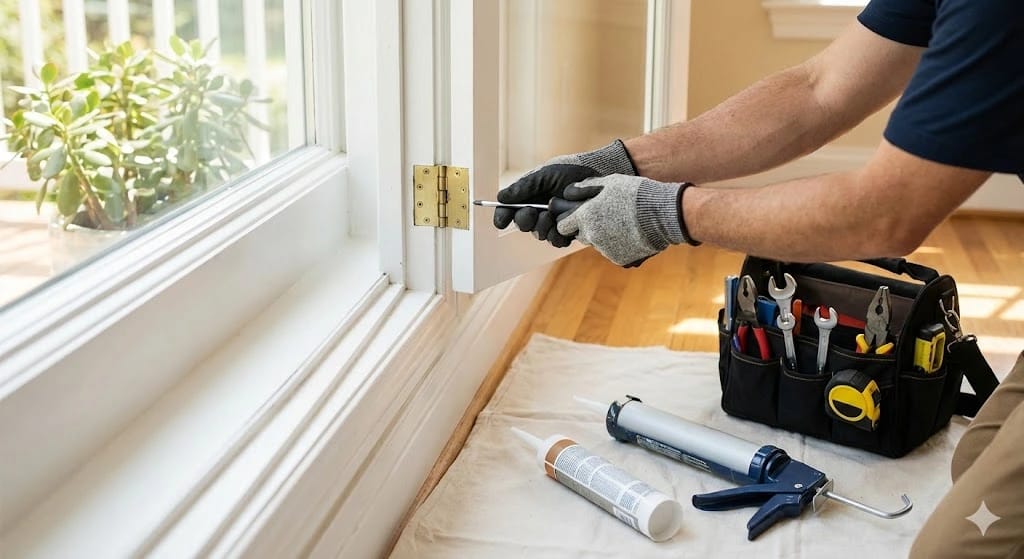
As part of our window repair service, the work scope is matched to the actual condition of the specific window. If the building is protected, requirements applicable to the property should also be checked before an intervention that may alter protected elements. The initial diagnosis and technician's visit are free within the area we serve.
What to establish before making a decision
With a window in an old tenement building, it is better not to begin with the question “restore or replace?”. First establish the actual condition of the timber, construction, hardware, glazing and other components.
If the proposed work may change the appearance or important elements of the existing joinery, the second step is to check the protection status of the specific building and the requirements that apply to that intervention.
Only after combining both pieces of information does it make sense to decide on the scope of repair, restoration or possible replacement.
Related content
See also: PVC window wooden window aluminium window wooden window repair. Initial diagnosis and travel are free of charge.