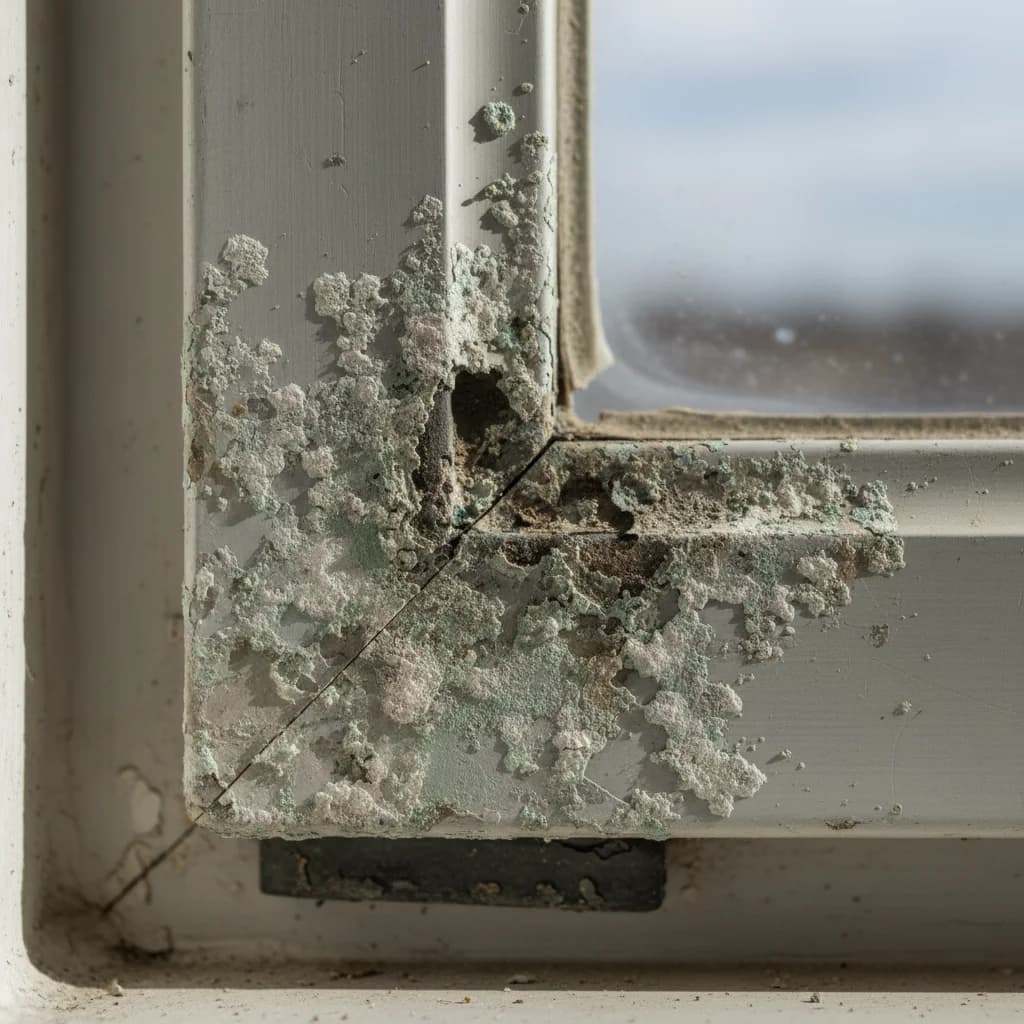
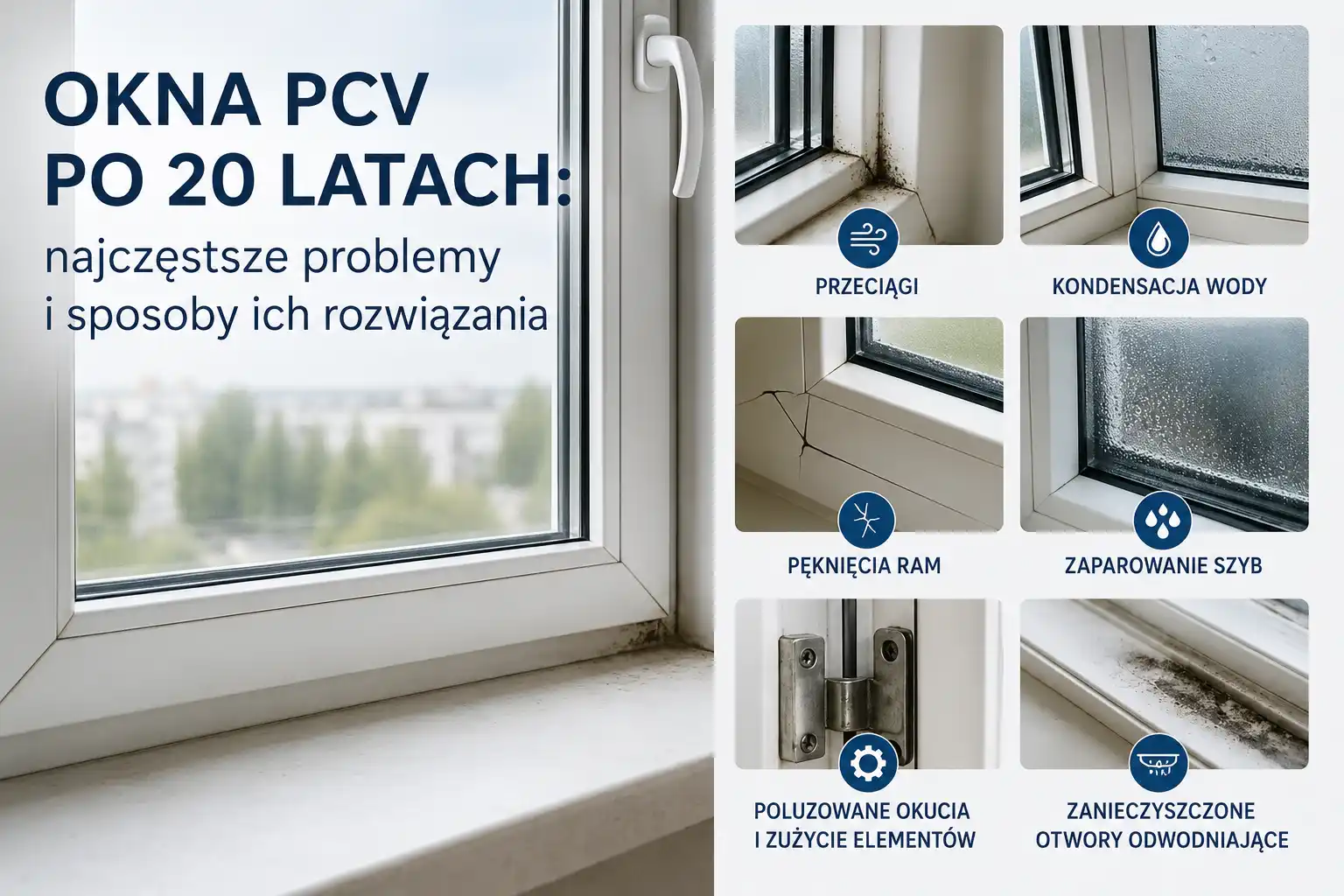
Moisture on the glass, a damp reveal corner or mould beside the frame can look similar, but they do not necessarily have the same cause. The symptom alone is not enough to conclude that the problem lies in the window, its seal or the installation.
Diagnosis should separate several areas: indoor conditions and ventilation, the surface temperature of the glass and reveal, how the window closes, and the condition of the frame-to-building connection. Assessing these areas helps narrow the possible causes.
The same principle applies in Wrocław and across Lower Silesia: location can provide context, but it does not replace assessment of the specific window, room and place where moisture appears.
Condensation on the glass — what it actually means
Condensation on the inner glass surface forms when that surface temperature falls below the dew point of the indoor air. Its presence alone therefore does not automatically mean a window fault.
Condensation depends on factors including indoor humidity and temperature, glass surface temperature, outdoor conditions and air movement near the window. The duration of droplets alone is not enough to identify one cause.
Greater attention is warranted when condensation returns regularly, is heavy, or causes prolonged dampness of the frame, reveal or sill. In that situation, both indoor conditions and the window and its surroundings should be assessed.
The connection between the frame and reveal is one area to consider when looking for the source of damp or a draught. Its construction depends on how the window was installed and which materials were used, so its condition cannot be judged from window age alone.
Visible gaps by the frame, damp marks around the reveal or a problem appearing after rainfall may justify closer inspection of this connection. They do not by themselves confirm that the installation joint is damaged.
Diagnosis needs to establish where the actual leak or dampness is and how the window is connected to the building. Only then can it be decided whether repair of that connection is needed and what the scope should be.
A cold reveal surface does not always mean a leak
Moisture can also appear where the internal surface temperature is lower than nearby areas. If the surface reaches conditions suitable for condensation and indoor humidity is high enough, local dampness can develop.
The lower surface temperature may relate to the building envelope, the detail around the window, the way the window is installed or other local conditions. A cold or damp reveal corner should therefore not automatically be treated as either a window leak or a thermal bridge without further assessment.
If the problem comes from low surface temperature related to the reveal or building-envelope construction, sash adjustment or seal replacement does not remove that cause. The element actually responsible for the cooling needs to be identified first.
The seal, closing and draughts
The condition of the perimeter seal and the way the sash closes should also be considered. A worn, damaged or displaced seal can affect airtightness, as can incorrect sash geometry or a hardware problem.
A draught felt around the window does not automatically point to the seal. Air may be entering around the sash, the frame-to-wall connection or another part of the construction.
Seal replacement or adjustment should therefore be treated as the solution only after diagnosis shows that the problem is genuinely in that area.
Ventilation and air supply
Indoor humidity depends partly on how much water vapour is generated and how effectively air is exchanged. Cooking, bathing, drying laundry and normal daily use all add moisture that must be removed by ventilation.
Replacing less airtight windows with much more airtight ones can reduce uncontrolled air infiltration that previously contributed to air exchange. If adequate air supply is not maintained after that change, conditions favourable to condensation may occur more often.
This does not mean that a trickle vent is always the answer. The method of supplying air should suit the ventilation system and conditions in the specific building.
More detail is available in our guides to window trickle vents and condensation and moisture on windows.
What to observe before diagnosis
Before a technician visits, it is useful to note a few things. The aim is not to diagnose the problem yourself, but to record information that helps recreate the conditions in which it appears.
Where the moisture appears. Is it on the glass, frame, sill, reveal corner or the wall beside the window?
When the problem appears. Does damp mainly occur in cold weather, after bathing or cooking, in the morning, after rain or regardless of weather?
How often it returns. Is it a one-off event, or does it recur in the same place?
Changes in the flat. Did the problem start after window replacement, renovation, a change in heating, covering a radiator or another change that could affect air movement?
Visible signs around the window. Note gaps, damage, closing problems or damp marks after rainfall, but do not assign them a specific cause on your own.
These observations help narrow the diagnostic area. The final work scope should follow the identified source of the problem, not only the place where damp or mould is visible.
When the problem deserves closer assessment
A more detailed assessment is particularly useful when:
— mould repeatedly appears by the frame, on the reveal or on the adjacent wall;
— condensation is heavy or regularly dampens nearby surfaces;
— moisture appears on the sill, reveal or by the frame after rainfall;
— there is a clear draught or local cold spot around the window;
— visible gaps or damage appear around the frame, sill or their connection to the building;
— the problem returns despite changes in airing or room use.
Each of these symptoms can have more than one cause. Diagnosis is about determining whether the source lies in the window itself, its connection to the building, indoor conditions, ventilation or several areas at once.
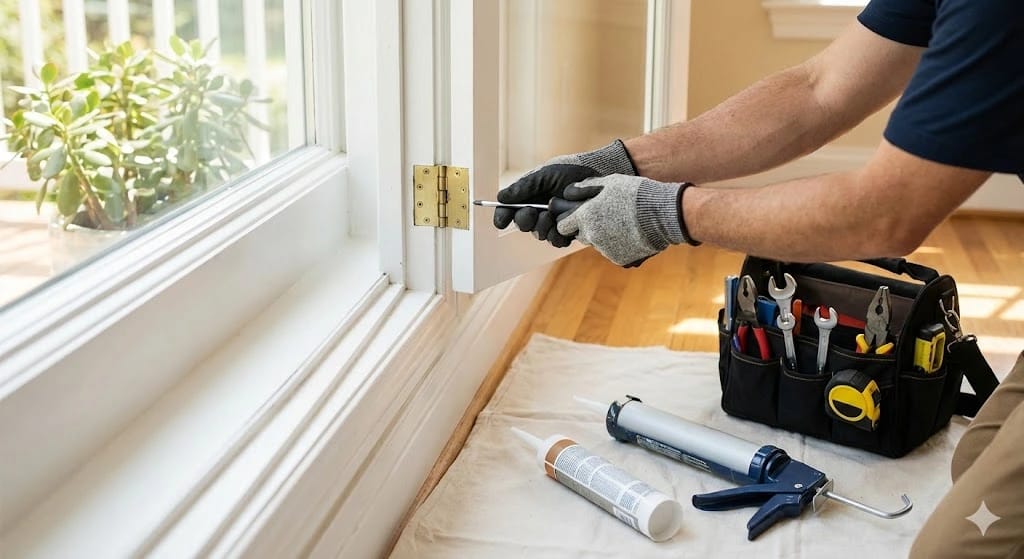
As part of our window repair service, the work scope is matched to the actual cause and condition of the specific window. The initial diagnosis and technician's visit are free within the area we serve.
Wrocław and Lower Silesia — location does not replace diagnosis
Wrocław contains many different building and window types, from older tenements and blocks to newer development. For moisture diagnosis, however, the construction of the specific building, the type of window, the way it was installed, ventilation and indoor conditions matter more than the district name itself.
There is therefore no single “Wrocław cause” of damp around windows. The same symptom in two flats can come from different conditions and require a different work scope.
Location helps define the building context and service logistics, but the technical cause needs to be established for the specific window on site.
First the cause, then the work scope
Damp and mould around a window do not automatically mean a failure of the window itself. A similar symptom can relate to indoor conditions, surface temperature, ventilation, sash airtightness, the frame-to-building connection or several factors together.
That is why it is better not to begin with seal replacement, adjustment or resealing the installation simply because damp has appeared near the window. The source should be identified first.
Only then can the work scope be matched to the actual cause rather than only the visible symptom.