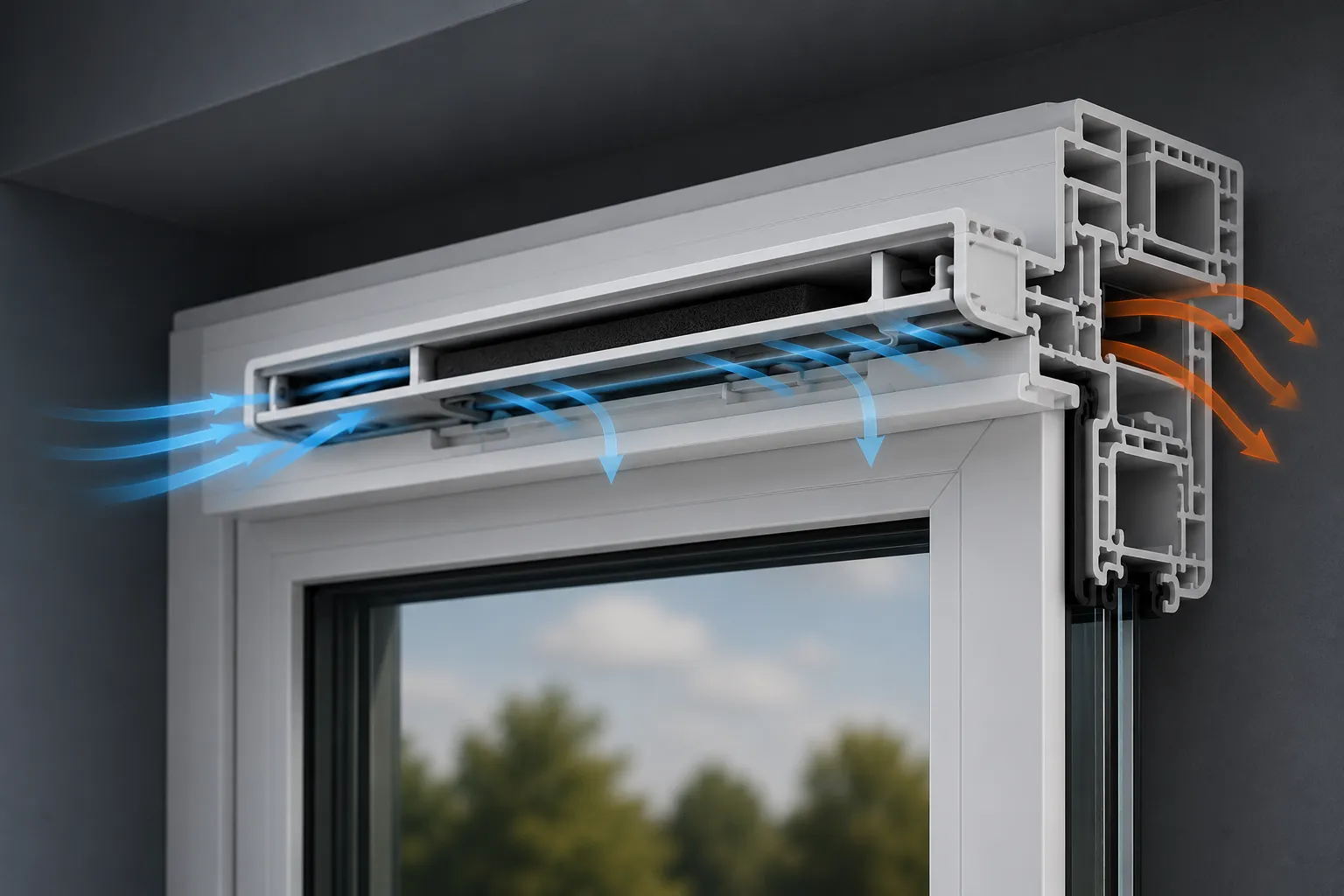
Replacing older windows with more airtight ones can reduce uncontrolled air infiltration into rooms. In buildings with gravity ventilation, an adequate air supply is needed so that air can move through the dwelling towards the exhaust ducts. A window trickle vent is one way to provide that supply.
This does not mean that condensation, damp or a stuffy feeling automatically mean a trickle vent is needed. The first step is to determine whether the problem actually comes from insufficient air supply and how the whole ventilation system is working.
What a window trickle vent does
A trickle vent provides a controlled supply of outdoor air without the need to open the window regularly. It is an air-supply element of the ventilation system — it does not replace the sash seal or exhaust ventilation.
Because outdoor air enters through the vent, its operation also affects thermal conditions in the room. Airflow capacity, control method, installation position and correct matching to the ventilation system all matter.
Humidity-controlled, pressure-controlled or manually adjusted?
Trickle vents differ mainly in how airflow is controlled. There is no single solution that is best for every dwelling.
Humidity-controlled vent. It changes its opening according to the relative humidity of indoor air. As humidity changes, the mechanism adjusts the air supply within the range provided by the specific model.
Pressure-controlled vent. It reacts to the pressure difference between indoors and outdoors. Depending on the design, the mechanism may limit airflow as the pressure difference rises. Exact operation and airflow range depend on the specific model.
Manually adjusted vent. The user sets the opening within the range specified by the manufacturer. This provides direct control but requires conscious adjustment.
When choosing a vent, compatibility with the ventilation system, required airflow and window construction matters more than the category name alone.
When it is worth checking whether more air supply is needed
Air supply is worth assessing when conditions in the dwelling change noticeably after window replacement or sealing, when condensation appears regularly on the glass, or when there are problems with damp or ventilation.
A stuffy feeling in a room with the windows closed can also be relevant. None of these symptoms alone confirms that installing a trickle vent is the right solution.
Both air supply and air removal need to be considered. If the problem lies in exhaust ventilation or has another cause, increasing the supply may not remove the underlying issue.
Trickle vents, condensation and damp
Condensation on the inner glass surface forms when the surface temperature is sufficiently low relative to indoor air temperature and humidity. Increasing air exchange can help reduce indoor humidity in some situations, but a trickle vent is not a universal solution for condensation.
Damp or mould can also have other causes, including exhaust ventilation problems, thermal bridges, low surface temperatures or a moisture source unrelated to ventilation. The problem being addressed should therefore be identified before installation.
More detail is available in our guide to condensation and moisture on windows.
Trickle vents and ventilation requirements
Whether a building needs a window trickle vent depends on the ventilation system and how the required air supply is provided. The requirements concern adequate room ventilation and sufficient air supply, but that does not always mean a window-mounted vent is required in every situation.
A building may use another air-supply method, so window replacement or additional vents should be considered in the context of the specific building and its ventilation system.
What the installation method depends on
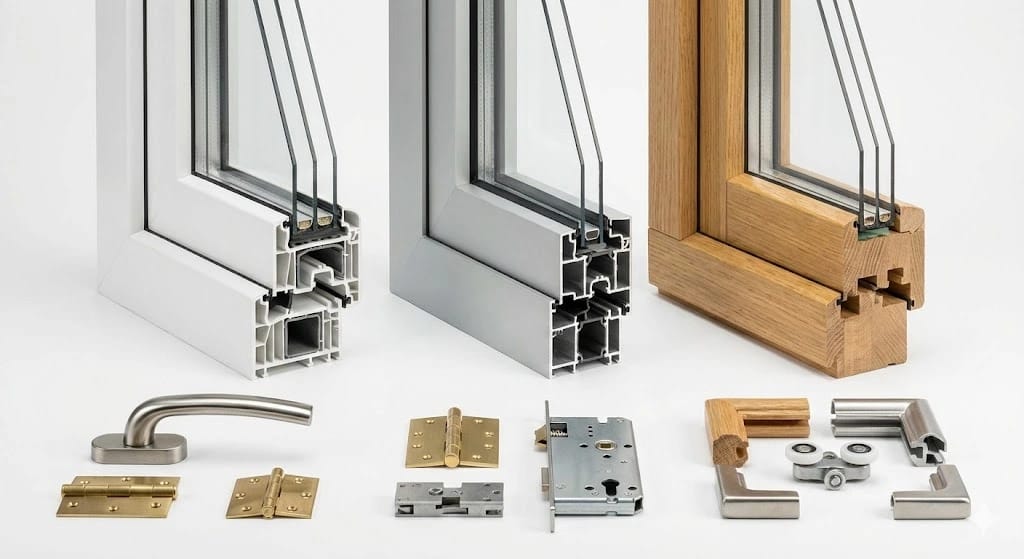
Installation depends on the vent design, window profile and manufacturer guidance. Different systems can require different profile preparation and different positioning of the air inlet components.
If installation requires drilling or routing the profile, the dimensions and positions specified for the system must be followed without damaging structural parts of the window. Trickle vent installation should therefore not be treated as one universal procedure that is identical for every window.
Before installation, the chosen vent should also be checked for compatibility with the profile and for airflow parameters suitable for the ventilation system.
When a trickle vent alone will not solve the problem
A trickle vent provides air supply. Installing one will not solve a problem whose cause lies elsewhere, for example when:
— exhaust ventilation is not working correctly;
— damp comes from a leak or moisture in the building envelope;
— the room has high moisture generation that the existing ventilation does not remove;
— condensation is also related to low surface temperature or a thermal bridge.
In these situations, a trickle vent can be part of the solution only if there is genuinely insufficient air supply. It does not replace dealing with the other causes.
How to choose a vent for a specific dwelling
Selection should not be based only on whether the vent is humidity-controlled, pressure-controlled or manually adjusted. Airflow parameters, the building's ventilation system, the number and function of rooms, existing air inlets and compatibility with the window construction also matter.
In some situations, acoustic performance can also be important, especially for windows exposed to external noise.
The specific model and installation method should therefore follow the actual conditions rather than one product feature alone.
If you are considering installation, see our trickle vent installation service. If the problem also concerns the operation of the window itself, see window repair. The initial diagnosis and technician's visit are free within the area we serve.
What to remember
A window trickle vent is one way to provide controlled air supply to a room. It does not replace exhaust ventilation and it does not automatically solve every condensation or damp problem.
Whether a vent is needed and which type is suitable depends on the ventilation system, required airflow, window construction and conditions in the specific room.
The problem to be solved should be identified first, and only then should the device and installation method be selected.
Related content
See also: PVC window repair. Initial diagnosis and travel are free of charge.