With a roof window, similar symptoms can have very different causes. Droplets on the glass may be condensation, while water appearing around the frame after rain requires checking where it is actually entering. A heavier sash or a change in handle operation belongs to a separate group of mechanical problems.
Before repair, it is worth establishing exactly where the problem appears and under what conditions. With leaks in particular, the place where water becomes visible from inside does not necessarily identify the point of entry.
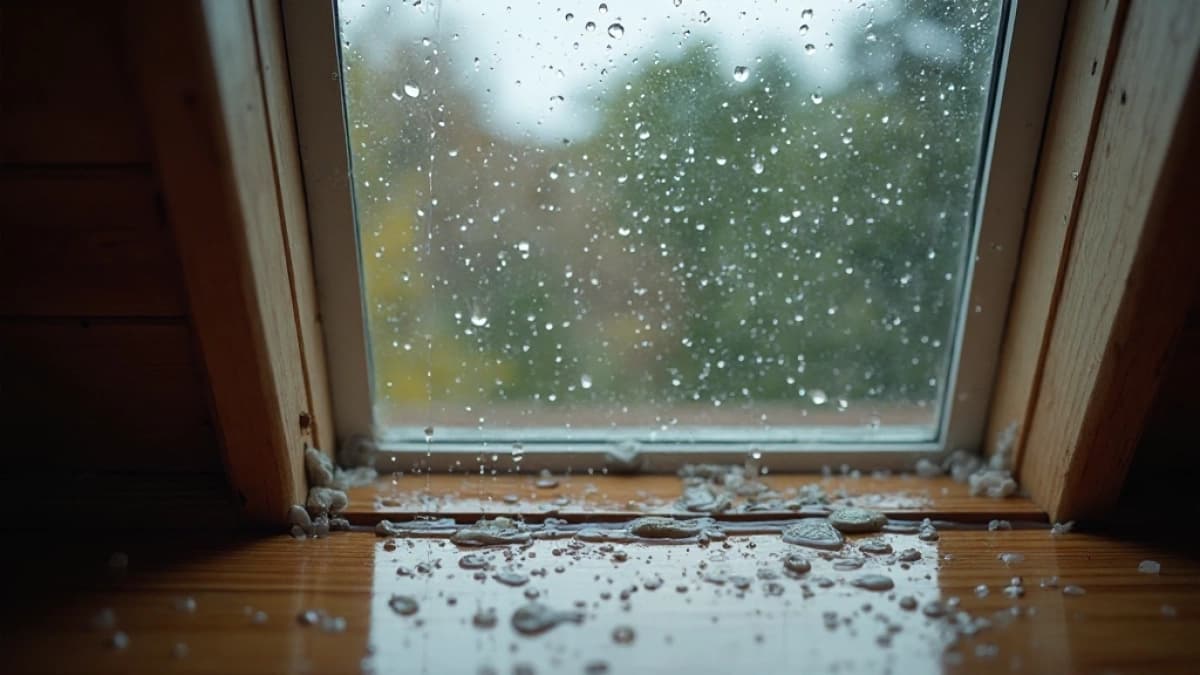
Condensation on a roof window — where does the moisture appear?
The key question is which side of the glass is affected. Condensation on the outer surface, on the room side and between the panes are three different situations.
On the outer glass surface. Condensation can appear after a cool, clear night when the glass surface reaches a temperature that allows moisture from the air to condense. It usually clears as temperature and sunlight conditions change. Its presence alone does not indicate a leak or provide a basis for judging the technical condition of the window.
On the room side. Condensation on the inner glass surface forms when its temperature is sufficiently low relative to the indoor air temperature and humidity. Indoor humidity, ventilation, room temperature and the window surface temperature can all matter.
Room-side condensation alone does not prove a window fault or a ventilation problem. If it occurs regularly, the indoor conditions and the exact place where moisture appears should be assessed.
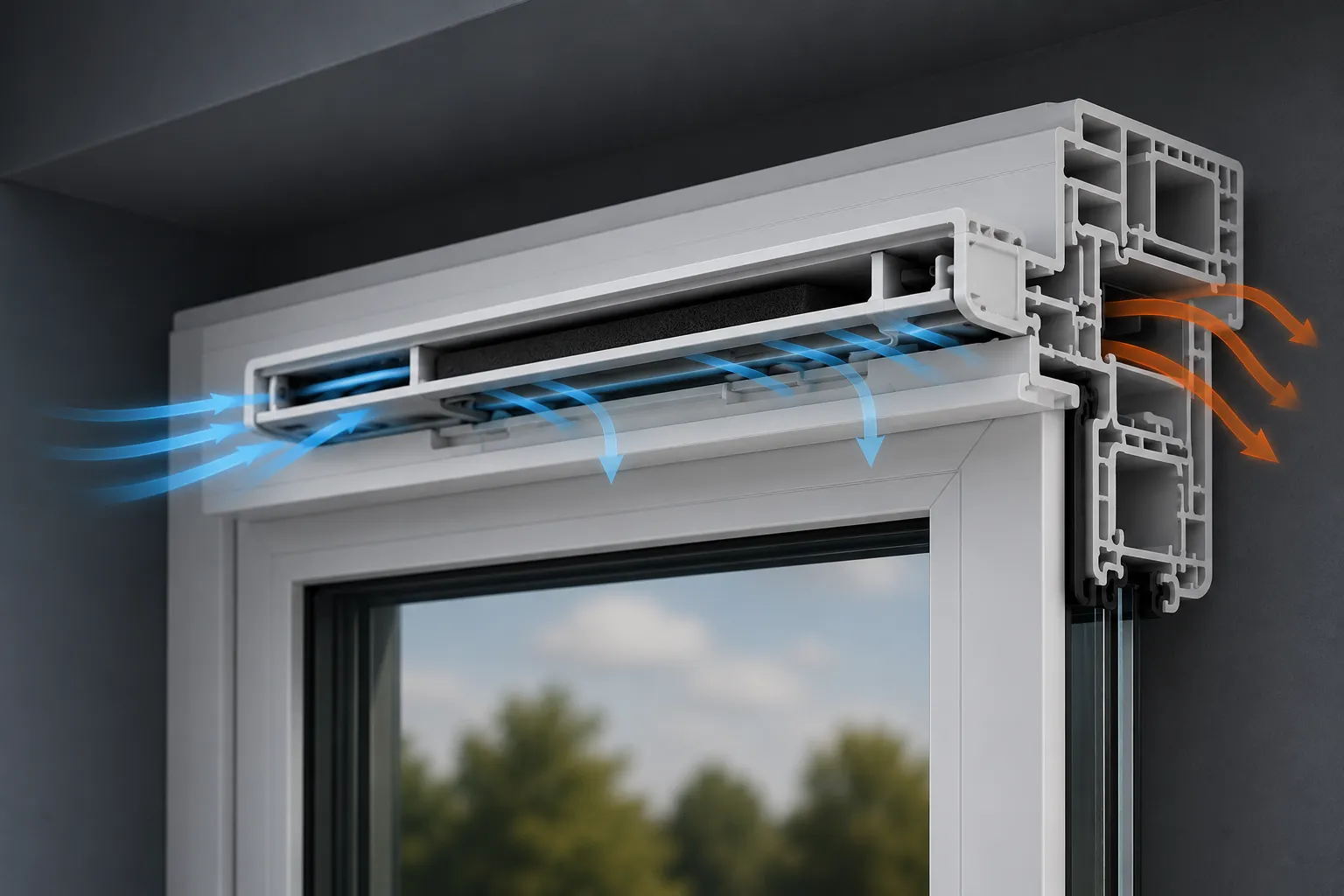
More detail is available in our guide to condensation and moisture on windows. If the question concerns how air is supplied to the room, our article on window trickle vents may also help.
Between the panes. Persistent fogging, residue or droplets inside the insulated glass unit can indicate loss of seal. This moisture cannot be wiped from either side of the window.
In this situation, the glass unit and the rest of the window are assessed together. If the remaining construction is in suitable condition and the design allows it, replacing the glass unit alone may be possible without replacing the whole window.
The window seal, flashing and roof connection are not the same thing
Roof-window watertightness depends on more than one component. The seal between sash and frame needs to be distinguished from water drainage and the way the entire window is connected to the roof construction.
The sash seal is part of the window itself and contributes to sealing between the sash and frame. Its condition is assessed for visible damage, permanent deformation, displacement and how the sash works with the frame.
The flashing collar forms part of the system connecting the window to the roof covering and helps direct water correctly around the window. It is not the same component as the sash seal.
Other components and installation details can also affect the watertightness of the entire window-to-roof connection. Water appearing around the window should therefore not automatically be blamed on either the sash seal or the flashing alone.
What does water appearing after rain mean?
If water appears around the window during or after rainfall, first note the conditions: whether the window was closed, where the water becomes visible, whether it happens with every rainfall or only during heavy or wind-driven rain.
Water visible inside can originate somewhere else from the point where it emerges. The fact that it appears near the frame is not enough to diagnose damage to the flashing, seal or another specific component.
Diagnosis needs to consider both the window itself and its connection to the roof, including how water is directed around the construction.
What a problem with window operation may mean
The handle works differently. If it develops noticeably more play, loses the resistance it used to have or requires more force, the closing mechanism and locking components specific to the model should be checked. Handle feel alone is not enough reason to adjust sash compression.
The sash does not hold position. If it starts dropping, no longer stays where it is set or its movement changes, the mechanism supporting sash operation should be checked. Its design depends on the specific roof-window model.
A draught with the window closed. This can relate to seal condition, sash position, the closing mechanism or leakage elsewhere. The actual path of the air should be identified first.
Water at the lower part of the window. This does not automatically mean a blocked channel or gutter. First distinguish condensation from water related to rainfall or another leak.
The sash becomes harder to move. If movement develops greater resistance, check where friction occurs, the mechanism and the condition of moving components. The season alone is not enough reason to assume lubrication is needed.
Why the specific roof-window model matters
Different manufacturers and series can use different opening mechanisms, adjustment points, sash-support components and sealing solutions. Before adjustment, parts selection or dismantling, it is worth identifying the manufacturer, series and, where available, the specific model marking.
This applies to VELUX, FAKRO, Roto, Dakea and other systems. A solution suitable for one model should not automatically be transferred to another.
What can be checked without dismantling
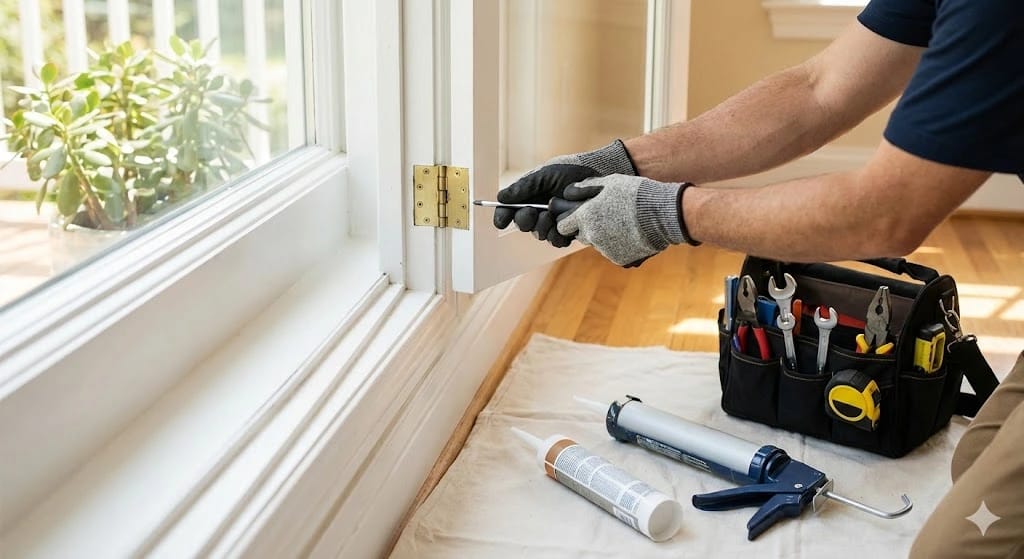
Without taking anything apart, you can identify where moisture or a draught appears, inspect accessible seals for visible damage, check how the handle and sash work, and note the window model marking.
With room-side condensation, it is also useful to consider indoor conditions and how the room is ventilated. Routine maintenance should follow the instructions appropriate to the specific model.
Avoid random adjustment, dismantling mechanisms or interfering with the window-to-roof connection without knowing the system. If diagnosis or repair requires roof access, appropriate safety equipment and experience are needed.
When a more detailed diagnosis is needed
A closer inspection is worth arranging when:
— water appears around a closed window during or after rain;
— the sash does not open or close correctly;
— the handle or mechanism begins to operate noticeably differently;
— the sash no longer holds position;
— persistent fogging, residue or droplets remain between the panes;
— a clear draught appears with the window closed and the source is unknown;
— the problem may involve the window-to-roof connection;
— inspection or repair requires access to the exterior roof area.
The purpose of diagnosis is to identify the source before choosing the repair method, especially where a similar symptom can arise from several different components.
More detail is available in our guide to roof window repair.
As part of our window repair service, we first assess the specific window and the nature of the problem, then define the required work. The initial diagnosis and technician's visit are free within the area we serve.
What to remember
With roof windows, condensation, a leak in the window itself and a problem in the connection to the roof require different approaches. The place where moisture appears does not always identify the source.
Room-side condensation does not automatically mean a window fault, and water appearing after rain does not allow the seal or flashing to be identified as the cause without inspection. Mechanical symptoms — changes in handle or sash operation, or a draught — also need to be assessed in the context of the specific model.
Diagnosis should come first, then the repair method.
Related services
Work on roof windows can include window sealing, gasket replacement or adjustment. For typical moisture and vapour problems, see condensation and moisture on windows. Initial diagnosis and travel are free of charge.