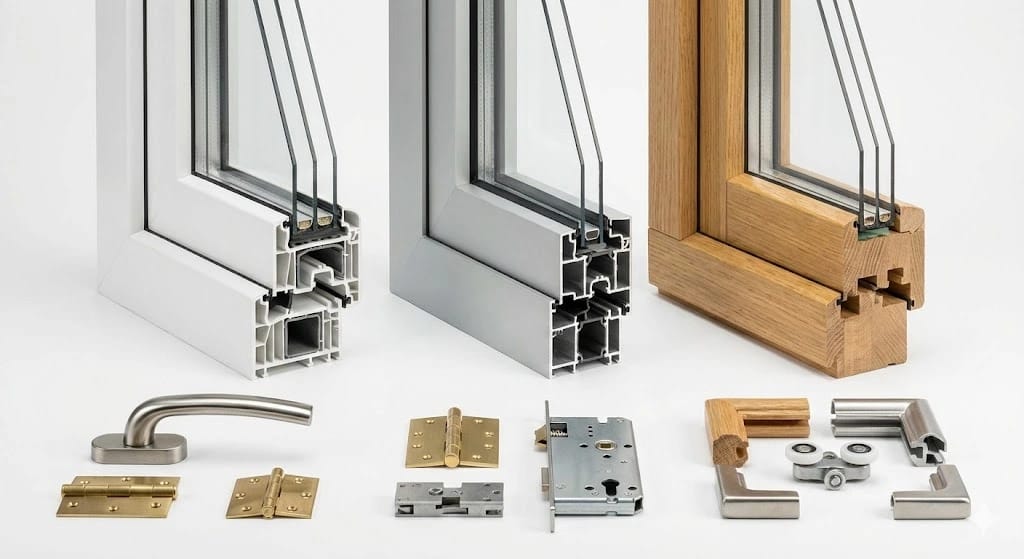
A squeaking window does not automatically point to one specific fault. The sound may come from hardware, contact between the sash and frame or gasket, or another component moving while the window is opened, closed or locked. The first step should therefore be to identify when the sound occurs and where it comes from, rather than applying lubricant or changing hardware settings at random.
A squeak is a symptom, not a diagnosis. Observation will not always identify the exact component, but it can help determine whether the issue may be addressed by maintenance specified by the manufacturer or needs a more detailed inspection.
Why does a window squeak? The sound alone is not a diagnosis
The source may be hardware, contact between the sash and frame, the gasket, or another moving component. No single characteristic of the sound reliably identifies a specific component.
Instead of judging the problem by tone or volume alone, check three things: when the sound occurs, where it comes from and whether the window has any other symptoms.
How can you check where the squeak is coming from?
When does the sound occur?
Note whether the squeak appears while opening the sash, while closing it, when turning the handle or only during a particular part of the movement. This can narrow down the area to inspect, but it does not by itself identify the cause.
Where does the sound come from?
Try to establish whether the sound comes from the hardware, the hinge side, the point where the sash meets the frame, or the gasket area. Do not dismantle the mechanism or change settings simply to test which component is making the sound.
Are there any other symptoms?
Check whether the sash rubs against the frame, whether the window has become harder to close, whether the handle sticks, or whether a component is visibly damaged or loose. An additional symptom is often more useful than the character of the squeak itself.
Possible sources of a squeaking window
Hardware points that require maintenance
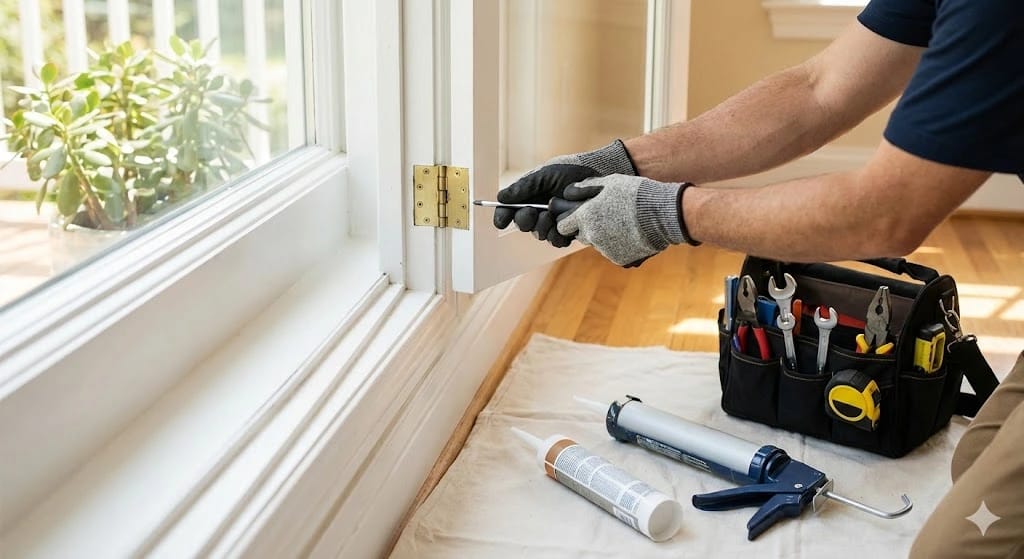
Some hardware systems include points that the manufacturer specifies for periodic maintenance and lubrication. If the sound comes from one of these points, maintenance carried out according to the manufacturer's instructions may reduce or eliminate the symptom. This does not mean that every visible hardware component should be lubricated.
Contact between the sash and frame
If the squeak is accompanied by the sash rubbing against the frame or by noticeably more difficult closing, the sash position and hardware operation should be checked. In that situation, a window adjustment may be needed, but the scope of the adjustment should depend on the specific hardware system and the actual cause.
Sound from the gasket area
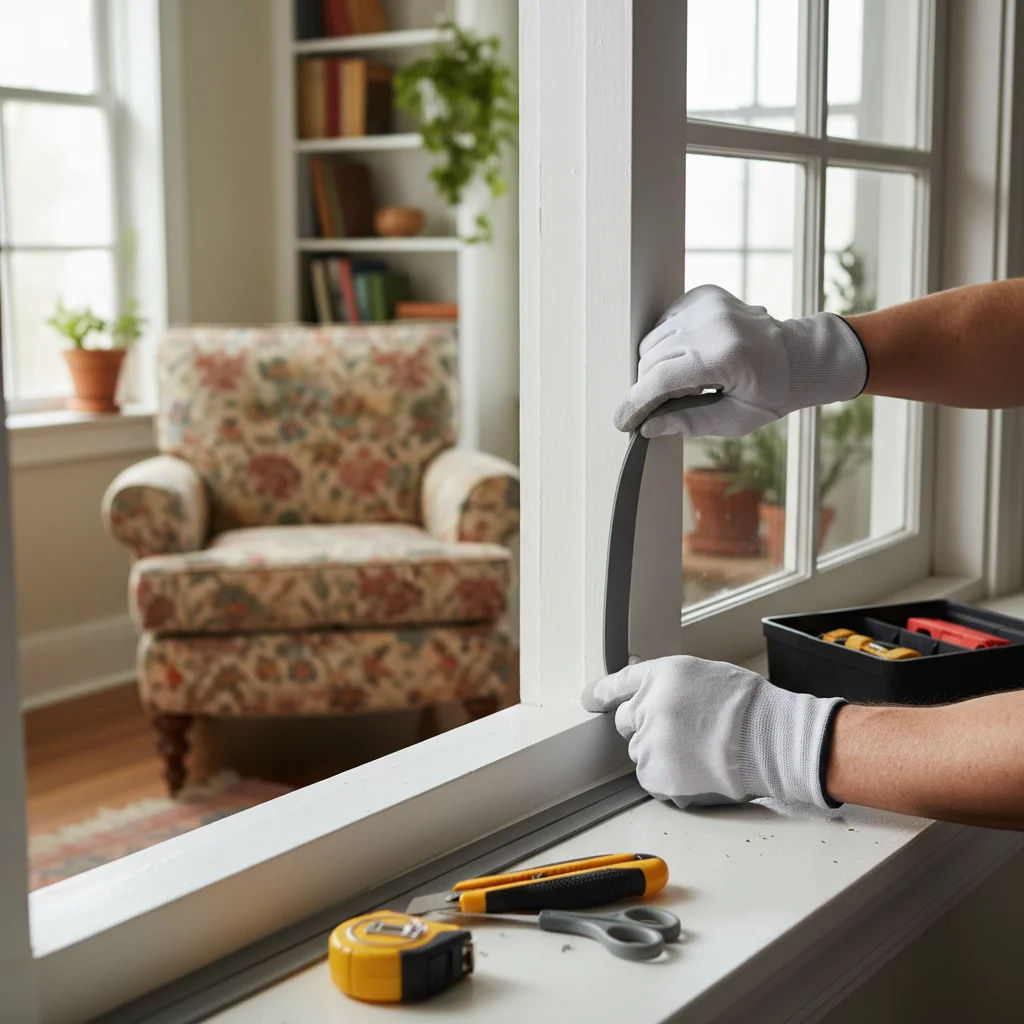
The sound can also occur where the sash contacts the gasket. During a basic visual check, look for a gasket that has come out of its groove, is cracked or is visibly deformed. The sound alone is not a reason to decide that the gasket must be replaced.
Dirt or another part of the mechanism
Accessible dirt can affect how a mechanism operates, but not every sound means that cleaning will solve the problem. If the source cannot be identified without dismantling the hardware or changing its settings, limit the inspection to accessible components.
What can you do yourself when a window squeaks?
Check the hardware instructions first
If you know the hardware manufacturer and system, check the maintenance instructions. They should specify which points require lubrication, how often they should be checked and which product can be used.
Remove accessible dirt
Visible, accessible components can be cleaned according to the manufacturer's guidance. Do not remove hardware parts or covers unless the user instructions specifically allow it.
Lubricate only the points specified by the manufacturer
Lubricating a window hinge does not mean applying lubricant to every visible component around the hinge. Depending on the system, different points may have different maintenance requirements, and some components may not be intended for lubrication by the user.
Use the correct product
Do not use a product simply because it is described as a universal lubricant. Use the product specified for the particular hardware system. Some manufacturers' instructions explicitly exclude certain penetrating products, rust removers or other products that are not intended for that mechanism.
When will lubrication not solve the problem?
Lubrication will not remove the cause if the sound results from the sash rubbing against the frame, incorrect mechanism operation, a damaged component or a problem outside the points intended for maintenance.
If maintenance carried out according to the manufacturer's instructions does not change the symptom, do not keep adding lubricant or adjusting the hardware by trial and error. Look for another cause instead of repeatedly adding lubricant.
When does a squeaking window need adjustment or repair?
A more detailed inspection is appropriate when the sash rubs against the frame, the window has become noticeably harder to close, the handle sticks or jams, the sound is accompanied by an unusual grinding or knocking noise, a component looks damaged or loose, or the squeak returns despite correct maintenance.
If the source cannot be established without dismantling the mechanism or making random adjustments, identify the cause first. The scope of window repair should only be chosen after determining which component actually needs adjustment, repair or replacement.
A squeak also does not mean the window should be adjusted on a fixed schedule. We discuss when adjustment actually makes sense in our guide to how often windows should be adjusted.
How can you reduce the risk of hardware problems?
Some manufacturers specify maintenance of certain hardware points at least once a year. The interval and scope depend on the manufacturer, hardware system and conditions of use.
Regular maintenance cannot guarantee that a squeak will never appear, but it helps keep the hardware maintained according to the manufacturer's requirements. We cover broader post-heating-season checks and maintenance in our guide to spring window service.
Squeaking window — key takeaways
A squeak is a symptom, not a diagnosis. Lubrication only makes sense at the points and in the way specified by the manufacturer of the hardware system. If the sound is accompanied by sash rubbing, difficult closing, a sticking handle or visible damage, identify the cause before deciding on maintenance, adjustment or repair.
What should you check when the squeak is accompanied by another symptom?
If the window also fails to close correctly, see our guide to a window that does not close — adjustment or repair. If the problem appeared during DIY maintenance or you are unsure where safe user maintenance ends, see what you can do yourself when maintaining a PVC window. We also describe local service under window repair in Wrocław. The squeak itself remains a symptom; these resources help choose the next step only after the other symptoms are taken into account.