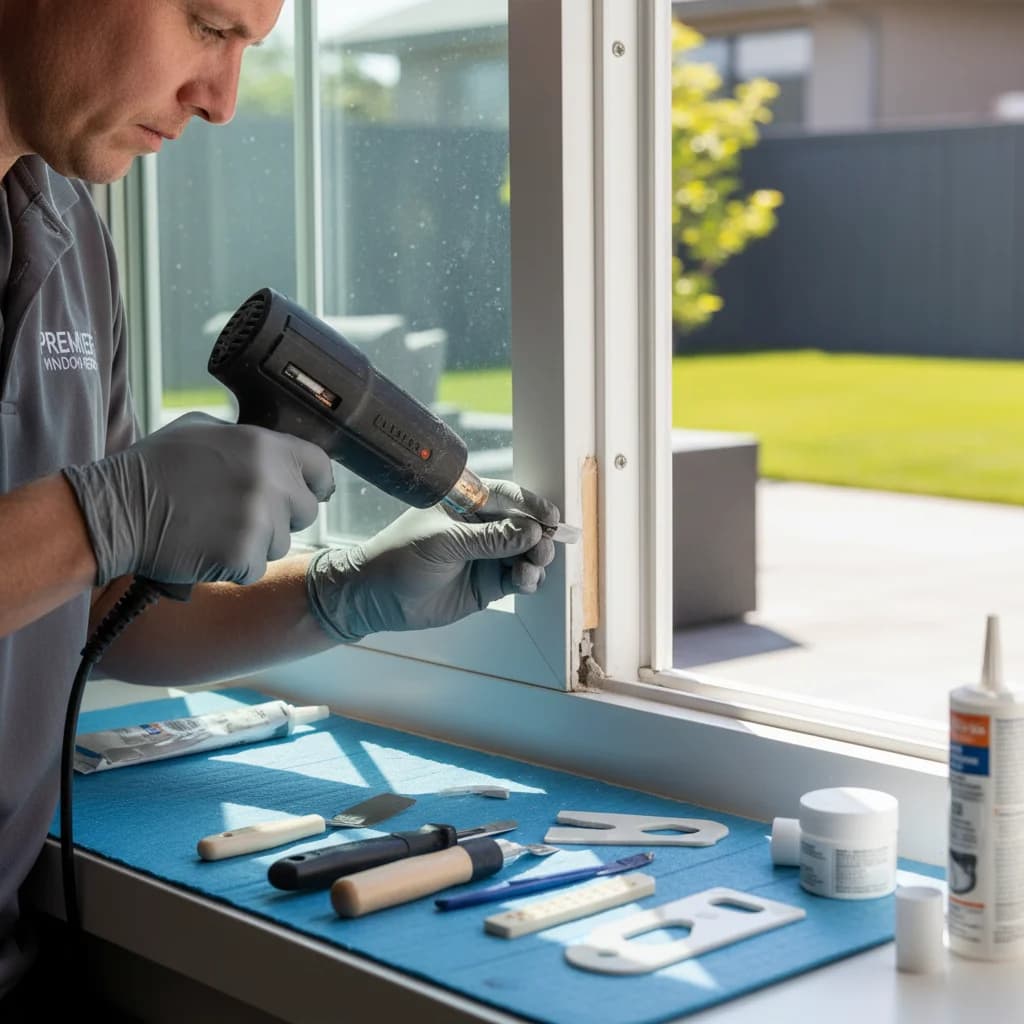
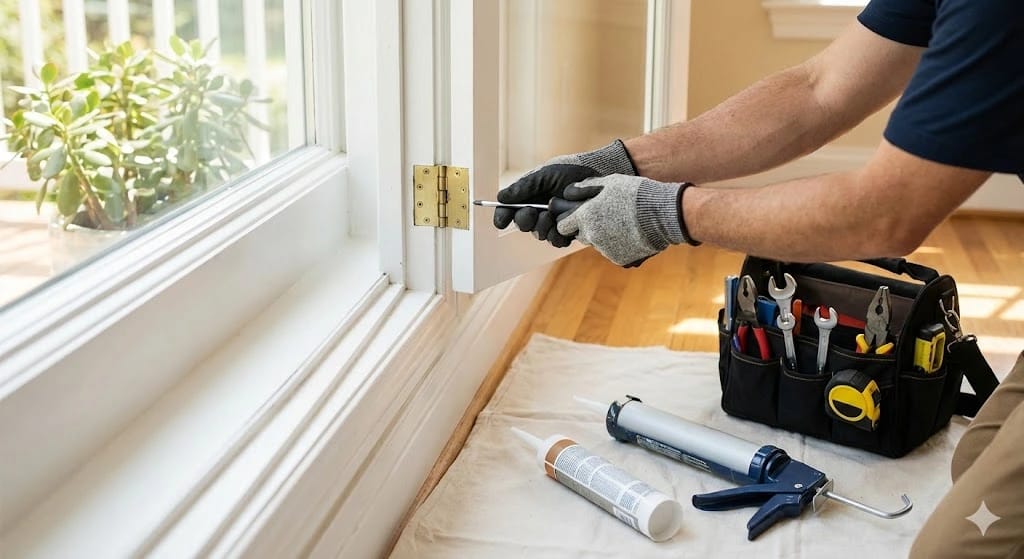
In large-panel buildings, a window problem does not always concern only the sash, seal or hardware. The way the frame is set into the reveal and the condition of the surrounding building elements can also matter.
Diagnosis should therefore separate two areas: the condition of the window itself and the condition of its connection to the building. A draught, moisture, a colder area around the reveal or water marks do not automatically identify one cause.
Window age does not determine replacement either. The decision should follow the actual condition of the profile, hardware, seals, insulated glass unit and frame-to-reveal connection.
What deserves different attention in large-panel construction
Prefabricated buildings do not all share one identical construction. Reveal geometry, wall-layer arrangement, the way the window is installed and the history of later renovation can differ between building systems and even between flats in the same block.
Older installations may use solutions and materials different from those used today. That does not mean every older joint is leaking or needs rebuilding.
Assessment should therefore consider not only the sash and window mechanism but also the connection between the frame and reveal and the surrounding building envelope.
The window itself or the frame-to-reveal connection?
The sash seal, hardware and insulated glass unit belong to the window itself. The connection between frame and reveal is a separate part of how the window interfaces with the building.
If the problem concerns sash position, handle operation or hardware, the cause is sought within the window. If moisture, air movement or water marks appear around the frame-to-reveal junction, the installation joint is one area that should be checked.
The visible location of a symptom does not confirm its source. Air or water may enter somewhere else from the place where it becomes noticeable.
Moisture at the reveal does not point to one cause
Moisture or mould in a reveal corner does not automatically mean a faulty window or leaking installation. Surface temperature, indoor humidity, ventilation, a local thermal bridge, leakage at the installation joint or water entering from elsewhere may all matter.
Before repair, it is useful to determine whether the moisture is condensation, or whether it is associated with air leakage or water ingress.
If the problem is genuinely in the frame-to-reveal connection, sash adjustment or seal replacement will not remove its cause.
More detail on distinguishing moisture sources is available in our guide to condensation and moisture on windows.
A thermal bridge and an air or water leak are different problems
A thermal bridge and a leaking installation joint can create similar sensations, but they are not the same problem.
With a thermal bridge, the internal surface temperature of the building envelope is locally lower. If indoor conditions favour condensation, moisture can appear there. Leakage instead means unwanted air or water movement through a specific joint.
If diagnosis confirms a thermal bridge around the reveal, hardware adjustment or sash-seal replacement will not remove its cause. Any improvement depends on the construction of the building envelope and should consider the complete reveal detail.
Hardware and seals — what is assessed in the window itself
A change in handle operation, sash rubbing, harder closing or unusual play is a reason to check sash position and hardware operation. The symptom alone does not determine whether adjustment, maintenance, repair or component replacement is needed.
Before repair, it is worth identifying the hardware manufacturer and series and checking the availability of compatible components.
Seals should be assessed mainly for cracks, cuts, permanent deformation, displacement from the groove and other visible damage. Window age alone is not a reason for seal replacement, and a draught does not prove that the seal is the cause.
Fogging between panes — when to assess the glass unit
Persistent fogging, residue or droplets between the panes can indicate loss of seal in the insulated glass unit. This moisture cannot be removed by cleaning accessible glass surfaces.
If the problem is limited to the glass unit and the rest of the construction is in suitable condition and allows such a repair, replacement of the glass unit without replacing the whole window may be possible.
Repair or replace?
Neither the age of the window nor the fact that it is in a large-panel building is sufficient reason for replacement.
Repair may make sense when the main window construction is in suitable condition and the problem involves components that can be repaired or replaced, such as hardware, a seal or the insulated glass unit.
Replacement is worth considering where the main profile has serious structural damage, there are permanent deformations, several significant faults occur together, or no effective repair solution or compatible parts are available.
If several serious problems occur at the same time, it is worth comparing the repair scope and expected result with complete window replacement.
What to note before diagnosis
Before the visit, it is useful to note when and where the problem appears. Helpful information includes:
— which edge feels draughty;
— whether moisture appears constantly, after rain or mainly at low outdoor temperatures;
— whether the sash rubs against the frame or is harder to close;
— whether handle operation has changed;
— whether fogging is on the glass surface or between the panes;
— whether the seal has visible cracks, cuts or displacement from the groove;
— where available, the hardware or profile manufacturer and system marking.
This information is more useful than simple home “tightness tests”, because the same symptom can have more than one cause.
When diagnosis should not be delayed
It is worth checking the problem sooner when:
— the sash rubs heavily against the frame or does not close correctly;
— the handle begins to operate noticeably differently;
— persistent fogging, residue or droplets remain between the panes;
— a clear local draught appears with the window closed and the source is unclear;
— moisture or mould repeatedly appears around the reveal;
— water marks appear around the window or reveal after rain.
The symptom alone does not determine the repair. With moisture and draughts in particular, it is important to distinguish a problem in the window itself from a problem in its connection to the building.
As part of our window repair service, we first determine whether the problem concerns the window itself, its connection to the reveal or another part of the surrounding construction. We then define the required work. The initial diagnosis and technician's visit are free within the area we serve.
What to remember
The age of the building or window does not provide a diagnosis. In a large-panel building, the condition of the window itself and its connection to the reveal should be assessed separately.
A draught does not automatically mean a worn seal, moisture in a corner does not confirm leaking installation or a thermal bridge, and fogging between panes is a separate issue involving the insulated glass unit.
The decision to adjust the window, repair the frame-to-reveal connection or replace the whole window should follow the actual source of the problem, not the age of the building or the year the window was installed.
In many panel-block buildings, it is worth separately assessing the window sealing at the frame-to-wall joint. See our guide to condensation on glass and windows for more detail.