Repair and complete window replacement should not be compared only by looking at two prices. A useful comparison asks what result each option is expected to deliver, what remains unchanged after repair and what additional benefits replacement would actually provide.
The right question is not simply “which option is cheaper?” but “what is the cost of achieving the result I actually need?”
Before comparing prices, define the result of both options
Start with the diagnosed problem. If the issue concerns hardware, a handle, sash alignment, a seal or a glazing unit, define what a successful repair should restore. Then define what full replacement would change beyond removing that same defect.
This prevents a common mistake: comparing the price of one repair task with the price of a new window even though the two options deliver different scopes.
Calculate the full repair scope, not the cost of one symptom
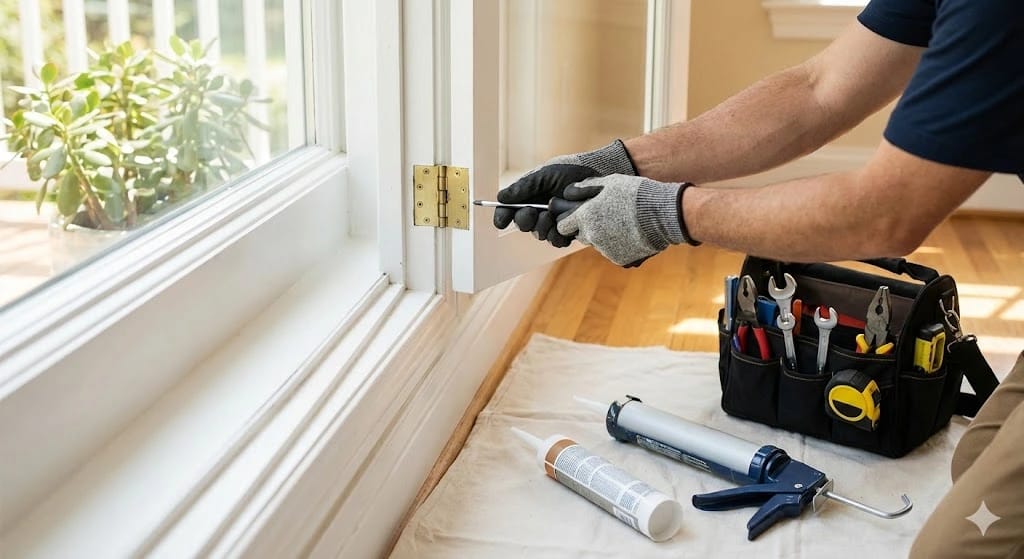
If several elements need work, include all of them in the repair scenario. The cost of adjusting one sash is not a fair representation of repair if the actual plan also requires hardware, seals or glazing work. A proper window repair estimate should reflect the diagnosed scope.
Check what will remain after the repair
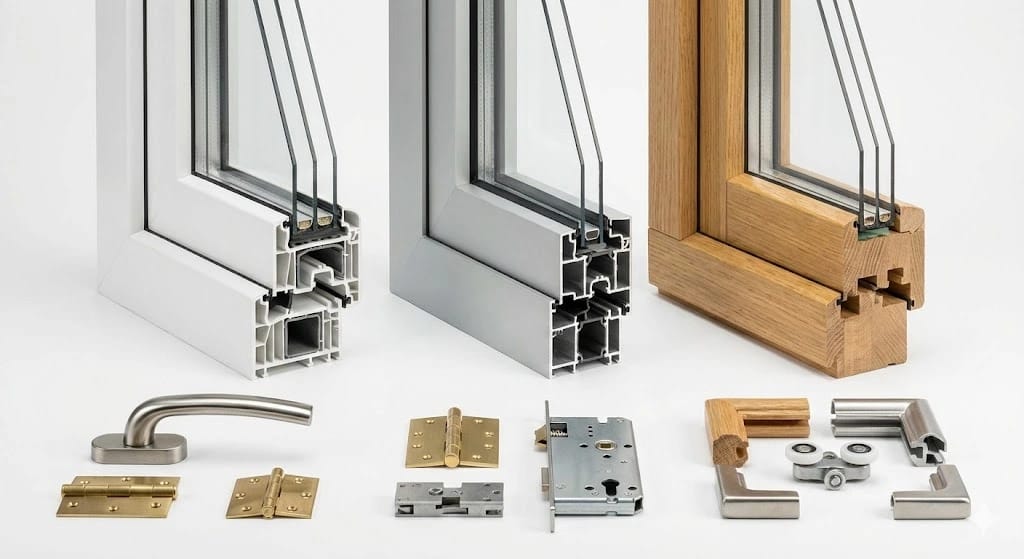
Repair usually leaves the existing frame, sash and most components in place. That can be an advantage when the construction is fundamentally sound. It can also be a limitation if several unrelated elements are already near the end of their useful life.
Ask which components remain unchanged and whether any known weaknesses will still be present after the proposed work.
Check what replacement gives you in addition
A new window may change thermal, acoustic, security or operating parameters, but those benefits should be relevant to the building and the user. Do not count a theoretical improvement as a financial benefit unless you know that the existing window is responsible for the problem you want to solve.
Do not convert promises of lower heating bills into savings without building data
Heat loss depends on more than the window alone. Building insulation, installation details, ventilation, indoor temperatures and the size and condition of the existing glazing all matter. A lower U-value for a new window does not by itself tell you how much the household will save.
A recurring fault: do not simply add old repair bills
If the same symptom returns, diagnose it again before concluding that repair is no longer worthwhile. Repeated spending may indicate that the original cause was not removed, but it may also concern different components over time. Our guide to a window that does not close properly shows why the same symptom can lead to different repair paths.
Five numbers and answers worth having before deciding
Try to establish: the complete repair price; the complete replacement price including installation and finishing; what the repair is expected to restore; what remains unchanged after repair; and which additional benefits of replacement are measurable and relevant to you.
Two cases where the price difference alone is misleading
Repair looks very cheap. If the quote covers only one visible symptom while several required tasks are omitted, the comparison understates the real repair scenario.
Replacement looks like better value. If most of the claimed benefit is based on unverified energy savings, the comparison may overstate the financial return from a new window.
When calculation alone is not enough
If the frame is structurally damaged, the installation is failing, several major systems are affected or the source of moisture and draughts is still unknown, the first step is diagnosis rather than a spreadsheet comparison.
The key point: compare the cost of achieving the result
A fair decision compares complete scopes. Repair can be the better choice when it restores a sound construction at a proportionate cost. Replacement deserves serious consideration when repair would leave important unresolved limitations or when the construction itself is no longer a good base for further work.
If the diagnosis is still missing before the calculation
Use window service to establish the cause and scope before comparing options. Once the problem is defined, the repair-versus-replacement calculation becomes much more meaningful.