A window that starts rubbing, becomes harder to close, feels draughty or develops a handle problem does not automatically point to one specific repair. Moisture on the glass, a damaged gasket or fogging between the panes can also have very different causes.
Good window service starts with identifying the cause. Adjustment helps when the components are serviceable but their alignment is incorrect. A worn or damaged part may need repair or replacement, while full window replacement should only be considered after assessing the condition of the whole unit and the purpose of the work.
Start with the symptom, then diagnose the cause
Why can the same symptom have several causes?
A rubbing sash can be related to alignment, geometry or hardware operation. A draught may come from the gasket, sash alignment, the frame-to-wall joint or another leakage path. A handle that has become harder to operate does not automatically mean the handle itself is damaged.
A symptom helps identify the area to inspect, but it is not yet a diagnosis. The first step is therefore to establish exactly what the individual window is doing.
What can you safely check without dismantling the window?
Note when the problem occurs, whether the sash rubs at one point, whether the handle sticks, whether there is visible cracking or deformation, where moisture appears and whether fogging is on the glass surface or between the panes.
There is no need to dismantle the hardware or make random adjustments. These observations are useful for describing the symptom, not for identifying a failed component by yourself.
When may window adjustment be enough?
Adjustment corrects alignment; it does not repair a damaged part
Adjustment may be enough when the hardware and related components are mechanically serviceable and the issue comes from sash position or component alignment. The aim is to restore correct operation without replacing parts that are still serviceable.
We explain the adjustment process in more detail in our separate guide to 3D window adjustment.
What symptoms can justify checking the adjustment?
Symptoms that may justify checking the alignment include the sash rubbing against the frame, harder closing, a change in handle operation or a local sealing issue. Each of these symptoms can also have another cause, so the observation alone does not prove that adjustment is the correct solution.
When is repair or replacement of a specific component needed?
Gaskets
Cracking, permanent deformation, sections that have come out of the groove or other damage affecting the seal can be reasons to assess a gasket for replacement. Gasket hardness or a noticeable draught alone is not enough for a reliable diagnosis; the gasket seating, sash alignment and other possible leakage paths also need to be checked.
If diagnosis confirms that the gasket is the source of the problem, replacing it may restore the seal without disturbing components that are still serviceable.
Hardware and handles
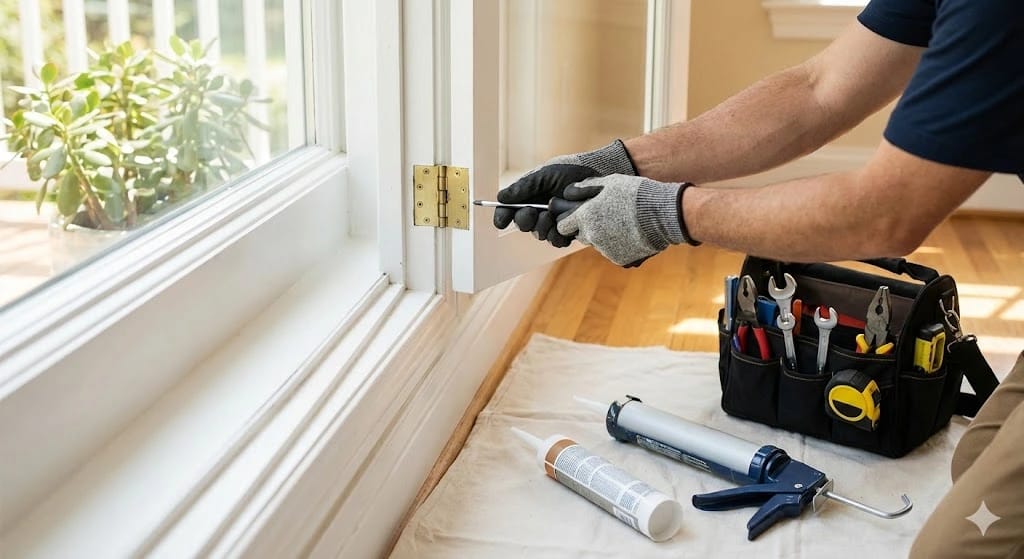
A sticking handle, locking problem, noticeable play or a tilt function that no longer works correctly can indicate a hardware issue. Only after the mechanism is checked can you determine whether adjustment is enough or whether a specific component is damaged.
We cover this distinction in detail in our guide to damaged window hardware.
Insulating glass units
Condensation on the room-side surface of the glass does not automatically mean the insulating glass unit has failed. Persistent fogging or moisture inside the sealed cavity between the panes is different and can indicate loss of the unit's seal.
A failed glazing unit does not automatically mean the whole window must be replaced. If the problem is limited to the insulating glass unit, replacing the unit may be considered without replacing the whole window, provided that the frame, sash and remaining components are in suitable condition.
When should full window replacement be considered?
Serious frame or sash damage
Full replacement may be considered when there is serious profile damage, permanent deformation of the frame or sash, or material degradation that affects the function and durability of the window. Surface discolouration or a single hardware problem is not enough on its own to justify replacing the entire window.
When repair is technically limited
The availability of compatible parts and the ability to restore reliable, safe operation also matter. In older constructions, unavailable replacement parts can limit repair options, but the age of the window alone is not a reason to replace it.
When the goal is modernisation rather than fault repair
Full window replacement can also be a deliberate upgrade for thermal performance, acoustic performance or a wider renovation project. This is different from fixing a single fault: a technically serviceable window may be replaced for functional reasons, while a damaged window does not always need to be replaced in full.
What does the Warsaw context change?
The district alone does not tell you what repair an individual window needs. Warsaw's building stock is diverse, and the age of a building does not necessarily match the age of the windows installed in it. Hardware systems, glazing units and installation methods can also differ.
Older buildings and historic properties
Older buildings may contain historic timber windows as well as PVC or aluminium windows installed during later renovations. In protected properties, the scope of work may also depend on the historic value of the joinery and conservation requirements. We cover these cases in more detail in our guide to windows in historic tenement buildings.
Post-war multi-family housing
The age of the building is not the same as the age of the window. In post-war blocks and estates, windows may have been replaced more than once, so the individual window, hardware system, gaskets and installation should be assessed rather than assuming the repair from the age of the building.
Newer developments
A newer building does not mean one standard window design or one typical fault. New developments can use different PVC and aluminium systems, larger glazed areas and various balcony-door solutions, so diagnosis still starts with the individual window rather than the age of the development.
Installation and the frame-to-wall joint
Not every draught or moisture problem comes from the sash, gasket or hardware. The frame-to-wall joint and other installation details may also need to be assessed, especially when the symptom occurs around the frame while the sash itself operates correctly.
We cover Warsaw-specific building conditions in more detail in our article on window repair in Warsaw.
What is worth noting before a service visit?
1. What exactly is the window doing?
Note whether the sash rubs, the handle sticks, the window is harder to close, a draught or moisture appears, there is an unusual sound, or another symptom is present.
2. When and where does the problem occur?
Note whether it happens while opening, closing or locking, whether it affects a particular corner or edge, and exactly where moisture or a draught is present.
3. Is there visible physical damage?
A cracked profile, damaged gasket, bent component, loose part or damaged glass is useful information to provide before the visit. You do not need to decide which replacement part is required yourself.
This information does not replace diagnosis, but it helps narrow down what needs to be checked during the visit.
When should you stop trying to fix it yourself?
Stop further adjustment or repair attempts if the handle jams or requires significant force, the sash cannot be closed correctly, a component is visibly cracked or deformed, the sash feels unstable, or a previous DIY adjustment did not improve operation.
Damp or mould around a window also needs its source identified, but it does not always mean the window itself is faulty. Possible causes can include ventilation, thermal conditions around the opening, the installation joint or another moisture source.
What does good window service in Warsaw look like?
Good window service in Warsaw should start with checking the symptom and identifying its cause rather than automatically proposing replacement parts. Only after diagnosis should the scope be chosen: adjustment, component repair, glazing-unit replacement or broader work.
As part of our window repair service, we identify the cause first and then explain the required work and its cost before starting the repair. The initial diagnosis and technician's visit are free of charge. We provide a warranty on completed work and materials used.
Adjustment, repair or replacement — the key rule
The scope of repair should not be determined from the symptom alone. If serviceable components only need their alignment corrected, adjustment may be enough. If a specific component is worn or damaged, it may need repair or replacement. A glazing-unit problem does not automatically mean full window replacement, and replacing the entire window should only be considered when the condition of the construction, technical limitations or the goal of the upgrade genuinely justify it.
How to move from diagnosis to the right service
If inspection shows that mechanically sound hardware only needs its alignment corrected, the next step may be window adjustment. If a gasket is cracked or permanently deformed and confirmed as the source of the problem, the relevant service is gasket replacement. When the symptoms are unclear or involve several components at the same time, window service is the appropriate starting point. This keeps different faults from being reduced to one universal repair.